
The Rise of Shovel-Ready Infrastructure Grants and Their Impact on Real Estate and Industrial Development


 Aime Summary
Strategic Municipal Partnerships: The Backbone of Shovel-Ready Success
Shovel-ready grants thrive on collaboration between state governments and local municipalities. In New York, the FAST NY program has allocated over $283 million as of August 2025 to improve nearly 7,700 acres of industrial property, with a focus on pre-development planning and infrastructure upgrades such as water, sewer, and transportation systems according to state data. Similarly, Pennsylvania's PA SITES program has invested $113.6 million across 29 projects since its inception, transforming underused land-such as former coal mines and brownfields-into viable industrial sites according to program reports. These programs rely on partnerships with municipalities, economic development organizations, and industrial agencies to identify high-potential sites and streamline development timelines.
For instance, in Lackawanna County, Pennsylvania, a $6 million PA SITES grant enabled Century Development Associates to redevelop a 230-acre former coal mine into a shovel-ready site for manufacturing and logistics. The project included grading, utility extensions, and environmental remediation, making the land attractive to businesses seeking expansion opportunities as detailed in official announcements. Such collaborations reduce development risks and timelines, creating a competitive edge for regions vying to attract high-tech manufacturing and logistics firms.
Industrial Land Value Appreciation: A Byproduct of Strategic Investment
The economic impact of these grants extends beyond job creation and infrastructure improvements; they are directly driving industrial land value appreciation. In New York, the FAST NY program's infrastructure investments-such as the $32.36 million allocated to the Triangle Site at Griffiss International Airport in Oneida County-have positioned the area as a hub for semiconductor manufacturing and logistics. These upgrades, including utility and transportation enhancements, according to official statements significantly increase the site's marketability and long-term value.
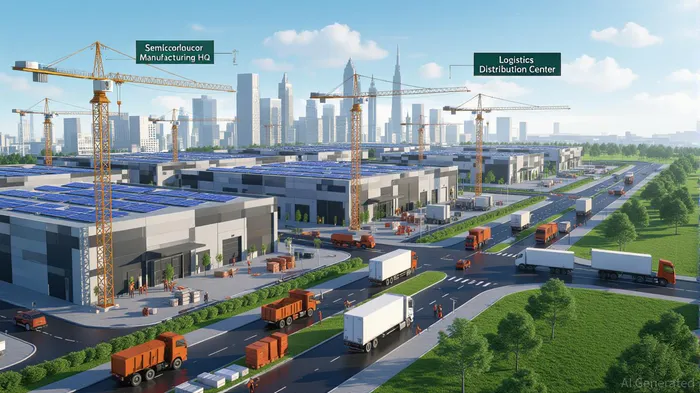 Similarly, Pennsylvania's focus on infrastructure readiness has spurred land value growth in secondary markets. For example, Bedford, Lackawanna, and Luzerne counties have seen increased demand for industrial sites due to PA SITES-funded improvements like access road upgrades and utility extensions as reported in recent updates. According to a 2025 market analysis, infrastructure investments and technological integration are key drivers of property value increases in Pennsylvania's commercial real estate sector as detailed in a comprehensive report.
Factors such as proximity to highways, on-site parking, and clear heights (with properties of 18 feet or more commanding 20% higher prices) further amplify land value appreciation in New York's industrial market according to market research. These metrics underscore how shovel-ready grants are not just preparing sites for development but also embedding them with characteristics that command premium valuations.
Broader Economic Impacts: Jobs, Competitiveness, and Regional Revitalization
The ripple effects of these programs are evident in both economic and social outcomes. Pennsylvania's PA SITES initiative, for instance, has been credited with attracting $31.6 billion in private sector investments since its launch, creating over 16,700 jobs and positioning the state as the top business climate in the Northeast according to official program data. In New York, the FAST NY program has supported projects like the Xerox Webster Campus, where a $9.8 million grant transformed a 300-acre brownfield into a thriving industrial hub, generating over one million square feet of industrial space as reported in project updates.
These investments also address long-standing regional disparities. By targeting underdeveloped areas-such as former coal mine sites in Lackawanna County-shovel-ready grants are revitalizing communities that have historically struggled with economic stagnation. Governor Josh Shapiro's administration has emphasized that such projects not only create jobs but also foster sustainable economic ecosystems by attracting industries like semiconductor manufacturing and renewable energy as stated in official communications.
The Future of Shovel-Ready Development: A Lucrative Investment Opportunity
For investors, the convergence of shovel-ready grants and industrial land value appreciation presents a compelling opportunity. The U.S. commercial real estate sector contributed $1.1 trillion to the economy and supported 5.3 million jobs in 2024, with industrial and warehouse spaces leading the charge according to industry research. As states like New York and Pennsylvania continue to prioritize infrastructure readiness, the demand for industrial land in shovel-ready sites is expected to outpace supply, further driving value appreciation.
However, success hinges on strategic alignment with state priorities. Municipalities that proactively engage with programs like FAST NY and PA SITES-by identifying high-potential sites and leveraging grant funding for infrastructure-will position themselves as magnets for industrial investment. For investors, this means prioritizing regions with active grant programs and a track record of successful site development.
Conclusion
Shovel-ready infrastructure grants are more than a temporary economic stimulus; they are reshaping the industrial real estate landscape through strategic municipal partnerships and targeted infrastructure investments. By transforming underused land into high-value industrial hubs, programs like FAST NY and PA SITES are not only boosting local economies but also creating a new paradigm for industrial land appreciation. For investors, the message is clear: the future of industrial real estate lies in regions where shovel-ready development is a priority.

Blending traditional trading wisdom with cutting-edge cryptocurrency insights.
Latest Articles
Stay ahead of the market.
Get curated U.S. market news, insights and key dates delivered to your inbox.


AInvest
PRO
AInvest
PRO



Comments
No comments yet