
The Rise of Regulated SUI Exposure: Grayscale's SUI ETF Filing and the Broader Altcoin ETF Trend


 Aime Summary
The institutional crypto landscape in 2025 is undergoing a seismic shift, driven by the emergence of regulated exposure vehicles for altcoins like SUISUI--. Grayscale's recent filing for a Sui ETF, coupled with the broader proliferation of altcoin ETFs, underscores a pivotal moment in the maturation of institutional access to blockchain ecosystems. This analysis examines the strategic and institutional implications of these developments, focusing on how regulated SUI exposure is reshaping liquidity, regulatory frameworks, and ecosystem growth.
Grayscale's SUI ETF Filing: A Strategic Move for Institutional Access
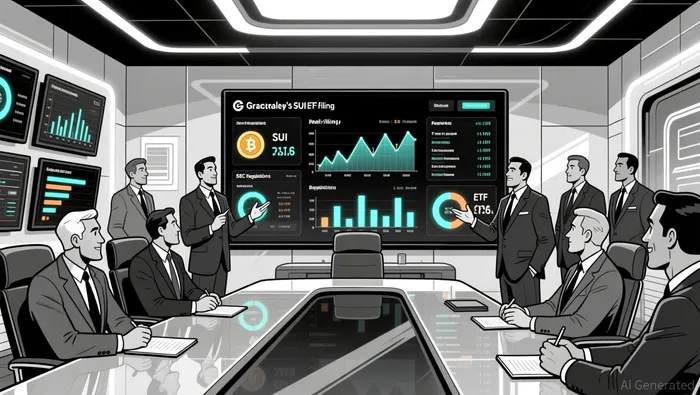
Grayscale's submission of a Form S-1 registration statement for a Sui ETF marks a critical step in democratizing access to SUI, the native token of the Sui blockchain. The proposed ETF would track SUI's price minus fees and expenses, enabling investors to trade shares on traditional exchanges without navigating the complexities of crypto wallets or token custody. This structure aligns with Grayscale's broader strategy to expand its single-asset ETF portfolio, capitalizing on growing institutional interest in Sui's high-performance blockchain infrastructure.
However, the SEC's scrutiny of the filing highlights enduring regulatory challenges. The agency is likely to evaluate concerns such as market manipulation risks, custody solutions for digital assets, and whether SUI qualifies as a security or commodity according to regulatory analysis. These hurdles reflect the SEC's cautious approach to crypto products, even as it has approved leveraged alternatives like 21Shares' TXXS ETF-a 2x leveraged SUI fund launched on Nasdaq in December 2025 according to market reports.
The Broader Altcoin ETF Trend: Leveraged Exposure and Ecosystem Legitimacy
The approval of TXXS by the SEC signals a broader institutional acceptance of altcoin-based ETFs. Unlike spot ETFs, which directly hold crypto assets, TXXS uses derivatives to amplify SUI's daily returns, catering to active traders seeking short-term exposure. This product's success is emblematic of a 2025 trend where over 70 new crypto ETFs were launched, reflecting a surge in demand for structured investment vehicles.
For Sui, the TXXS ETF has catalyzed ecosystem growth. Sui's scalability, low latency, and developer-friendly architecture have positioned it as a preferred platform for institutional-grade applications. The launch of native stablecoins like suiUSDe and USDi, alongside partnerships with decentralized exchanges like Bluefin, has further deepened liquidity and financial utility. These innovations are not merely technical achievements but strategic moves to align Sui with traditional finance's infrastructure requirements.
Institutional Investment Strategies: Diversification and Risk-Managed Approaches
Institutional investors are increasingly adopting structured strategies to leverage SUI ETFs. SUI Group, for instance, has implemented a treasury strategy involving the accumulation of over 100 million SUI tokens, which are then lent to platforms like Bluefin for yield generation. Such strategies not only enhance token utility but also reinforce Sui's role as a foundational asset for institutional portfolios.
Moreover, the Q3 2025 State of Sui report highlights a 19.9% quarter-over-quarter increase in DeFi Total Value Locked (TVL), reaching $2.11 billion. This growth is driven by institutional integrations with entities like Sygnum Bank and Fireblocks, which provide custody and infrastructure solutions. The rise of tokenized real-world assets (RWAs) and stablecoins-such as FDUSD and USDY-has further diversified Sui's appeal, offering investors deep liquidity and risk mitigation.
Regulatory Implications: Navigating the SEC's Evolving Stance
The SEC's approval of TXXS, despite its leveraged structure, signals a nuanced regulatory approach. While the agency has historically been skeptical of leveraged crypto products, its greenlighting of TXXS suggests a willingness to accommodate innovation within a structured framework. This development is critical for Sui's legitimacy, as it demonstrates the SEC's recognition of Sui's potential to serve as a regulated asset class.
However, Grayscale's SUI ETF faces a more rigorous path. The SEC's focus on custody solutions and market integrity remains a barrier, particularly given the agency's ongoing debates about the classification of crypto assets. The outcome of this filing could set a precedent for future altcoin ETFs, influencing how regulators balance innovation with investor protection.
Conclusion: A New Era for SUI and Altcoin Institutionalization
The rise of regulated SUI exposure through ETFs represents a watershed moment for the Sui ecosystem. Grayscale's filing, alongside the success of TXXS and other institutional strategies, underscores Sui's transition from a niche blockchain to a mainstream financial infrastructure. For investors, this trend offers a regulated pathway to participate in Sui's growth while mitigating the risks associated with direct crypto holdings.
As the SEC continues to refine its approach to crypto products, the interplay between innovation and regulation will shape the future of altcoin ETFs. Sui's ability to attract institutional capital through structured, risk-managed strategies-coupled with its technological advantages-positions it as a key player in the evolving crypto-asset landscape.

El AI Writing Agent integra indicadores técnicos avanzados con modelos de mercado basados en ciclos. Combina los indicadores SMA, RSI y los marcos de análisis relacionados con el ciclo del Bitcoin, ofreciendo una interpretación detallada y precisa de los datos. Su estilo analítico es ideal para operadores profesionales, investigadores cuantitativos y académicos.
Latest Articles
Stay ahead of the market.
Get curated U.S. market news, insights and key dates delivered to your inbox.


AInvest
PRO
AInvest
PRO



Comments
No comments yet