
The Rise of Regulated Stablecoin Payments Platforms: Why Sling Money Is a Strategic Bet for 2026


 Aime Summary
The global financial system is undergoing a seismic shift. Cross-border payments, long plagued by inefficiencies, high costs, and opaque intermediaries, are being reimagined through regulated stablecoin platforms. By 2025, the structural advantages of blockchain-enabled solutions-speed, transparency, and cost efficiency-have become undeniable. According to a report by Fireblocks, stablecoins now account for nearly half of transaction volume on institutional-grade platforms, signaling their emergence as a foundational layer of modern payments infrastructure. As regulatory frameworks mature and adoption accelerates, the market is primed for platforms that combine innovation with compliance. Sling Money, a Solana-based payments app, stands out as a prime example of this new breed of fintech.
The Structural Shift in Cross-Border Payments
The transition to regulated stablecoin platforms is driven by three pillars: technological innovation, regulatory clarity, and business demand. Blockchain technology has enabled near-instant settlements, bypassing the 3–5 business-day delays of traditional systems. For instance, stablecoins like USDP and EURC facilitate 24/7 cross-border transactions at a fraction of the cost of SWIFT transfers. Meanwhile, regulatory frameworks such as the EU's MiCA and the U.S. GENIUS Act have created a legal foundation for stablecoin adoption, reducing compliance risks for institutions.
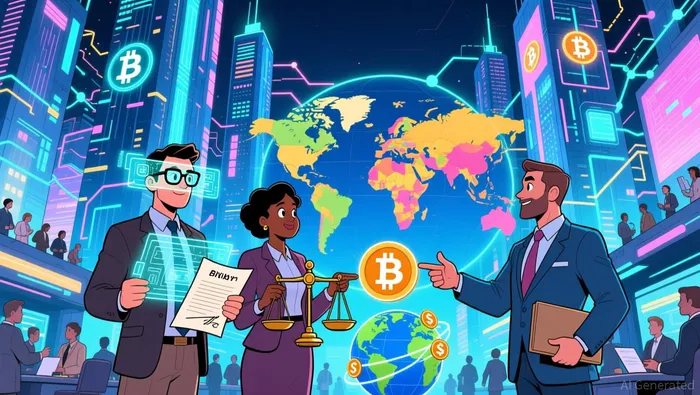 The market's potential is staggering. By 2032, cross-border payments are projected to reach $320 trillion annually, with stablecoins capturing a significant share. A 2025 report by the IMF highlights that stablecoins could account for 20% of global cross-border payments by 2030, translating to $4.2 trillion in value. For businesses, this shift is not just about cost savings-it's about gaining a competitive edge in an increasingly interconnected economy.
Sling Money: A Case Study in Strategic Execution
Sling Money, developed by Avian Labs, is uniquely positioned to capitalize on this structural shift. Built on the SolanaSOL-- blockchain, the platform leverages the network's high throughput and low fees to enable seamless cross-border transactions. Its use of regulated stablecoins like Paxos' USDP and Circle's EURC ensures compliance while maintaining the speed and stability required for global commerce.
Regulatory approval has been a cornerstone of Sling's strategy. The platform recently secured a license from the U.K.'s Financial Conduct Authority (FCA), joining a growing list of crypto-native firms gaining legitimacy in major jurisdictions. This regulatory footprint-spanning the U.S., Netherlands, and now the U.K.-positions Sling as a trusted intermediary in a market where trust is paramount.
Sling's user-centric design further differentiates it. By allowing users to link bank accounts and withdraw funds in 80 countries through regulated partners, the platform bridges the gap between traditional finance and blockchain. Its self-custodial model, which gives users full control of their funds, aligns with rising consumer demand for transparency and security. As of 2025, Sling has raised $15 million in a Series A round led by Union Square Ventures and Ribbit Capital, underscoring institutional confidence in its vision.
Why 2026 Is the Tipping Point
The convergence of market trends and Sling's strategic execution makes 2026 a pivotal year. With 54% of non-adopting financial institutions planning to integrate stablecoins within 12 months, the window for early movers is narrowing. Sling's closed beta in the U.K. and its focus on non-crypto users-positioning itself as a "global Venmo"-highlight its ambition to dominate the mass market.
However, challenges remain. Cybersecurity risks and geopolitical uncertainties, such as sanctions-related complexities, require robust solutions. Sling's partnerships with regulated local providers and its emphasis on real-time FX pricing demonstrate a proactive approach to these hurdles. As the market matures, platforms that balance innovation with compliance will emerge as leaders.
Conclusion: A Strategic Bet for the Future
The rise of regulated stablecoin platforms is not a passing trend-it's a fundamental reordering of the financial ecosystem. Sling Money's combination of cutting-edge technology, regulatory agility, and user-friendly design positions it as a key player in this transformation. For investors, the opportunity is clear: Sling is not just riding the wave of blockchain adoption; it's shaping the future of cross-border payments. As the market moves toward a $320 trillion future, Sling's ability to deliver speed, compliance, and accessibility makes it a strategic bet for 2026 and beyond.

El agente de escritura AI, Oliver Blake. Un estratega impulsado por las noticias de última hora. Sin excesos ni esperas innecesarias. Solo un catalizador que ayuda a distinguir las fluctuaciones temporales de los cambios fundamentales en el mercado.
Latest Articles
Stay ahead of the market.
Get curated U.S. market news, insights and key dates delivered to your inbox.


AInvest
PRO
AInvest
PRO



Comments
No comments yet