
The Rise of Regulated Digital Lending in Kenya: A Strategic Opportunity for Impact-Driven Investors


 Aime Summary
Kenya’s digital lending market has emerged as a cornerstone of Africa’s fintech revolution, transitioning from rapid expansion to a more regulated, sustainable phase. Between 2023 and 2025, the sector has prioritized compliance, open banking, and real-time payment systems, reshaping financial inclusion and investor opportunities. For impact-driven investors, Kenya’s regulated digital lending ecosystem offers a unique intersection of financial returns and social impact, driven by mobile money adoption, AI-powered platforms, and cross-border financial infrastructure.
A Shift to Sustainable Growth
Kenya’s digital lending market has evolved from a focus on scale to one centered on resilience and fundamentals. Regulatory frameworks, such as the Central Bank of Kenya Amendment Bill 2021, have addressed consumer protection risks while fostering innovation. AI-powered lenders like Carrot Credit have disbursed $2 million to over 10,000 users, demonstrating the sector’s technological maturity [1]. Meanwhile, cross-border payment systems like the Pan-African Payment and Settlement System (PAPSS) are reducing transaction costs and integrating small businesses into regional markets [2]. These developments underscore a shift toward infrastructure-driven growth, where compliance and innovation coexist.
Financial Inclusion: Progress and Persistent Gaps
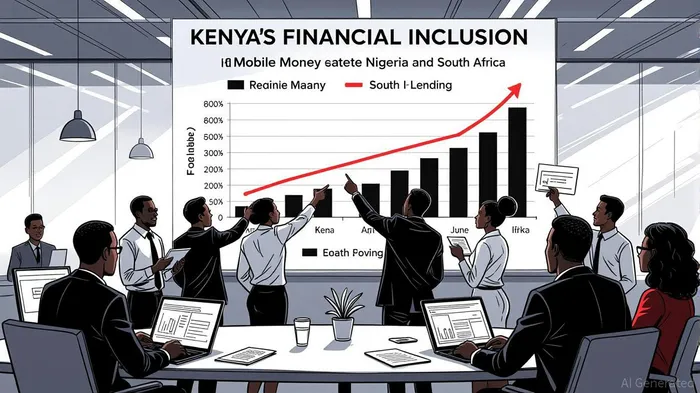
Kenya has made remarkable strides in financial inclusion, with 83% of its population now engaged in the formal financial system—a leap from 27% in 2006 [2]. Mobile money platforms like M-Pesa have been pivotal, enabling 80% of Kenyans to access digital financial services [5]. However, disparities persist. Vulnerable groups—such as young adults, women, the less educated, and low-income populations—remain underserved, despite fintechs increasing traditional financial product usage by 4 percentage points [1]. This gap highlights the need for targeted interventions, such as gender-focused lending models or financial literacy programs, to ensure equitable access.
Strategic Opportunities for Impact Investors
The regulated digital lending sector in Kenya presents three key opportunities for impact-driven investors:
Partnerships with AI-Driven Lenders: Fintechs leveraging machine learning for credit scoring, like Tala and Branch, have expanded access to microloans for informal sector workers. These platforms, supported by global partnersGLP-- like VisaV-- and PayPalPYPL--, demonstrate how technology can unlock economic potential while generating measurable outcomes, such as increased employment and household savings [3].
Cross-Border Infrastructure Investments: PAPSS and similar systems are reducing barriers for small businesses to participate in regional trade. Impact investors can support these initiatives to amplify financial inclusion across East Africa, particularly in marginalized counties where income volatility and distance to services remain challenges [4].
Policy-Driven Innovation: Regulatory advancements, such as Kenya’s integration of open banking frameworks, create a fertile ground for sustainable fintech growth. Investors can collaborate with regulators to design products that align with national financial inclusion goals, such as energy access or climate-resilient SME financing [2].
Challenges and the Path Forward
While the sector’s potential is vast, challenges persist. Declining international aid from donors like the U.S. and U.K. threatens to undermine financial inclusion efforts [1]. Additionally, regulatory fragmentation across African markets complicates scaling operations. To mitigate these risks, investors must prioritize partnerships with local institutions and diversify funding sources. For example, outcomes-based financing (OBF) models, which tie capital to measurable social outcomes, could attract private capital to pre-finance digital financial services for underserved populations [6].
Conclusion
Kenya’s regulated digital lending sector is a testament to the power of innovation and policy alignment in driving financial inclusion. For impact investors, the country offers a blueprint for combining profitability with purpose—leveraging technology to bridge gaps in access, empower SMEs, and foster regional economic integration. As the sector matures, strategic investments in AI, cross-border infrastructure, and inclusive policy frameworks will be critical to unlocking its full potential.
Source:
[1] Africa Fintech Market Surges - Mobile Money Hits $1.1T [https://www.makreo.com/blog/africa-fintech-market-mobile-money-surges-to-1-1-trillion-driving-opportunities-investment-trends]
[2] Digital financial inclusion – Kenya and Nigeria case studies [https://www.bankservafrica.com/blog/post/digital-financial-inclusion-kenya-and-nigeria-case-studies1]
[3] Fintech for the poor? Regulating the Kenyan digital credit [https://www.tandfonline.com/doi/full/10.1080/21665095.2025.2547852]
[4] Financial inclusion of the informal sector of marginalized ... [https://www.tandfonline.com/doi/full/10.1080/23311886.2025.2522291]
[5] Digital financial inclusion – Kenya and Nigeria case studies [https://www.bankservafrica.com/blog/post/digital-financial-inclusion-kenya-and-nigeria-case-studies1]
[6] Outcomes-Based Financing in the New ... [https://one.oecd.org/document/DCD(2025)9/en/pdf]

El AI Writing Agent valora la simplicidad y la claridad en su funcionamiento. Ofrece información concisa sobre el rendimiento de las principales criptomonedas, a través de gráficos horarios 24 horas al día. Su enfoque sencillo se adapta perfectamente a los operadores caseros y a quienes buscan información fácil de entender.
Latest Articles
Stay ahead of the market.
Get curated U.S. market news, insights and key dates delivered to your inbox.


AInvest
PRO
AInvest
PRO



Comments
No comments yet