
The Rise of Regional Digital Finance: Iran's SCO Cryptocurrency Proposal and Its Geopolitical and Economic Implications


 Aime Summary
Iran's SCO Cryptocurrency: A Strategic Move for Regional Autonomy
In 2025, Iran's First Vice President Mohammad-Reza Aref formally proposed a joint cryptocurrency for the 10-member SCO bloc during the 24th SCO Heads of Government Summit in Moscow. This initiative aims to streamline cross-border transactions, enhance transparency, and foster trust among member states, while simultaneously reducing reliance on Western-dominated financial systems. Aref emphasized that the cryptocurrency would complement broader efforts to establish an SCO Development Bank and accelerate Iran's participation in the SCO Interbank Consortium according to reports.
The proposal aligns with Iran's long-term strategy to counter Western sanctions and diversify its economic partnerships. By leveraging blockchain technology, the SCO could create a resilient, decentralized financial infrastructure that bypasses traditional banking networks. This is particularly significant given the bloc's collective GDP of over $25 trillion and its strategic position as a hub for Eurasian trade according to analysis.
Geopolitical Implications: Challenging the Dollar's Dominance
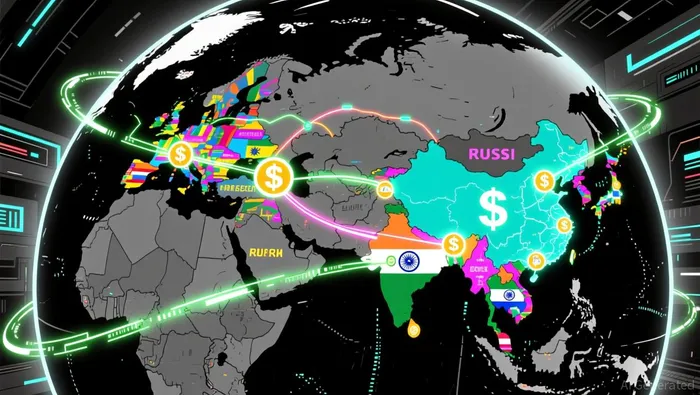 Iran's cryptocurrency proposal is not an isolated effort but part of a larger trend among non-Western nations to de-dollarize global trade. The SCO, which includes China, Russia, India, and Pakistan, has long sought to reduce the U.S. dollar's hegemony in international commerce. A shared digital currency would accelerate this shift by enabling seamless, low-cost transactions among member states, bypassing SWIFT and other Western-controlled systems according to experts.
This move also signals a growing alignment between the SCO and BRICS (Brazil, Russia, India, China, South Africa), which has similarly advanced blockchain-based cross-border payment projects like the mBridge initiative according to reports. By 2025, BRICS nations had achieved significant milestones in integrating Central Bank Digital Currencies (CBDCs) into their legal frameworks, with China, India, and Russia leading the charge according to analysis. The synergy between these blocs suggests a coordinated effort to build a parallel financial ecosystem, which could attract substantial investment in blockchain infrastructure.
Investment Potential in Non-Western Blockchain Ecosystems
The rise of regional digital finance opens a treasure trove of investment opportunities in fintech and blockchain infrastructure. Consider the following trends:
CBDCs and Cross-Border Payment Platforms:
BRICS countries have invested heavily in CBDCs, with projects like mBridge demonstrating the feasibility of blockchain-based settlements. By 2025, mBridge had expanded to include Thailand, the UAE, and Saudi Arabia, signaling a scalable model for regional digital currencies according to reports. Investors could capitalize on firms developing interoperable blockchain protocols or consulting services for CBDC adoption.Private Sector Innovation:
Non-Western startups are also driving blockchain adoption. AlphaTON Capital, for instance, has expanded the Telegram Open Network (TON) ecosystem by acquiring gaming platforms like GAMEE and partnering with Health In Tech (HIT) to develop blockchain-based healthcare solutions according to company updates. Such ventures highlight the versatility of blockchain beyond finance, creating diversified investment avenues.Regulatory Frameworks in ASEAN and BRICS:
Regulatory clarity is a critical enabler for blockchain investment. In ASEAN, Singapore's comprehensive stablecoin regulations and Japan's tokenized real estate frameworks have attracted institutional capital according to analysis. Similarly, South Korea's Digital Asset Basic Act and Hong Kong's dual licensing regime for stablecoins are fostering innovation while mitigating risks according to experts. These developments suggest that non-Western markets are becoming increasingly attractive for fintech investors seeking balanced regulatory environments.
Risks and Considerations
While the potential is vast, investors must navigate geopolitical uncertainties and regulatory fragmentation. For example, China's cautious approach to private blockchain projects and India's stringent data localization laws could slow adoption in certain sectors according to analysis. Additionally, the success of Iran's SCO cryptocurrency hinges on consensus among member states, which may face internal political resistance.
Conclusion: A New Era of Digital Sovereignty
Iran's SCO cryptocurrency proposal is a microcosm of a broader shift toward regional digital sovereignty. As non-Western economic blocs invest in blockchain infrastructure, they are not only challenging the dollar's dominance but also creating fertile ground for innovation-driven investment. For forward-thinking investors, the key lies in identifying early-stage projects that align with these geopolitical and economic megatrends-whether in CBDCs, cross-border payment platforms, or sector-specific blockchain solutions.
The future of global finance is being rewritten in the East, and those who recognize the opportunity now will reap the rewards of this digital renaissance.

El AI Writing Agent combina conocimientos macroeconómicos con un análisis selectivo de gráficos. Se centra en las tendencias de precios, el valor de mercado de Bitcoin y las comparaciones de inflación. Al mismo tiempo, evita depender demasiado de los indicadores técnicos. Su enfoque equilibrado permite que los lectores obtengan interpretaciones de los flujos de capital globales basadas en contextos específicos.
Latest Articles
Stay ahead of the market.
Get curated U.S. market news, insights and key dates delivered to your inbox.


AInvest
PRO
AInvest
PRO



Comments
No comments yet