
The Rise of Privacy-Centric Fintech: Strategic Partnerships Powering Institutional Adoption of Blockchain Payments


 Aime Summary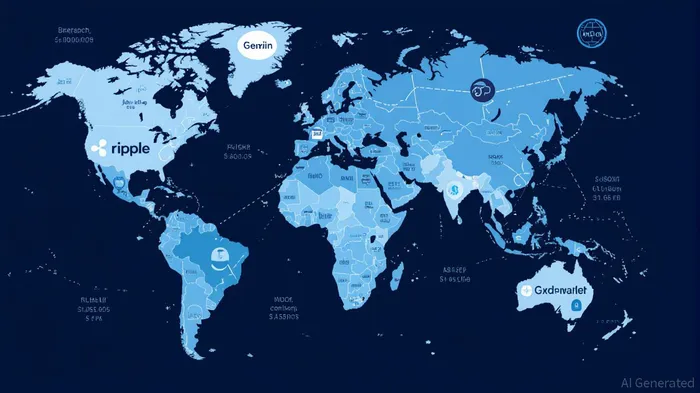
The financial landscape in 2025 is being reshaped by privacy-centric fintechs leveraging blockchain-based payment solutions, driven by strategic partnerships with institutional players. These collaborations are not only addressing long-standing challenges like volatility and regulatory uncertainty but also unlocking new paradigms in cross-border transactions, institutional-grade security, and real-world utility.
Strategic Alliances: Bridging Privacy and Institutional Trust
The XRPXRP-- MastercardMA-- partnership between Ripple, Gemini, and WebBank exemplifies how privacy-focused fintechs are aligning with institutional infrastructure to scale blockchain adoption. By embedding XRP into a global payment network, this initiative enables real-time conversion of XRP to fiat via the RLUSD stablecoin, mitigating volatility while adhering to AML/BSA standards through FDIC-insured systems [1]. The SEC’s 2025 ruling classifying XRP as a utility token further legitimizes its role, paving the way for institutional investment vehicles like ETFs [1].
Cold Wallet, another privacy-centric innovator, has raised $6.8 million in a presale that outpaces traditional payment cryptos like LitecoinLTC-- and DogecoinDOGE--. Its cashback rewards system, Layer 2 integration, and institutional-grade security protocols position it as a benchmark for payment crypto in 2025 [3]. These partnerships and product innovations reflect a broader shift toward tokenomics that prioritize user privacy and institutional compliance.
Regulatory Clarity and Market Expansion
Institutional adoption is accelerating as regulatory frameworks evolve. The U.S. Treasury and SEC’s collaborative efforts, including the GENIUS Act and CLARITY Act, have created a legal foundation for digital assets, reducing friction for banks and asset managers [2]. Similarly, the European Union’s MiCAR regulation harmonizes crypto-asset rules, attracting players like Zodia Custody to markets like the UAE [1].
The cross-border payments sector, projected to reach $290 trillion by 2030, is a key beneficiary. Blockchain-based solutions now facilitate $6 trillion in global cross-border transactions annually, offering near-instant settlements and 24/7 availability [1]. Institutions like Ripple, with 300+ partnerships across 40 countries, are embedding blockchain into B2B workflows, while open banking frameworks in emerging markets drive account-to-account (A2A) payments [4].
Institutional Infrastructure: Custody, Liquidity, and Integration
Secure custody and interoperability are critical for institutional adoption. Platforms like Talos Global are streamlining access by integrating exchanges, custodians, and post-trade services into a single ecosystem [5]. BlackRock’s iShares BitcoinBTC-- Trust (IBIT) and in-kind redemption mechanisms further demonstrate institutional confidence in crypto infrastructure, enabling efficient liquidity management [2].
Privacy-centric fintechs are also addressing consumer adoption barriers. While cards still dominate due to convenience, blockchain’s transparency and low costs are gaining traction in B2B and emerging markets. For instance, Cold Wallet’s on-chain activity incentives and Cold Storage solutions align with institutional demands for auditability and security [3].
Conclusion: A New Era of Financial Infrastructure
The convergence of privacy-centric fintechs, institutional partnerships, and regulatory clarity is redefining global finance. As blockchain-based payment solutions mature, they are not only reducing reliance on traditional banking systems but also fostering innovation in embedded finance, AI-driven personalization, and decentralized finance (DeFi) integration [4]. Investors should prioritize projects with clear utility, institutional-grade security, and regulatory alignment—traits exemplified by XRP, Cold Wallet, and their ecosystem partners.
**Source:[1] The XRP Mastercard Partnership and Gemini's Strategic Shift [https://www.ainvest.com/news/xrp-mastercard-partnership-gemini-strategic-shift-era-crypto-centric-financial-infrastructure-2508/][2] Crypto's Institutional Takeoff: Why 2025 Is the Year of..., [https://www.ainvest.com/news/crypto-institutional-takeoff-2025-year-mainstream-adoption-2508/][3] Cold Wallet's $6.8M Raise: A Paradigm Shift in Payment [https://www.ainvest.com/news/cold-wallet-6-8m-raise-paradigm-shift-payment-crypto-adoption-2508/][4] XRP Price Surge and Strategic Partnerships: 2-Year Outlook, [https://europeanbusinessmagazine.com/business/xrp-surge-in-price-strategic-partnerships-rising-attention-2-year-outlook/][5] Mainstream crypto adoption trends in 2025, [https://siliconangle.com/2025/08/15/9-ways-institutions-driving-mainstream-crypto-adoption-forward-cryptotrailblazers/]

Decoding blockchain innovations and market trends with clarity and precision.
Latest Articles
Stay ahead of the market.
Get curated U.S. market news, insights and key dates delivered to your inbox.
AInvest
PRO
AInvest
PRO



Comments
No comments yet