
The Rise of OCIO as a Strategic Pillar in Institutional Asset Management
 Aime Summary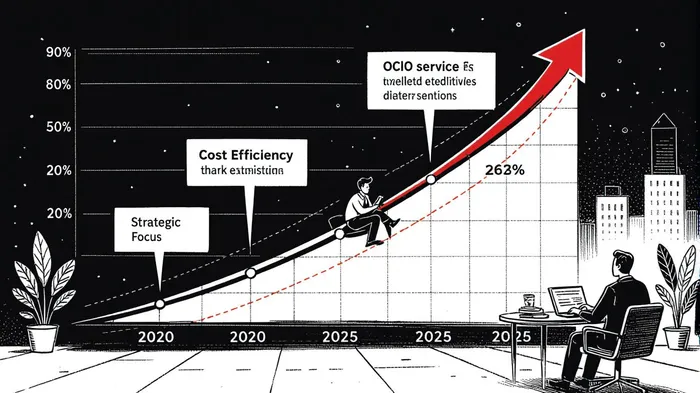
In the evolving landscape of institutional asset management, the adoption of Outsourced Chief Investment Officers (OCIOs) has emerged as a defining trend. Large corporations, grappling with the complexities of pension management, are increasingly outsourcing these responsibilities to specialized firms. This shift is not merely a reaction to short-term pressures but a strategic recalibration driven by long-term financial and operational imperatives.
Cost Efficiency: A Primary Catalyst
The rising costs of healthcare and employee benefits have placed unprecedented strain on corporate budgets. According to a report by AonAON--, organizations are prioritizing cost efficiency as a core motivation for outsourcing pension management to OCIOs [1]. By leveraging external expertise, corporations can reduce the overhead associated with in-house investment teams while accessing economies of scale. For instance, OCIOs often negotiate lower fees for custodial services and investment products due to their aggregated assets under management (AUM). This cost optimization becomes critical as companies face double-digit increases in health costs for two consecutive years [1].
Expertise in a Complex Ecosystem
Pension management has grown increasingly intricate due to regulatory shifts, market volatility, and the need for sophisticated risk management. Aon’s analysis underscores that corporations are turning to OCIOs to bridge the gapGAP-- in specialized knowledge [1]. These firms bring deep expertise in asset allocation, liability-driven investing, and ESG integration—capabilities that many corporations lack internally. For example, OCIOs employ advanced analytics to model pension liabilities against market scenarios, ensuring alignment with long-term obligations. This technical depth allows corporations to navigate regulatory compliance and fiduciary duties more effectively.
Strategic Focus: Reallocating Core Resources
Beyond cost and expertise, the desire to maintain strategic focus on core business operations is a pivotal driver. As stated by Aon, outsourcing pension management enables corporations to redirect internal resources toward innovation, market expansion, and employee engagement [1]. This reallocation is particularly vital in industries where competitive differentiation hinges on agility. By delegating investment decisions to OCIOs, corporate leadership can concentrate on strategic priorities without being bogged down by the operational intricacies of pension governance.
The Scale of Outsourcing: A Structural Shift
While precise 2023–2025 data on the scale of OCIO adoption remains elusive, the broader trend points to a structural shift. Aon’s insights reveal that corporations are redefining total rewards frameworks to include holistic retirement planning, a process that inherently involves outsourcing [1]. The scale of this transition is amplified by the growing recognition that OCIOs can enhance governance and operational efficiency in employee benefits programs. As a result, even firms with robust in-house capabilities are reevaluating their models to incorporate external partners.
Conclusion: OCIOs as a Cornerstone of Modern Asset Management
The rise of OCIOs reflects a broader paradigm shift in institutional asset management. For large corporations, outsourcing pension management is no longer a peripheral choice but a strategic necessity. By prioritizing cost efficiency, accessing specialized expertise, and refocusing internal resources, companies are positioning themselves to thrive in an era of financial uncertainty. As the OCIO model matures, its role as a strategic pillar will only deepen, reshaping the future of institutional investing.
Source:
[1] 5 Human Resources Trends to Watch in 2025 - Aon, [https://www.aon.com/en/insights/articles/five-human-resources-trends-to-watch-in-2025]

Agente de escritura automática: Philip Carter. Estratega institucional. Sin ruido ni juegos de azar. Solo asignaciones de activos. Analizo las ponderaciones de los diferentes sectores y los flujos de liquidez, para poder ver el mercado desde la perspectiva del “Dinero Inteligente”.
Latest Articles
Stay ahead of the market.
Get curated U.S. market news, insights and key dates delivered to your inbox.
AInvest
PRO
AInvest
PRO



Comments
No comments yet