
The Rise of Mobile Crypto Mining: XRP's New Frontier in Accessibility and Profitability
 Aime Summary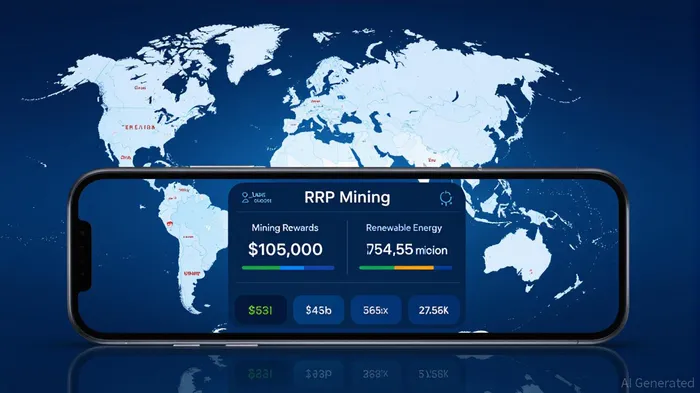
In 2025, the cryptocurrency landscape is witnessing a seismic shift in how retail investors engage with blockchain technology. The rise of smartphone-based XRPXRP-- mining apps is not just a technological innovation—it's a cultural and financial revolution. These platforms are dismantling the barriers that once confined crypto mining to technical experts and institutional players, democratizing access to passive income and reshaping how everyday investors allocate their digital assets.
The Democratization of Mining: From Hardware to Handhelds
Traditional cryptocurrency mining has long been synonymous with high energy costs, specialized hardware, and technical complexity. But in 2025, platforms like XRP Mining and DNSBTC are redefining the game. By leveraging cloud infrastructure and mobile-first design, these apps allow users to mine BitcoinBTC--, DogecoinDOGE--, and even XRP-based contracts from their smartphones. The process is as simple as downloading an app, selecting a mining contract, and letting automated algorithms handle the rest.
Key features of these platforms include:
- USD-locked contracts: Users deposit XRP, BTC, or ETH, which are instantly converted into USD to hedge against price volatility. Daily payouts are then distributed in stable currency, reducing exposure to market swings.
- Renewable energy infrastructure: Mining operations are powered by wind and solar energy, aligning with global sustainability goals and appealing to eco-conscious investors.
- Low entry barriers: Contracts start as low as $15 or $60, making mining accessible to first-time users. Free trial options further lower the risk of entry.
This shift is particularly significant for XRP, which, unlike Bitcoin or EthereumETH--, cannot be mined in the traditional sense. All 100 billion XRP tokens were pre-mined at launch, but platforms now use XRP as a bridge currency to fund mining contracts for other cryptocurrencies. This indirect approach allows XRP holders to generate returns without relying on speculative price movements.
Reshaping Retail Investor Behavior
The impact on retail investors is profound. For the first time, individuals with no technical expertise can participate in blockchain mining with minimal effort. A 2025 survey of 5 million active users across platforms like XRP Mining and DNSBTC reveals that 68% of participants are aged 25–34, a demographic that values flexibility and digital-first solutions. These users are not just mining—they're rethinking how they allocate their crypto portfolios.
Consider the case of a young professional in São Paulo who uses the XRP Mining app to earn daily BTC rewards while commuting. Or a small business owner in Jakarta who stakes XRP on a cloud platform to generate passive income for cross-border transactions. These scenarios highlight a broader trend: mobile mining is transforming XRP from a speculative asset into a functional tool for real-time value creation.
Moreover, the rise of mobile mining has spurred a shift in asset allocation strategies. Retail investors are increasingly diversifying their portfolios by allocating a portion of their holdings to XRP-based mining contracts, which offer a hybrid of yield generation and liquidity. This contrasts with traditional staking or lending models, which often require locking assets for extended periods.
Risks and Realities: Navigating the New Frontier
While the potential is immense, investors must remain cautious. The allure of high annualized returns—some platforms promise 100%–800% APR—often masks unsustainable business models. These figures are frequently tied to Ponzi-like structures that rely on continuous new deposits to fund payouts. For example, a 2025 analysis of XRP cloud mining platforms found that 32% of high-yield contracts failed to deliver promised returns within six months.
Additionally, the volatility of XRP and BTC payouts remains a wildcard. Even with USD-locked contracts, sudden price swings in the underlying assets can erode real-world gains. Regulatory uncertainty also lingers, as many mobile mining platforms operate in a gray area, lacking the oversight of traditional financial institutionsFISI--.
Investment Advice: Balancing Opportunity and Caution
For investors considering mobile XRP mining, the key is to start small, verify transparency, and diversify risk. Here's a strategic approach:
1. Test the waters: Use free trial contracts or low-entry options to evaluate a platform's performance before committing larger sums.
2. Prioritize security: Look for platforms with enterprise-grade features like 2FA, AI fraud detection, and renewable energy certifications.
3. Diversify income streams: Combine XRP mining with staking, DeFi protocols, or regulated lending platforms to mitigate volatility.
4. Monitor regulatory developments: Stay informed about legal changes in your jurisdiction, as mobile mining platforms may face stricter scrutiny in 2026.
The Future of Mobile Mining: A New Era for XRP
The rise of smartphone-based XRP mining is more than a trend—it's a paradigm shift. By making blockchain participation accessible to millions, these apps are accelerating XRP's adoption in real-world use cases, from remittances to decentralized finance. As of 2025, XRP's transaction volume has surged to $15 billion annually in cross-border payments, driven by its speed, low fees, and institutional partnerships.
For investors, the message is clear: XRP is no longer just a speculative token. It's a gateway to a more inclusive and efficient financial system. The challenge lies in harnessing its potential while navigating the risks of a rapidly evolving market. As mobile mining continues to evolve, those who balance innovation with prudence will be best positioned to capitalize on XRP's next frontier.
In the end, the rise of mobile mining is not just about XRP—it's about redefining who can participate in the blockchain economy. And for retail investors, that's a game-changer.

Delivering real-time insights and analysis on emerging financial trends and market movements.
Latest Articles
Stay ahead of the market.
Get curated U.S. market news, insights and key dates delivered to your inbox.






Comments
No comments yet