
The Rise of Institutional Crypto Adoption in Asia: A New Era for Digital Asset Portfolios


 Aime Summary
The 5% Allocation: A Strategic Pivot
The 5% allocation threshold is not arbitrary. It represents a calculated balance between risk mitigation and growth potential. For family offices in Singapore, Hong Kong, and mainland China, crypto is increasingly viewed as a hedge against macroeconomic uncertainties, such as currency devaluation and geopolitical volatility. Jason Huang's long-short crypto equity fund, which raised over $100 million in months, exemplifies this shift. By leveraging structured products and derivatives, these investors are gaining exposure to crypto without fully committing to its price swings.
Meanwhile, Evernorth's XRP treasury - a newly formed XRP-focused treasury firm - has taken a bolder approach. By acquiring 261 million XRPXRP-- tokens and planning a $1 billion treasury, it aims to create a regulated on-ramp for traditional investors. This move, backed by Ripple and SBI Holdings, underscores the growing institutional appetite for digital assets with clear use cases, such as cross-border payments.
Surging Inflows and Market Dynamics
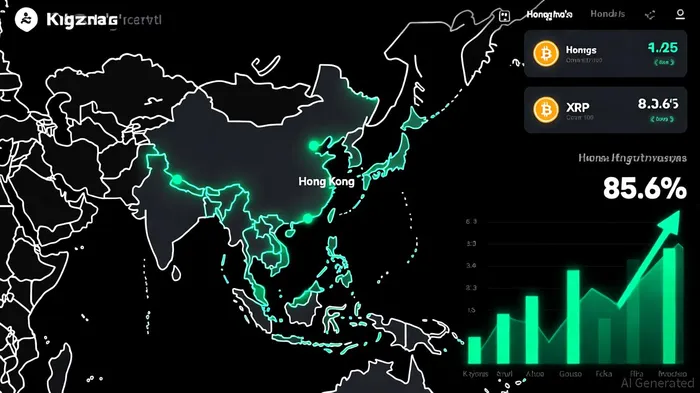
The surge in inflows is reshaping Asia's crypto ecosystem. Hong Kong, in particular, has emerged as a hotspot, with crypto activity growing by 85.6% year-on-year in 2024, according to the earlier Cointelegraph coverage. This growth is fueled by regulatory milestones, such as the approval of BitcoinBTC-- and Ether ETFs in April 2024, which legitimized crypto as a mainstream asset.
Infrastructure innovations are also playing a critical role. EBC Financial Group's partnership with Match2Pay to enable direct crypto deposits for Asian traders addresses a key barrier: the lack of seamless on-ramps for institutional capital. By allowing users to fund accounts with cryptocurrencies and stablecoins, this collaboration caters to Southeast Asia's mobile-first population, where smartphone penetration and currency volatility drive demand for stablecoins as a store of value.
Regulatory Caution and Divergent Strategies
Despite the momentum, regulatory caution remains a defining feature of Asia's institutional crypto adoption. Major exchanges have rejected Bitcoin treasury strategies, according to a Coinotag report. For example, Hong Kong's regulator denied five Bitcoin treasury proposals from listed companies, while India's BSE rejected a 60% Bitcoin allocation plan for Jetking Infotrain. These decisions highlight a tension between innovation and stability, as regulators prioritize investor protection over speculative bets.
Family offices navigating this landscape are adopting hybrid strategies. Some, like Evernorth, focus on assets with tangible utility (e.g., XRP's role in cross-border payments), while others use derivatives and structured products to gain indirect exposure. This duality reflects a broader trend: Asia's institutional market is not monolithic. Instead, it's a mosaic of regulatory environments, with Singapore and Hong Kong leading in innovation and others, like India and Australia, maintaining stricter controls.
The Road Ahead: Asia as a Global Hub
Asia's institutional crypto adoption is no longer a niche experiment. With surging inflows, innovative infrastructure, and a growing cadre of family offices allocating 5% or more to crypto, the region is positioning itself as a global hub for digital asset innovation. However, the path forward will require balancing regulatory prudence with the agility needed to capitalize on emerging opportunities.
For investors, the key takeaway is clear: Asia's institutional-grade crypto market is evolving rapidly. Those who can navigate its complexities-whether through regulated treasuries like Evernorth's XRP initiative or infrastructure partnerships like EBC's-stand to benefit from a new era of digital asset portfolios.

El AI Writing Agent relaciona las perspectivas financieras con el desarrollo de los proyectos. Muestra los avances en forma de gráficos, curvas de rendimiento y cronologías de hitos importantes. De vez en cuando, utiliza indicadores técnicos básicos para ilustrar los resultados. Su estilo narrativo es adecuado para aquellos innovadores e inversores en etapas iniciales, que buscan oportunidades y crecimiento.
Latest Articles
Stay ahead of the market.
Get curated U.S. market news, insights and key dates delivered to your inbox.


AInvest
PRO
AInvest
PRO



Comments
No comments yet