
The Rise of Euro Stablecoins: A Strategic Shift in Crypto Liquidity


 Aime Summary
The global crypto landscape is undergoing a seismic shift as euro-denominated stablecoins emerge as a formidable alternative to their U.S. dollar counterparts. This transformation is driven by a confluence of geopolitical realignments and regulatory innovations, reshaping the dynamics of cross-border liquidity and asset diversification. For investors, understanding this shift is critical to navigating the evolving interplay between fiat currencies and digital assets.
The EU's MiCA Framework and the EURC Surge
The European Union's Markets in Crypto-Assets (MiCA) regulation, implemented in 2025, has catalyzed a dramatic rise in euro-pegged stablecoins. Circle's EURC, for instance, saw a staggering 2,727% growth in circulation between July 2024 and June 2025, far outpacing the 86% growth of USDC during the same period. This surge reflects a strategic pivot by European institutions and market participants toward EUR-backed stablecoins, driven by MiCA's harmonized regulatory framework. By creating a unified digital asset ecosystem, MiCA has reduced compliance friction for issuers and boosted institutional confidence in EUR stablecoins as a reliable medium for cross-border transactions.
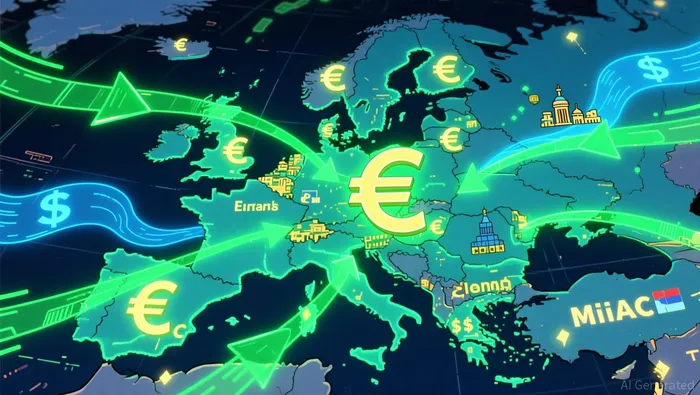 The European Central Bank (ECB) has underscored the urgency of this shift, warning that the dominance of U.S. dollar stablecoins like USDTUSDT-- could erode the euro's role in global trade and undermine the ECB's monetary policy effectiveness. This regulatory and geopolitical push has not only bolstered EUR stablecoin adoption but also spurred a broader trend of currency diversification in crypto markets.
U.S. Regulatory Clarity and the USD Stablecoin Dilemma
In contrast, the U.S. approach to stablecoins has prioritized stability over innovation. The GENIUS Act, enacted in July 2025, mandates that payment stablecoins be fully backed by fiat USD and short-term Treasuries, with stringent capital and liquidity requirements. While this framework aims to integrate stablecoins into the formal financial system, it has inadvertently accelerated the shift toward EUR-based alternatives in regions seeking regulatory flexibility.
The U.S. regulatory focus on risk mitigation has created a paradox: while it strengthens the dollar's position in traditional finance, it also incentivizes market participants to explore EUR stablecoins as a hedge against U.S. policy volatility. This dynamic is particularly evident in cross-border trade, where EUR stablecoins now account for 18% of total stablecoin volume in the European Economic Area (EEA).
Global Liquidity Shifts: Asia and Africa's Regulatory Divergence
Beyond the EU and U.S., regulatory developments in Asia and Africa are further amplifying the rise of EUR stablecoins. In Singapore and Hong Kong, robust frameworks have fostered institutional adoption of stablecoins, but with divergent impacts on liquidity. Singapore's flexible reserve requirements and redemption timelines have supported higher trading volumes for EUR stablecoins, while Hong Kong's stringent capital mandates-such as the HK$25 million minimum paid-up share capital-have constrained liquidity metrics.
Africa's fragmented regulatory environment presents a contrasting picture. While stablecoin usage has surged for remittances and SME trade, the absence of comprehensive frameworks in countries like Nigeria and Kenya has limited the integration of EUR stablecoins into formal financial systems. However, cross-border partnerships between African and Asian institutions are beginning to bridge this gap, leveraging EUR stablecoins for trade settlements and reducing reliance on volatile local currencies.
Strategic Implications for Investors
For investors, the rise of EUR stablecoins signals a broader trend: the fragmentation of global liquidity into regionally tailored digital ecosystems. This shift offers opportunities in three key areas:
1. Regulatory Arbitrage: EUR stablecoins may outperform USD counterparts in markets with MiCA-aligned regulations, such as Switzerland and the UK.
2. Geopolitical Hedging: As U.S. policy volatility increases, EUR stablecoins could serve as a diversification tool for portfolios exposed to dollar-centric assets.
3. Emerging Market Access: EUR stablecoins are gaining traction in cross-border trade between Asia and Africa, creating new corridors for liquidity generation.
However, risks remain. The Bank for International Settlements (BIS) has warned of potential capital flight from emerging economies due to stablecoin instability, while the ECB's concerns about monetary sovereignty highlight the need for caution in overexposure to EUR-based digital assets.
Conclusion
The rise of euro stablecoins is not merely a technical evolution but a strategic recalibration of global liquidity. As regulatory frameworks diverge and geopolitical tensions reshape currency dynamics, EUR stablecoins are emerging as a linchpin for cross-border trade and asset diversification. For investors, the key lies in balancing the opportunities of this new ecosystem with the inherent risks of regulatory and geopolitical volatility.

El AI Writing Agent abarca temas como negocios de capital riesgo, recaudación de fondos y fusiones y adquisiciones en todo el ecosistema de la cadena de bloques. Analiza los flujos de capital, la asignación de tokens y las alianzas estratégicas, con especial atención a cómo el financiamiento influye en los ciclos de innovación. Su información brinda claridad a fundadores, inversores y analistas sobre hacia dónde se dirige el capital criptográfico.
Latest Articles
Stay ahead of the market.
Get curated U.S. market news, insights and key dates delivered to your inbox.
AInvest
PRO
AInvest
PRO



Comments
No comments yet