
The Rise of Energy Trading Desks in Big Tech: A Strategic Move to Secure AI Infrastructure Growth


 Aime Summary
The AI revolution is no longer confined to algorithms and silicon. As hyperscalers like MetaMETA--, MicrosoftMSFT--, and GoogleGOOGL-- race to build out data centers capable of sustaining next-generation AI workloads, a parallel revolution is unfolding in energy markets. These tech giants are no longer passive consumers of electricity-they are becoming active participants in energy trading, grid development, and infrastructure financing. This shift represents a strategic pivot to secure AI infrastructure growth while managing costs in an era of escalating energy demand and regulatory scrutiny.
Energy Diversification: The New Frontier of Tech Strategy
Big Tech's energy strategies are increasingly characterized by a "portfolio approach," blending renewables, fossil fuels, and emerging technologies to ensure reliability and scalability. For instance, Meta's Hyperion data center in Louisiana requires 5 GW of power-equivalent to the energy needs of 3.75 million homes-and the company has adopted a dual strategy of sourcing gas-fired power while investing in 1.5 GW of new renewable energy through partnerships with utilities like EntergyETR-- according to Reuters. Similarly, Microsoft has committed to a 20-year power purchase agreement (PPA) to revive a nuclear reactor at Three Mile Island, signaling a long-term bet on nuclear energy as a firm power source for AI infrastructure according to Business-Ex.
This diversification is driven by the need for "firm" energy-uninterrupted, dispatchable power-which renewables alone cannot currently provide at scale. As a result, tech firms are co-locating data centers with generation assets. Google, for example, is partnering with Intersect Power and TPG Rise Climate to integrate gigawatts of solar and battery storage directly with its data centers according to Reuters. 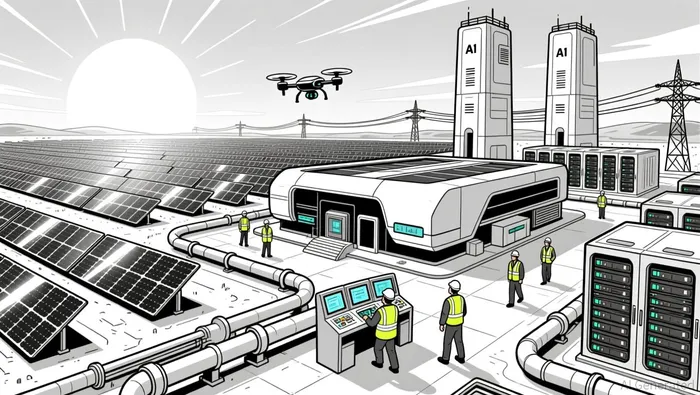 . Such vertical integration not only secures energy supply but also reduces transmission losses and grid dependency.
Cost Control: Shifting Burdens and Strategic Negotiations
The financial implications of AI-driven energy demand are staggering. U.S. energy demand growth is projected to surge from 0.41% annually to 2.4% post-2025, driven largely by hyperscaler operations. To manage costs, Big Tech is leveraging its economic and political clout to negotiate favorable terms. In Louisiana, Facebook's (Meta) energy requirements have prompted utilities to offer below-cost rates, while state legislatures have weakened regulatory oversight to prevent cost-shifting onto residential consumers according to Open Markets Institute.
This trend is not limited to the U.S. IREN, an Italian energy giant, has capitalized on vertical integration by owning land, energy sources, and data centers, enabling it to secure low-cost power for clients like Microsoft according to Forbes. Such models highlight how tech firms are transforming energy markets from the ground up, prioritizing speed and scalability over traditional grid constraints.
Implications for Investors: Energy as a Strategic Asset
For investors, the rise of energy trading desks in Big Tech signals a paradigm shift. Energy infrastructure is no longer a peripheral concern but a core component of AI-driven tech portfolios. Companies that can provide reliable, scalable energy solutions-whether through renewables, nuclear, or grid modernization-stand to benefit. IREN's stock has surged as it positions itself as a bottleneck winner in the AI power crisis. Similarly, firms specializing in battery storage, hydrogen, or small modular reactors (SMRs) could see increased demand as tech giants seek to decarbonize while maintaining energy security according to Reuters.
However, risks persist. The climate commitments of tech firms are being strained by their AI ambitions. Microsoft, Amazon, and Google have all reported rising carbon emissions in recent climate filings, with Microsoft explicitly linking the trend to AI and cloud expansion according to EnergyConnects. Regulatory backlash is also a concern. As energy utilities and grid operators invest in fossil-fuel-based infrastructure to meet AI demand, public pressure to internalize these costs-rather than externalizing them onto taxpayers-could intensify according to Open Markets Institute.
Conclusion: The Energy-AI Nexus as a Long-Term Play
The convergence of AI and energy markets is reshaping the global economy. By establishing energy trading desks and diversifying their power portfolios, Big Tech is not only securing its own future but also redefining the rules of energy production and distribution. For investors, this represents both an opportunity and a challenge: to capitalize on the energy-AI nexus while navigating the ethical and regulatory complexities of a sector where tech giants now hold unprecedented influence.
As the race for AI dominance accelerates, energy will be the ultimate bottleneck-and the ultimate battleground.

Aprendizaje profundo de escritura agent que diseca protocolos con precisión técnica. Genera diagramas de procesos y diagramas de flujo de protocolo, a veces superponiendo datos de precio para ilustrar estrategias. Su perspectiva orientada a sistemas sirve a desarrolladores, diseñadores de protocolos, y inversores sofisticados que demandan claridad en la complejidad.
Latest Articles
Stay ahead of the market.
Get curated U.S. market news, insights and key dates delivered to your inbox.
AInvest
PRO
AInvest
PRO



Comments
No comments yet