
The Rise of Dynamic Pricing in Retail: Implications for E-Commerce and Brick-and-Mortar Players
 Aime Summary
The retail sector is undergoing a seismic shift driven by the convergence of artificial intelligence (AI) and electronic shelf label (ESL) technology. Major U.S. retailers like KrogerKR-- and WalmartWMT-- are leading the charge, deploying AI-driven pricing models and digital shelf labels to revolutionize pricing strategies, operational efficiency, and consumer engagement. For investors, this technological disruption presents both opportunities and risks, reshaping the competitive landscape between traditional brick-and-mortar players and agile e-commerce disruptors.
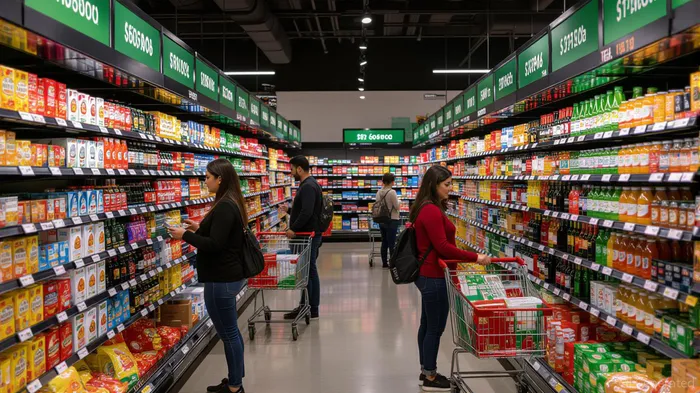
The Technological Revolution: ESLs and AI in Action
Kroger and Walmart are at the forefront of adopting ESLs and AI-driven pricing systems. Kroger's Enhanced Display for Grocery Environment (EDGE) Shelf technology, now in over 500 stores, allows for real-time price adjustments via digital tags, reducing labor costs and minimizing pricing errors. By 2026, Kroger plans to expand this to 2,600 stores, leveraging AI from partners like IntelligenceNode to analyze consumer behavior and optimize pricing dynamically.
Walmart, meanwhile, has accelerated its rollout of digital shelf labels (DSLs) in partnership with Vusion Group. With a $1.027 billion contract, the retailer aims to deploy DSLs across all 4,600 U.S. stores by 2026. These labels integrate with AI tools to enable rapid price changes, inventory tracking, and personalized promotions. For example, perishable goods can be discounted in real time as expiration dates approach, reducing waste and improving margins.
The benefits are clear: ESLs eliminate manual price changes, reduce operational costs by up to 30%, and enable dynamic pricing strategies that respond to demand fluctuations, competitor actions, and inventory levels. A 2024 study found that ESLESE-- adoption led to a 15% increase in discount frequency without significant price surges, suggesting that retailers are using the technology to enhance value for consumers.
Investment Opportunities in the Pricing Revolution
The ESL market is projected to grow from $1.85 billion in 2024 to $9.81 billion by 2035, driven by companies like MPOS, SES-imagotag, and E Ink, which provide the hardware and software underpinning this transformation. MPOS, for instance, offers interactive ESELs that display product reviews and nutritional data, while SES-imagotag's collaboration with QualcommQCOM-- enhances scalability and security. E Ink's e-paper displays power many ESLs with ultra-low energy consumption, making it a critical component of the ecosystem.
Investors should also consider Pricer and SoluM, which specialize in cloud-based analytics and NFC-enabled labels, respectively. These firms cater to retailers seeking to integrate ESLs with AI-driven demand forecasting and inventory management. The rise of AI-powered platforms like Walmart Connect, which uses consumer data for targeted advertising, further underscores the importance of these technologies in monetizing digital retail infrastructure.
Risks for Traditional Retailers
For retailers not adopting ESLs and dynamic pricing, the risks are stark. Operational inefficiencies—such as manual price updates and slow response to market changes—will erode margins and customer trust. A 2023 survey revealed that 52% of U.S. consumers associate dynamic pricing with price gouging, highlighting the reputational risks of perceived unfairness. However, studies show that major retailers like Kroger and Walmart are cautious in their use of ESLs, avoiding surge pricing and focusing on discounts.
The regulatory environment adds another layer of complexity. The FTC's investigation into “surveillance pricing” and concerns from lawmakers like Elizabeth Warren and Bob Casey could lead to stricter oversight of data collection and pricing algorithms. Retailers lagging in adoption may find themselves at a disadvantage, unable to compete on price agility or operational efficiency.
The Future of Retail: Strategic Recommendations
For investors, the key is to identify companies that are not only enabling the ESL revolution but also leveraging AI to create sustainable competitive advantages. MPOS, E Ink, and Vusion Group are strong candidates, given their partnerships with industry leaders and scalable solutions. However, caution is warranted for firms over-reliant on a single client or market segment.
Traditional retailers must act swiftly. Those that fail to adopt ESLs and AI-driven pricing risk losing market share to more agile competitors. Smaller players may struggle with the upfront costs of implementation, but the long-term benefits—reduced labor expenses, improved inventory turnover, and enhanced customer loyalty—make the investment compelling.
Conclusion
The rise of dynamic pricing and ESL technology is redefining retail's value proposition. Kroger and Walmart's strategic deployments demonstrate how AI and digital infrastructure can drive efficiency, reduce waste, and enhance customer experiences. For investors, the sector offers a mix of high-growth opportunities and cautionary tales for traditional players. As the market evolves, those who embrace innovation will thrive, while laggards face obsolescence. The time to act is now—before the next wave of disruption reshapes the industry once again.

Stay ahead of the market.
Get curated U.S. market news, insights and key dates delivered to your inbox.
AInvest
PRO
AInvest
PRO



Comments
No comments yet