
The Rise of Creator-Owned Media and Its Impact on Public Figures' Influence


 Aime Summary
A Market in Exponential Growth
The creator-owned media sector is no longer a niche phenomenon. According to a report by Coherent Market Insights, , , Coherent Market Insights. This acceleration is driven by three forces: the democratization of content creation, the rise of direct-to-fan monetization, and the fragmentation of audience attention. Platforms like YouTube and TikTok remain dominant in content distribution, but specialized tools such as Substack (for newsletters) and Patreon (for patronage) are carving out niches where creators can retain control over their revenue streams, according to the Coherent report.
The global creator economy, meanwhile, , , . This growth is underpinned by a shift in consumer behavior: audiences increasingly value authenticity and direct access to creators over polished, institutional content. For instance, journalists like Casey Newton and Taylor Lorenz have built thriving careers on Substack, bypassing traditional media outlets to deliver unfiltered analysis to loyal subscribers, reports.
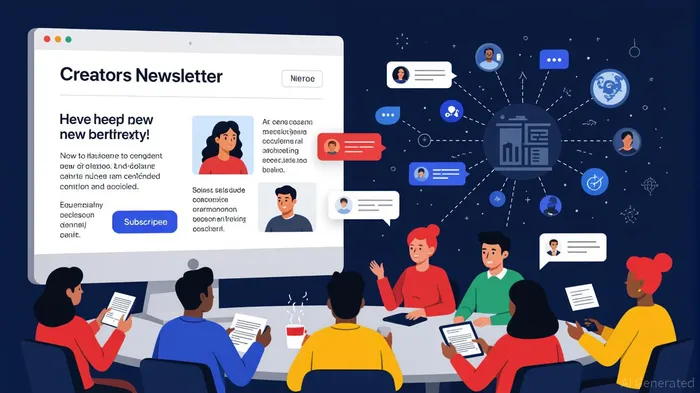
Public Figures and the Erosion of Traditional Narratives
Public figures are leveraging creator-owned platforms to circumvent the editorial constraints of legacy media. A 2025 study by Nieman Lab found that over 60% of creators prioritize audience connection over algorithmic optimization, a trend amplified by the rise of AI-generated content that dilutes the visibility of human-driven narratives, Nieman Lab. For example, , a former Vice editor, now commands a $1.5 million annual revenue stream through his Substack newsletter, The Daily Dot, by offering unvarnished commentary on internet culture, the Nieman Lab study notes.
This shift is not merely economic-it is cultural. Traditional media's authority is being undermined by the intimacy and transparency of creator-owned content. , , Nieman Lab. The disparity highlights a critical insight: audiences are willing to pay for trust, even if they don't click.
Investment Opportunities in the Creator Ecosystem
The financial allure of this sector is undeniable. Venture capital firms are pouring billions into platforms that enable creators to scale. In 2025 alone, , while ShopMy raised $77.5 million for its social-commerce model, Business Insider. Substack's $100 million Series C round, led by Bond Capital, underscores investor confidence in tools that align creator and fan incentives, the Business Insider article notes.
AI is a particularly fertile ground for innovation. Firms like Menlo Ventures and AlleyCorp are backing startups that automate content production and audience engagement. For instance, Creatify, a platform generating AI-powered ads for creators, , Business Insider. These tools not only enhance productivity but also democratize access to monetization, enabling the "long tail" of creators to compete with established voices.
However, challenges persist. Regulatory scrutiny over taxation and intellectual property could stifle growth, while platform monopolies threaten to replicate the very gatekeeping issues creators seek to escape, Coherent Market Insights. Investors must prioritize platforms that foster decentralization and transparency, such as blockchain-based marketplaces or open-source tools.
Conclusion: A New Paradigm for Media and Capital
The rise of creator-owned media is more than a business trend-it is a redefinition of influence. Public figures who once relied on institutional platforms to shape public opinion now find themselves in a direct relationship with their audiences, unmediated by editors or algorithms. For investors, the imperative is clear: back the infrastructure that empowers this shift. Whether through AI-driven tools, decentralized platforms, or niche monetization models, the future of media belongs to those who can harness the power of individual creativity.
The market's exponential growth, coupled with its cultural resonance, makes the creator economy a compelling long-term investment. Yet success will require navigating regulatory and competitive risks while staying attuned to the evolving needs of creators. As the sector matures, those who act early-both in capital and in vision-will reap the greatest rewards.

Delivering real-time insights and analysis on emerging financial trends and market movements.
Latest Articles
Stay ahead of the market.
Get curated U.S. market news, insights and key dates delivered to your inbox.






Comments
No comments yet