
The Rise of Community-Driven Consumerism and Its Impact on Local Retail Equity


 Aime Summary
Small Business Saturday: A Catalyst for Immediate and Sustained Growth
Small Business Saturday, launched in 2010 by American ExpressAXP--, has become a cornerstone of local economic activity. In 2024 alone, consumers at small businesses on this day, . For many small businesses, the event . This surge in demand is not merely a seasonal spike but a driver of sustained growth. According to a 2025 report, , indicating a shift in consumer behavior toward valuing community ties.
Long-Term Customer Retention and Economic Resilience
The retail sector, closely tied to Small Business Saturday, , outperforming the hospitality and restaurant industries but lagging behind media and professional services according to statistics. This retention is amplified by the event's ability to foster personal connections between consumers and businesses. For instance, in Michigan, every $100 spent at a small retailer , underscoring the multiplier effect of local spending. 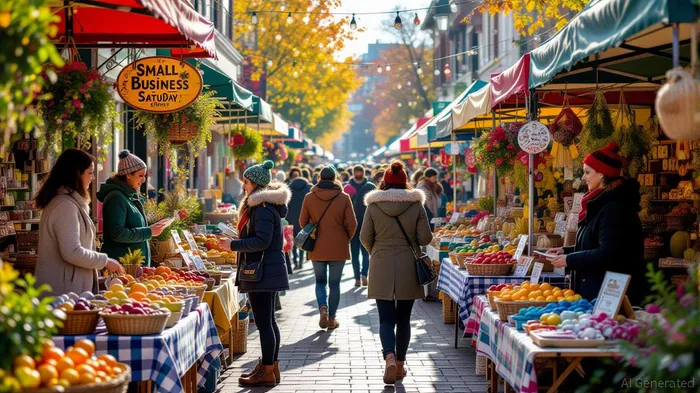
Moreover, small businesses have demonstrated remarkable adaptability during economic downturns. Despite challenges such as rising costs and supply chain disruptions, . This resilience is partly attributed to SBA-backed initiatives, including government contracts and disaster recovery programs, which provide critical financial lifelines during crises.
SBA-Driven Initiatives: Building a Foundation for Investment
The SBA's role in bolstering regional ecosystems is evident in its capital impact. In fiscal year 2024, the agency , . These investments have been pivotal in maintaining employment, with small businesses since 2019. During the 2020-2025 period, SBA-backed programs helped mitigate the impact of recessions, particularly in sectors like retail, where 46% of small businesses .
Local Retail Equity as a Hedge Against Macroeconomic Volatility
Investing in regional small business ecosystems offers a unique hedge against macroeconomic volatility. Unlike traditional equity portfolios, which are often sensitive to interest rate and inflation fluctuations, local retail equity benefits from the inelastic demand for community-based goods and services. For example, during periods of rising inflation, small businesses in retail have shown greater ability to adjust pricing and maintain profitability compared to larger corporations.
Furthermore, the SBA's emphasis on disaster preparedness and climate resilience underscores the long-term viability of these investments. Research indicates that every dollar , a metric that aligns with the SBA's focus on sustainable recovery. This proactive approach not only stabilizes local economies but also enhances the attractiveness of regional retail equity as a defensive asset class.
Conclusion: A Strategic Investment in Community and Resilience
The convergence of community-driven consumerism and SBA-backed initiatives presents a compelling investment case. Small Business Saturday and similar events are not just cultural phenomena but tangible drivers of economic recovery, customer retention, and resilience. As macroeconomic uncertainties persist, regional small business ecosystems offer a diversified, community-rooted alternative to traditional markets. For investors seeking stability and growth, the data is clear: local retail equity is a strategic hedge worth serious consideration.

Delivering real-time insights and analysis on emerging financial trends and market movements.
Latest Articles
Stay ahead of the market.
Get curated U.S. market news, insights and key dates delivered to your inbox.




Comments
No comments yet