
The Rise of Clean Energy Marketplaces: How REsurety's CleanTrade is Reshaping the Future of Sustainable Energy Investing


 Aime Summary
Market Infrastructure Innovation: A New Paradigm for Clean Energy Trading
Traditional energy markets have thrived on standardized, transparent, and liquid trading mechanisms. Clean energy, by contrast, has been plagued by fragmented pricing, opaque counterparty risks, and a lack of structured tools to manage volatility. CleanTrade tackles these challenges head-on by introducing a centralized, CFTC-regulated platform for trading Virtual Power Purchase Agreements (VPPAs), physical Power Purchase Agreements (PPAs), and project-specific Renewable Energy Certificates (RECs) as reported.
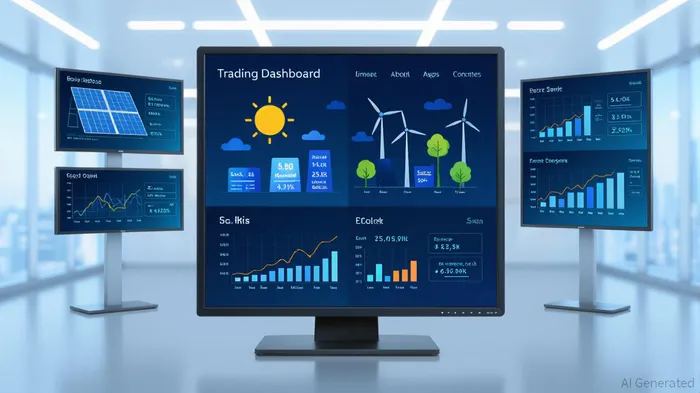 The platform's technological innovations are equally transformative. Real-time price visibility, automated risk mitigation, and granular tracking of decarbonization metrics enable corporations to meet sustainability targets with precision according to Bitget. For instance, within just two months of its launch, CleanTrade facilitated $16 billion in notional value of transactions, a testament to its ability to aggregate demand and supply in a previously disjointed market as confirmed. This level of operational rigor-mirroring that of traditional energy markets-has begun to bridge the gap between clean energy's environmental promise and its financial viability.
Liquidity Creation: From Niche to Mainstream
Liquidity has been a persistent bottleneck in clean energy markets. Prior to CleanTrade, buyers and sellers often faced protracted negotiations, limited price discovery, and high transaction costs. By standardizing contracts and enabling secondary market trading, CleanTrade has injected much-needed dynamism into the sector.
Consider the case of ESG funds and infrastructure investors. These players now have access to structured products and hedging tools that allow them to manage price volatility while aligning with decarbonization goals. According to a report by Bitget, 77% of sustainable investors prioritized ESG integration between 2023 and 2025, a trend CleanTrade has amplified by offering a transparent, rules-based marketplace according to Bitget. The platform's ability to reduce counterparty risk and streamline workflows has also lowered the cost of project financing, particularly in high-growth areas like solar power and electric vehicles as noted.
ESG Alignment and Institutional Investor Impact
CleanTrade's influence extends beyond liquidity to the very fabric of ESG investing. Institutional investors, historically cautious about greenwashing accusations, now have access to granular data on project-specific carbon metrics and financial performance. This transparency not only enhances accountability but also enables more targeted sustainability strategies.
For example, infrastructure investors can now efficiently allocate capital to projects with verifiable environmental impact, while corporations can track their carbon footprints with unprecedented accuracy as detailed. The platform's role in democratizing access to clean energy assets-whether through RECs or VPPAs-has also broadened the investor base, attracting capital from sectors previously hesitant to engage in renewable markets.
Conclusion: A Catalyst for the Energy Transition
REsurety's CleanTrade is more than a trading platform; it is a catalyst for systemic change. By addressing market infrastructure gaps, it has created a blueprint for scaling clean energy investments while aligning financial returns with environmental outcomes. For investors, the implications are clear: a more liquid, transparent, and standardized market reduces risk, enhances efficiency, and opens the door to a broader array of sustainable opportunities.
As the clean energy transition accelerates, platforms like CleanTrade will be critical in ensuring that the promise of decarbonization is matched by the pragmatism of capital markets. The $16 billion milestone is not just a number-it is a signal that the future of sustainable investing is here, and it is being built on innovation.

Blending traditional trading wisdom with cutting-edge cryptocurrency insights.
Latest Articles
Stay ahead of the market.
Get curated U.S. market news, insights and key dates delivered to your inbox.




Comments
No comments yet