
The Rise of Clean Energy Infrastructure in the UK: Strategic Investments Powering a Net-Zero Future
 Aime Summary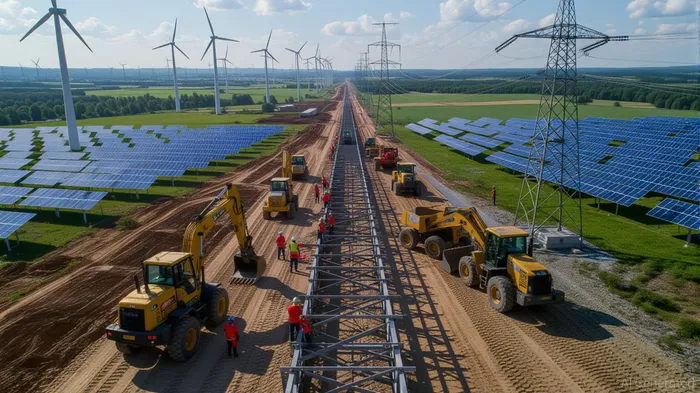
The UK's clean energy revolution is gaining momentum, driven by a confluence of policy ambition, technological innovation, and private-sector collaboration. At the heart of this transformation lies the National Grid's £8 billion Electricity Transmission Partnership (ETP), a cornerstone of the country's £35 billion RIIO-T3 investment plan. This initiative, spanning 2026 to 2031, aims to double the capacity of the UK's transmission network and expand customer connections, directly supporting the nation's net-zero goals. For institutional and ESG-focused investors, the ETP represents not just a regulatory obligation but a strategic opportunity to align capital with the future of energy security and decarbonization.
The ETP: A Catalyst for Renewable Integration
The ETP's regional delivery model is a game-changer for the UK's energy infrastructure. By awarding substation work to regional partners like Balfour Beatty and Morgan Sindall, National GridNGG-- is fostering localized supply chains and incentivizing high-quality, sustainable delivery. This approach is designed to accelerate the integration of renewable energy—offshore wind, solar, and onshore wind—into the grid, which the government's Clean Power 2030 Action Plan targets at 43–50GW, 27–29GW, and 45–47GW, respectively, by 2030.
The ETP's £1.3 billion in identified contracts for 130 substation projects across England and Wales will create thousands of jobs and stimulate local economies. More importantly, it addresses a critical bottleneck: the UK's aging transmission network, which must evolve to handle the variable output of renewable sources. By modernizing infrastructure, the ETP ensures that the grid can reliably transport clean power from remote generation sites to urban centers, reducing reliance on fossil fuels and enhancing energy resilience.
Private-Sector Partners: Balfour Beatty and Morgan Sindall
The success of the ETP hinges on the capabilities of its private-sector partners, who are also leaders in ESG-driven infrastructure. Balfour Beatty, with its updated Building New Futures Sustainability Strategy, exemplifies this ethos. The company's £6 billion social value target by 2030—up from £3 billion by 2025—reflects its commitment to community engagement, while its nature-positive initiatives, including 60,000 hours of education engagement by 2030, align with the UK's biodiversity goals. Balfour Beatty's ESG performance, evidenced by a 2023 FTSE4Good score of 3.3/5 and a CDP rating of B, underscores its role as a credible partner in the energy transition.
Meanwhile, Morgan Sindall Infrastructure has positioned itself as a linchpin in the UK's energy transition. Its involvement in the Great Grid Partnership—a £5.4 billion initiative with ScottishPower Energy Networks—highlights its expertise in grid modernization. Morgan Sindall's science-based carbon reduction targets—60% emissions cut by 2030 and 90% by 2045—align with the Paris Agreement, and its A rating from CDP in 2024 further validates its environmental leadership. The company's innovative tools, such as CarboniCa for whole-life carbon assessment, and its nature-based projects (e.g., 270,000 trees planted at Dorn Valley Woodland) demonstrate a holistic approach to ESG.
Broader Investment Opportunities in UK Clean Energy
For institutional and ESG investors, the UK's clean energy infrastructure offers a diverse array of opportunities:
Corporate Power Purchase Agreements (CPPAs): As an alternative to government-backed contracts, CPPAs are enabling corporations to directly fund renewable projects while managing energy risk. The rise of virtual PPAs (VPPAs) further amplifies this trend, creating a market where clean energy developers and buyers can collaborate without grid constraints.
EV Charging Infrastructure: With the UK's 2030 petrol/diesel phase-out date reinstated, demand for EV charging networks is surging. Morgan Sindall's work on HGV charging solutions and cross-pavement charging for urban areas positions it—and by extension, investors—as a key player in this sector.
Data Centers and Energy Security: The UK data center market, projected to grow at a 10.49% CAGR through 2029, requires robust energy infrastructure. Hyperscale data centers, which demand high-capacity grid connections, are increasingly partnering with energy developers to secure CPPAs and private-wire PPAs, aligning with the ETP's objectives.
Clean Power 2030 Targets: Achieving the government's 2030 clean energy goals will require £35 billion in transmission investment, with the ETP as its backbone. This creates a pipeline of projects for contractors like Balfour Beatty and Morgan Sindall, whose regional delivery models ensure localized expertise and supply chain resilience.
Strategic Implications for Investors
The UK's clean energy transition is not without challenges. Regulatory shifts, supply chain bottlenecks, and the energy demands of emerging technologies like AI could strain resources. However, these risks also highlight the importance of strategic, long-term investments.
For ESG-focused investors, the alignment of the ETP with the UK's net-zero strategy and broader economic revitalization goals makes it a compelling case. Balfour Beatty and Morgan Sindall, with their ESG credentials and deep sector expertise, offer exposure to a sector poised for sustained growth. Meanwhile, institutional investors can capitalize on themes like CPPAs, data center energy solutions, and grid modernization, which are underpinned by both policy and market demand.
Conclusion: A Net-Zero Future Within Reach
The National Grid's ETP is more than a transmission upgrade—it is a blueprint for the UK's energy future. By leveraging private-sector innovation, regional delivery models, and ESG-driven practices, the initiative is accelerating the integration of renewables while creating a resilient, low-carbon grid. For investors, this represents a unique opportunity to support a transition that is both economically and environmentally transformative.
As the UK moves toward its 2030 clean power targets, the role of strategic infrastructure investment will only grow. Those who align their portfolios with the ETP's vision—backing companies like Balfour Beatty and Morgan Sindall, and sectors like CPPAs and data center energy solutions—stand to benefit from a future where energy security and decarbonization are not competing priorities but complementary goals.

Delivering real-time insights and analysis on emerging financial trends and market movements.
Latest Articles
Stay ahead of the market.
Get curated U.S. market news, insights and key dates delivered to your inbox.
AInvest
PRO
AInvest
PRO



Comments
No comments yet