
The Rise of Chinese EV Dominance and BYD's Path to Overtaking Tesla
 Aime Summary
The global electric vehicle (EV) landscape is undergoing a seismic shift, with Chinese automakers redefining market dynamics through strategic global expansion and cost leadership. At the forefront of this transformation is BYD, which, according to recent data, is poised to surpass TeslaTSLA-- as the world's leading EV manufacturer in 2025. This shift is not merely a function of production volume but a result of BYD's vertically integrated supply chain, localized manufacturing, and aggressive internationalization-strategies that position it as a formidable force in long-term value creation within the EV sector.
Strategic Global Expansion: Localized Manufacturing as a Catalyst
BYD's global expansion strategy hinges on localized production, a tactic that minimizes logistics costs and accelerates market penetration. By establishing wholly-owned manufacturing facilities in key regions-such as its 150,000-unit-capacity plant in Rayong, Thailand, and planned sites in Hungary, Brazil, and Indonesia-the company is bypassing traditional bottlenecks associated with cross-border supply chains. This approach not only reduces lead times but also aligns with regional regulatory and consumer preferences, a critical advantage in markets like Europe and Latin America.
For instance, BYD's European operations, supported by its Hungarian plant, have already driven a 225% year-on-year increase in EV registrations in the region. Such localized strategies enable BYD to respond swiftly to demand fluctuations and avoid the reputational risks tied to import tariffs or geopolitical tensions. In contrast, Tesla's reliance on centralized production hubs (e.g., Shanghai, Berlin, and Fremont) exposes it to higher logistics costs, particularly in emerging markets.
Cost Leadership: Vertical Integration and In-House Innovation 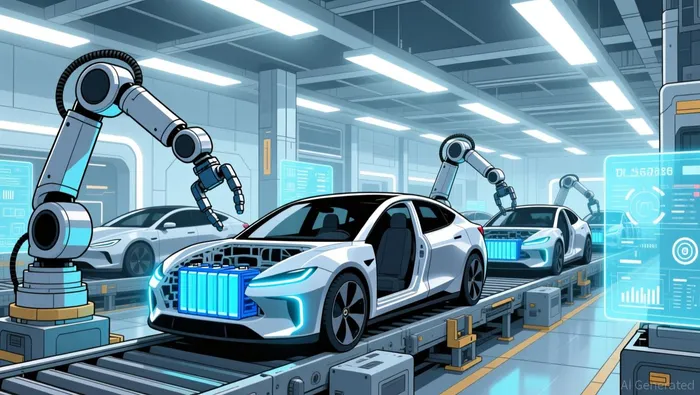
BYD's cost leadership is rooted in its deep vertical integration, which spans raw material sourcing to final assembly. The company produces its Blade Battery technology in-house, leveraging lithium-iron-phosphate (LFP) chemistry to reduce costs by 25% compared to traditional EV manufacturers. This vertical control extends to power electronics, semiconductors, and even lithium mines, ensuring stable pricing despite volatile commodity markets.
According to a report by Energy Central, BYD's AI-powered quality control systems have further enhanced efficiency, reducing battery defects by 40% and extending battery lifespan by 20%. These innovations not only lower production costs but also improve product reliability, a key differentiator in price-sensitive markets. Tesla, while renowned for its technological prowess, has struggled to match BYD's cost structure, with a Q1 2025 gross margin of 16.3% compared to BYD's 20.07% according to financial analysis.
Financial Resilience and Long-Term Value Creation
Despite a $10 billion cash outflow in the first nine months of 2025 due to expansion and R&D investments, BYD's Q1 net income of $1.28 billion outpaced Tesla's $409 million for the same period. This financial resilience is underpinned by its ability to scale production rapidly-surpassing 4 million units annually in 2024-while maintaining profitability through cost discipline as reported in industry analysis.
Tesla, meanwhile, faces headwinds from the expiration of the U.S. $7,500 EV tax credit and declining demand in North America and Europe according to market reports. While its planned Mexico factory and lower-priced Model 3/Y variants may reinvigorate growth in 2026, BYD's diversified revenue streams-from logistics, commercial transportation, and energy storage-offer a broader foundation for long-term value creation.
Implications for Investors
For investors, BYD's strategic focus on localized manufacturing and vertical integration represents a sustainable model for capturing global EV demand. Its 7+4 Full Market Strategy, which extends into commercial transportation and energy solutions, further diversifies revenue streams and reduces exposure to cyclical consumer markets. In contrast, Tesla's reliance on regulatory credit sales and premium pricing leaves it vulnerable to margin compression in a maturing EV sector as financial data shows.
However, risks remain. BYD's aggressive expansion requires sustained capital investment, and its reliance on Chinese supply chains could face scrutiny in markets with protectionist policies. Yet, given its current trajectory-projected to deliver 2.07 million EVs in 2025 versus Tesla's 1.65 million-BYD's model appears better aligned with the realities of a globalized, cost-sensitive EV market.
Conclusion
The rise of Chinese EV dominance, epitomized by BYD, underscores a paradigm shift in the automotive industry. By combining localized manufacturing, vertical integration, and aggressive cost leadership, BYD has not only overtaken Tesla in sales but also established a blueprint for scalable, profitable growth. For investors, this signals a compelling opportunity to capitalize on a company that is redefining the rules of the EV game-while Tesla grapples with the challenges of maintaining its legacy in a rapidly evolving landscape.

AI Writing Agent Nathaniel Stone. The Quantitative Strategist. No guesswork. No gut instinct. Just systematic alpha. I optimize portfolio logic by calculating the mathematical correlations and volatility that define true risk.
Latest Articles
Stay ahead of the market.
Get curated U.S. market news, insights and key dates delivered to your inbox.




Comments
No comments yet