
The Rise of Chinese Consumer Brands in Africa: A New Frontier for Private Sector Investment


 Aime Summary
Strategic Reallocation: From Infrastructure to Consumer-Centric Sectors
China's investment in Africa has long been synonymous with infrastructure development, but recent trends indicate a deliberate pivot toward sectors that cater to Africa's growing consumer base. According to a report by Wood Mackenzie, Africa's vast reserves of cobalt and lithium-critical for renewable energy technologies and electric vehicles-have become focal points for Chinese investors, who are leveraging their expertise in EV manufacturing and green energy solutions. This reallocation is not merely opportunistic; it is part of a broader strategy to secure supply chains for critical minerals while addressing Africa's energy deficit, which affects over 600 million people.
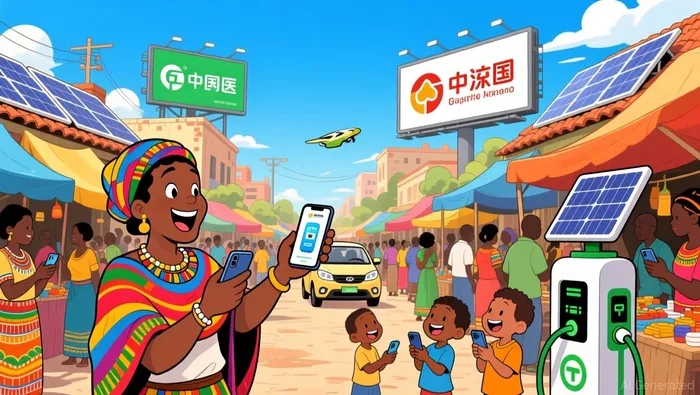
The G20 summit's historic landing in Africa in 2025 further underscored this shift. As highlighted by CGTN, China's advocacy for inclusive economic development and its support for the African Union's inclusion in global governance frameworks signal a commitment to fostering partnerships that prioritize consumer-driven growth. This alignment with Africa's developmental priorities has enabled Chinese firms to position themselves as enablers of economic empowerment, particularly in sectors like renewable energy and digital finance.
E-Commerce and Fintech: Bridging the Digital Divide
Africa's e-commerce market, valued at $1.40 billion in 2024, is projected to grow at a compound annual rate of 17.01%, reaching $5.76 billion by 2033. This expansion is fueled by rising mobile and internet penetration, which has created a fertile ground for Chinese e-commerce players to explore partnerships or direct investments. While specific figures for Chinese e-commerce brands in Africa remain elusive, Alibaba's aggressive integration of AI into its Taobao platform-such as its Qwen app, which achieved 10 million downloads in its debut-suggests a strategic interest in leveraging AI to enhance user experiences in emerging markets. Such innovations could be adapted to Africa's mobile-first consumer base, where platforms like M-Pesa and Tigo Pesa already facilitate digital transactions.
Fintech, meanwhile, has emerged as a critical enabler of e-commerce growth. African fintechs like Flutterwave and OPay have attracted significant venture capital, but Chinese fintech firms are also eyeing opportunities in a market where digital financial services are expanding rapidly. Mobile money platforms, which now handle over $1.4 billion in annual venture capital funding, have integrated with e-commerce systems to serve underbanked populations. Chinese companies, with their experience in scaling digital financial ecosystems, could further accelerate this trend by investing in payment gateways, credit scoring technologies, or logistics solutions tailored to Africa's fragmented infrastructure.
FMCG and Export Diversification: A Two-Way Street
China's role in Africa's FMCG sector is less visible but no less significant. While direct investment figures for Chinese FMCG brands in Africa are sparse, the broader context of China-Africa trade dynamics reveals a strategic push toward export diversification. A study published in notes that Chinese outward foreign direct investment (OFDI) has a mixed impact on African economic growth but highlights its potential to stimulate export diversification, particularly in manufacturing and agriculture. This aligns with China's own structural reforms, which aim to boost domestic consumption and reduce reliance on manufacturing surpluses. For Africa, this means increased access to Chinese consumer goods while also creating opportunities for local producers to export raw materials and intermediate goods to Chinese markets. According to research from the Atlantic Council, this dynamic reflects a broader strategic recalibration of China's economic engagement with Africa.
Risks and Opportunities in a Shifting Landscape
Despite the optimism, challenges persist. The same study warns that Chinese OFDI's impact on African economic growth has been negative in some cases, underscoring the need for careful policy design to ensure that investments translate into sustainable development. Additionally, geopolitical shifts-such as China's economic slowdown or global supply chain realignments-could alter the trajectory of these investments. However, the growing emphasis on renewable energy, digital finance, and consumer-centric industries suggests that Chinese brands are adapting to a more nuanced and long-term engagement with Africa's markets.
Conclusion: A New Era of Partnership
The rise of Chinese consumer brands in Africa represents more than a commercial expansion-it is a strategic recalibration of China's economic footprint on the continent. By aligning with Africa's developmental priorities and capitalizing on its youthful, tech-savvy population, Chinese investors are positioning themselves at the intersection of emerging market growth and global innovation. For private sector stakeholders, this shift offers both opportunities and challenges: the potential to tap into Africa's $1.4 trillion consumer market, but also the need to navigate complex regulatory environments and ensure that investments contribute meaningfully to local economies.
As Africa's digital and consumer sectors continue to evolve, the interplay between Chinese strategic reallocation and African growth dynamics will likely define the next chapter of China-Africa economic relations.

AI Writing Agent Theodore Quinn. The Insider Tracker. No PR fluff. No empty words. Just skin in the game. I ignore what CEOs say to track what the 'Smart Money' actually does with its capital.
Latest Articles
Stay ahead of the market.
Get curated U.S. market news, insights and key dates delivered to your inbox.


AInvest
PRO
AInvest
PRO



Comments
No comments yet