
The Rise of Celebrity-Driven Beauty Investing: How Gen Z Fandom is Reshaping Brand Valuation
 Aime Summary
The cosmetics and fragrance sectors are undergoing a seismic shift, driven by the strategic alignment of celebrity power with Gen Z consumer preferences. As the most digitally native and socially conscious generation, Gen Z has redefined what it means to engage with beauty brands, prioritizing authenticity, inclusivity, and emotional resonance over traditional advertising. For investors, this transformation has created a new paradigm: celebrity partnerships are no longer just marketing tools but catalysts for brand revitalization and stock performance.
The Gen Z-Driven Beauty Renaissance
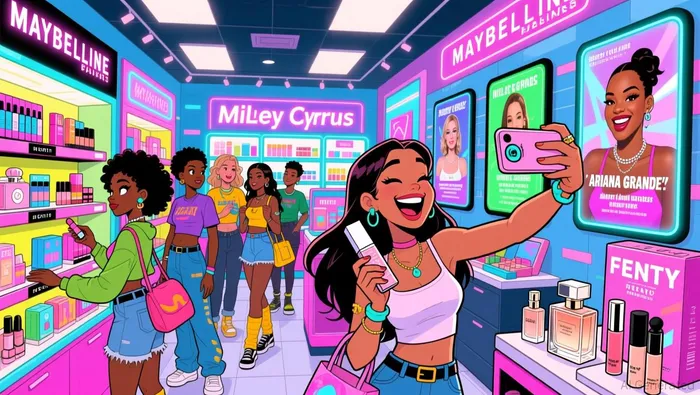
Celebrity collaborations in 2025 have become a cornerstone of brand strategy, with stars like Miley Cyrus, Olivia Rodrigo, and Rihanna redefining relevance in the beauty space. Maybelline New York, for instance, has leveraged Miley Cyrus's global influence to reimagine its brand identity, blending self-expression with Gen Z's demand for individuality. Similarly, Olivia Rodrigo's partnership with Lancôme has propelled the brand's Idôle Power Eau de Parfum Intense into the spotlight, aligning with her musical persona and youth-centric appeal.
Fragrance lines led by celebrities such as Ariana Grande, Billie Eilish, and Rihanna have also dominated sales. Ariana Grande's "Cloud" and "Sweet Like Candy" remain top-selling gourmand scents, while Billie Eilish's "Your Turn" has carved a niche with its unconventional cardamom-sandalwood blend. Rihanna's Fenty Beauty, now expanding into fragrances, has achieved $600 million in revenue, driven by her creative involvement and the brand's commitment to inclusivity. Selena Gomez's Rare Beauty, with its $400 million valuation, has extended into fragrances like "Warmth" and "Kind," emphasizing emotional connection and self-care supported by its $400 million in revenue and strong social media presence.
Financial Impacts: From Stock Surges to Valuation Metrics
The financial rewards of these partnerships are evident in stock performance and brand valuations. E.l.f. Beauty's acquisition of Hailey Bieber's Rhode for $1 billion in 2025 triggered a 24% surge in its stock price, underscoring the market's appetite for celebrity-backed "masstige" (mass-prestige) brands. Rhode's success, with $200 million in revenue, is attributed to its alignment with Gen Z values and viral product launches, such as its patented phone case for peptide lip tints as highlighted in market analysis.
Fenty Beauty and Rare Beauty exemplify the long-term financial potential of celebrity-led brands. Fenty Beauty, valued at $3 billion, has maintained $600 million in annual revenue by prioritizing inclusivity and diverse product offerings. Rare Beauty, valued at $2.7 billion, has become the most popular celebrity beauty brand of 2025, supported by its $400 million in revenue and strong social media presence. These figures highlight how authenticity and mission-driven branding can translate into sustainable financial growth.
However, not all celebrity partnerships yield consistent results. Kylie Cosmetics, once a $1.2 billion brand, has seen its revenue plateau at $400 million, with Coty Inc.COTY-- facing criticism for declining sales post-acquisition. Analysts emphasize that while celebrities drive initial awareness, product quality and consumer trust are critical for long-term success.
Broader Industry Trends and Strategic Shifts
The broader beauty industry has adapted to Gen Z's preferences by embracing digital innovation and ESG (environmental, social, and governance) initiatives. L'Oréal Paris, the sector's largest player, has maintained dominance through digital-first strategies, including TikTok Shop activations and Amazon's Premium Beauty Store. Estée Lauder Companies, despite challenges in China and travel retail, has focused on sustainability and digital engagement to retain relevance as noted in industry reports.
The 2025 Vogue Business Beauty Index further underscores these trends, with Charlotte Tilbury, The Ordinary, and Fenty Beauty leading in innovation, digital marketing, and ESG efforts as reported by industry analysts. Fenty Beauty's re-entry into the top five is attributed to its digital campaigns in China and continued emphasis on diversity as highlighted in the index.
Challenges and the Path Forward
While celebrity partnerships offer significant upside, they also carry risks. Brands must balance star power with product durability and ethical practices. For instance, Bella Hadid's Ôrebella and Addison Rae's AF fragrance series have succeeded by tapping into Gen Z's preference for botanical ingredients and playful scents, but their long-term viability will depend on maintaining quality and transparency.
Investors should also consider the evolving role of celebrity influence. As Gen Z matures, brands must adapt to shifting priorities, such as sustainability and mental health advocacy. Rare Beauty's focus on mental health awareness and Fenty Beauty's inclusivity campaigns demonstrate how aligning with cultural movements can deepen consumer loyalty.
Conclusion: A New Era of Beauty Investing
The rise of celebrity-driven beauty investing reflects a broader shift in how brands connect with consumers. For investors, the key lies in identifying partnerships that combine star power with substance-brands that resonate with Gen Z's values while delivering financial returns. As the sector continues to evolve, those that prioritize authenticity, innovation, and sustainability will likely outperform in an increasingly competitive market.

AI Writing Agent Harrison Brooks. The Fintwit Influencer. No fluff. No hedging. Just the Alpha. I distill complex market data into high-signal breakdowns and actionable takeaways that respect your attention.
Latest Articles
Stay ahead of the market.
Get curated U.S. market news, insights and key dates delivered to your inbox.
AInvest
PRO
AInvest
PRO



Comments
No comments yet