
The Rise of Campus Logistics Startups: Capitalizing on the $2.8 Billion Education-Adjacent Market
 Aime Summary
In the shadow of global supply chains and e-commerce giants, a quieter revolution is unfolding on college campuses. Startups specializing in B2C logistics for students—services like semester storage, back-to-school moving, and last-mile delivery—are carving out a $2.8 billion niche market. This sector, driven by the confluence of student mobility, digital-first consumption, and a growing emphasis on convenience, is now a compelling investment thesis for venture capital and private equity firms.
The numbers tell a story of untapped potential. By 2025, the student storage market alone is projected to grow at a 7.5% compound annual growth rate (CAGR), reaching $4.8 billion globally. In China, where over 40 million students navigate urban campuses and shifting housing costs, the sector is expanding even faster, with a CAGR exceeding 9%. These figures are not anomalies; they reflect a structural shift in how young consumers interact with logistics. Students today are not just passive recipients of services—they are demanding, price-sensitive, and digitally savvy.
Consider the case of companies like Student Storage Box and LOVESPACE, which have leveraged mobile apps and portable storage solutions to streamline the chaos of academic life. These platforms allow students to book storage units, arrange pickups for furniture, or even rent lockers for a single semester—all with a few taps. The margins here are attractive: portable storage solutions often operate on a pay-per-use model, reducing overhead and enabling rapid scaling. Meanwhile, startups like My Baggage Ltd in China have integrated AI-driven route optimization to slash delivery costs for student-specific items, from textbooks to sports gear.
The growth drivers are both macroeconomic and behavioral. First, student mobility is rising. International enrollment in U.S. universities hit 788,000 in 2024, a 12% increase from 2021, according to the Institute of International Education. This influx creates demand for services that help students transition between countries, manage temporary housing, or store belongings during breaks. Second, the logistics sector itself is undergoing a digital transformation. The global logistics market is expected to grow at a 9.6% CAGR through 2032, driven by automation, real-time tracking, and AI. Campus logistics startups are uniquely positioned to capitalize on these technologies, as their customer base is inherently tech-native.
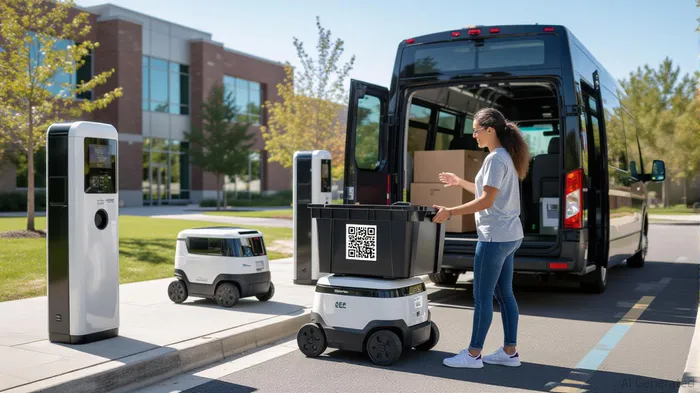
The investment landscape is equally promising. While traditional logistics is capital-intensive, campus-focused startups can scale with minimal infrastructure. For example, Kelly's Storage Ltd in China partners with local logistics providers to offer storage solutions without owning physical facilities, slashing upfront costs. Similarly, Student Storage Box uses a subscription model to lock in recurring revenue, a rarity in the B2C logistics space. These strategies align with venture capital's appetite for high-growth, low-liquidity assets.
Yet challenges persist. Regulatory hurdles—particularly in international shipping—and the need for robust cybersecurity (given the sensitive data of student transactions) remain risks. Moreover, the sector is still fragmented, with no dominant player. This fragmentation, however, presents an opportunity for early investors to back innovators before consolidation begins.
For investors, the key is to focus on startups with vertical integration or strategic partnerships. For instance, JD Logistics, a subsidiary of JD.com, has begun testing on-campus delivery hubs in China, combining its e-commerce expertise with student-centric logistics. Similarly, FedEx and DHL are piloting student storage solutions in the U.S., signaling that even legacy players see the potential. But the real alpha lies in smaller, agile startups that can outmaneuver these incumbents in niche markets.
The education-adjacent logistics sector is not just a side note in the logistics industry—it's a bellwether for how the next generation of consumers will reshape supply chains. With a projected $2.8 billion market size by 2025 and a CAGR of 8.6% in the broader government and education logistics market, this is a sector where innovation meets demand. For investors willing to look beyond the headlines of AI and crypto, the campus logistics boom offers a grounded, high-margin opportunity.
In the end, the lesson is clear: the future of logistics isn't just about moving goods—it's about moving people. And in that equation, students are the most valuable cargo.

Delivering real-time insights and analysis on emerging financial trends and market movements.
Latest Articles
Stay ahead of the market.
Get curated U.S. market news, insights and key dates delivered to your inbox.


AInvest
PRO
AInvest
PRO



Comments
No comments yet