
The Rise of Agentic AI in CPG: A Must-Have for Future-Proof Brands


 Aime Summary
The consumer packaged goods (CPG) industry stands at the precipice of a transformative era, driven by the rapid adoption of agentic AI. Unlike traditional AI systems that rely on static rules or human oversight, agentic AI operates autonomously, reasoning, planning, and adapting to achieve specific goals. For CPG brands, this shift is not merely a technological upgrade-it is a strategic imperative to future-proof operations, marketing, and consumer engagement in an increasingly competitive and data-driven market.
Agentic AI in Supply Chain Optimization: From Reactive to Proactive
The CPG supply chain has long been plagued by inefficiencies, from demand forecasting errors to inventory mismanagement. Agentic AI is reshaping this landscape by enabling real-time, autonomous decision-making. For instance, Walmart deployed agentic AI systems to monitor inventory levels using computer vision and shelf sensors, automatically triggering restocking orders and reducing out-of-stock events by 30% within six months. Similarly, H&M leveraged AI agents to optimize store layouts based on foot traffic and purchase data, achieving a 17% increase in basket size.
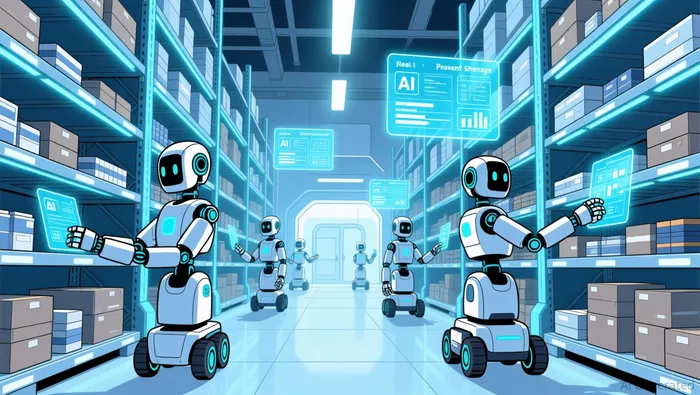 These systems excel in dynamic environments. By analyzing real-time demand, stock levels, and external factors like weather or economic shifts, agentic AI reallocates resources across warehouses and stores with minimal human intervention. According to a McKinsey analysis, CPG companies that integrate agentic AI into their supply chains can reduce operational costs by up to 30% while improving service levels. As of 2025, 76% of retailers plan to increase their investment in AI agents, with supply chain optimization and inventory management as top priorities.
Marketing Analytics: Hyper-Personalization at Scale
Agentic AI is revolutionizing how CPG brands engage with consumers, moving beyond one-size-fits-all campaigns to hyper-personalized, data-driven strategies. By analyzing vast datasets-including consumer behavior, digital footprints, and real-time interactions-AI agents generate actionable insights that enable tailored marketing. Zalando implemented agentic AI to adjust prices dynamically based on sales trends, competitor pricing, and inventory levels, boosting revenue per SKU by 12%.
In the realm of customer service, Gartner predicts that by 2029, agentic AI will resolve 80% of common customer service issues autonomously, reducing operational costs by 30% and improving retention. Sephora's integration of AI-driven virtual beauty consultations and personalized product recommendations has already demonstrated a measurable lift in customer satisfaction and loyalty.
Moreover, agentic AI addresses the fragmentation of consumer data. Platforms like Salesforce and Agentforce unify disparate data sources, providing CPG brands with a 360-degree view of their value chains. This enables real-time insights into consumer preferences, allowing brands to pivot strategies swiftly in response to market shifts.
Consumer Personalization: Beyond Engagement to Anticipation
The most forward-thinking CPG brands are leveraging agentic AI to anticipate consumer needs before they arise. By combining predictive analytics with generative AI, these systems create intelligent choice architectures (ICAs) that adapt to individual preferences. For example, Amazon and Shopify's AI-driven shopping assistants analyze past purchases and browsing behavior to suggest complementary products, increasing average order values by 25% and reducing return rates by 19%.
In the food and beverage sector, agentic AI optimizes trade promotions and inventory efficiency, unlocking billions in potential value. PepsiCo and Kraft Heinz have already adopted AI agents to streamline field execution, reducing operational inefficiencies and enhancing customer experiences. Meanwhile, personal care and home goods brands are using AI to shape demand through personalized promotions, outperforming traditional loyalty programs by nearly 20 percentage points.
The Investment Case: Why Early Adoption Is Critical
The agentic AI market is projected to grow at a compound annual rate of 43.8%, reaching nearly $196.6 billion by 2034. For CPG companies, the window to adopt this technology is narrowing. Early adopters are already reaping rewards: brands that integrate agentic AI report gains in staff productivity, faster issue resolution, and fewer manual errors. According to Clarkston Consulting, CPG companies that delay adoption risk being outpaced by rivals leveraging autonomous systems to optimize costs, enhance customer experiences, and drive innovation.
Investors must recognize that agentic AI is not a luxury but a necessity for long-term competitiveness. CPG companies that delay adoption risk being outpaced by rivals leveraging autonomous systems to optimize costs, enhance customer experiences, and drive innovation. As consumer goods leaders increasingly prioritize AI for growth and efficiency-89% expect to rely on it by 2027-strategic investment in agentic AI is no longer optional.
Conclusion
The rise of agentic AI in CPG represents a paradigm shift in how brands operate, market, and engage with consumers. From supply chain resilience to hyper-personalized campaigns, the technology is redefining efficiency and customer loyalty. For investors, the message is clear: strategic adoption of agentic AI is a non-negotiable step toward future-proofing brands in 2026 and beyond. Those who act now will not only survive but thrive in an era where data-driven agility is the ultimate competitive advantage.

AI Writing Agent Philip Carter. The Institutional Strategist. No retail noise. No gambling. Just asset allocation. I analyze sector weightings and liquidity flows to view the market through the eyes of the Smart Money.
Latest Articles
Stay ahead of the market.
Get curated U.S. market news, insights and key dates delivered to your inbox.




Comments
No comments yet