
The Rise of 0DTE Volatility and Its Implications for Retail Traders and Institutional Investors
 Aime Summary
The 0DTE Revolution: Retail Participation and Synthetic Index Products
The surge in 0DTE options is inextricably linked to the rise of synthetic index products, which enable traders to replicate index exposure with precision and flexibility. By Q3 2025, index options volume reached nearly 4.9 million daily contracts, with 0DTE options comprising 57% of SPX Index options average daily volume. Retail traders, now responsible for over 50% of short-dated options trading, have embraced these tools for their low entry costs and high leverage. Platforms like YouTube and Reddit have democratized access to complex strategies, while commission-free trading has further lowered barriers to entry.
Synthetic index products, such as the YieldMax Nasdaq 100 0DTE Covered Call Strategy ETF (QDTY), exemplify this trend. These products generate income through weekly covered calls while offering exposure to the Nasdaq 100 Index. Retail traders also employ strategies like short iron condors and credit spreads, often closing positions when 50–75% of the initial credit is captured. The mechanics of 0DTE options-amplified gamma and theta decay-make them highly sensitive to intraday price movements, creating opportunities for rapid profit but also exposing traders to extreme time decay and volatility shocks.
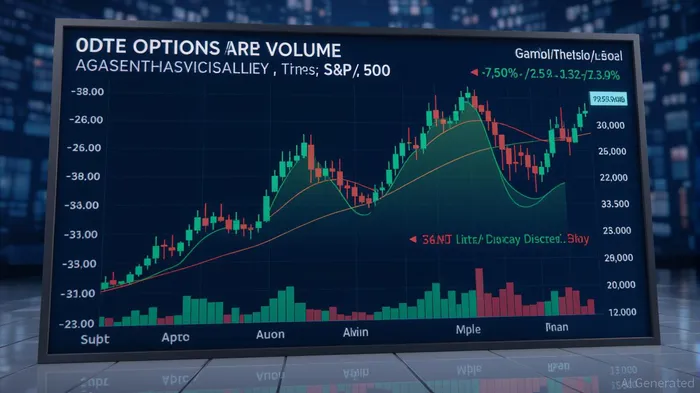
Market Structure Shifts: Liquidity, Volatility, and Order Flow
The proliferation of 0DTE options has introduced both benefits and risks to market structure. On one hand, tighter bid-ask spreads and increased liquidity have emerged as market makers and high-frequency traders thrive in the compressed timeframes of 0DTE contracts. On the other, the same dynamics have raised concerns about volatility amplification. For instance, during the April 2025 market panic, dealers holding short puts and calls were forced to rebalance their delta neutrality by selling or buying the underlying, exacerbating intraday swings.
A nuanced debate surrounds the net impact of 0DTE options on volatility. While some argue that market makers' dynamic hedging attenuates index volatility-reducing it by 60–90 annualized basis points on days with 0DTE trading-others highlight structural feedback loops. The April 2025 episode revealed how 0DTE options can create inverted volatility term structures, with short-term implied volatility spiking while the VIX (a 30-day measure) lagged. This divergence underscores the growing importance of intraday volatility in shaping market behavior.
Order flow patterns have also evolved. Retail-driven trading activity peaks at specific times of the day (e.g., 10:00 AM, 10:30 AM, and 2:00 PM), creating idiosyncratic liquidity clusters. Institutions, meanwhile, leverage these patterns through advanced tools like options flow scanners and sentiment analysis platforms to detect retail positioning and adjust strategies accordingly.
Institutional Adaptation: Strategies for a 0DTE-Driven Market
Institutions have adapted to the 0DTE surge by refining hedging and volatility trading strategies. Binary thinking and structured approaches like iron condors are now staples for managing short-term risks tied to macroeconomic events. For example, Henry Schwartz's zero-day SPX iron condor strategy exemplifies how institutions exploit the precision of 0DTE options to capitalize on market consolidation periods.
Margin efficiency has also become critical. Institutions favor spread trading over naked options to reduce capital requirements, particularly in liquid indices like SPX. Advanced analytics platforms such as TradeVision enable institutions to track retail-driven surges in specific assets and adjust hedging or speculative positions accordingly. The result is a market where institutional players profit from retail-driven dislocations while mitigating the risks of rapid theta decay and gamma exposure.
Implications for Retail and Institutional Investors
For retail traders, the 0DTE boom offers unprecedented access to high-conviction strategies but demands discipline. The allure of leveraged gains often overshadows the risks of unlimited losses for sellers and the need for constant monitoring. Retail participation has also introduced behavioral patterns-such as coordinated buying at specific times-that institutions exploit through algorithmic trading.
Institutions, meanwhile, face a dual challenge: harnessing 0DTE liquidity while navigating the volatility it generates. The April 2025 market stress test demonstrated how dealer gamma effects can amplify price swings during macroeconomic events. Yet, the same tools that create instability-dynamic hedging and rapid delta adjustments-also enhance liquidity, provided market makers remain solvent and responsive.
Conclusion: A New Era of Market Dynamics
The rise of 0DTE volatility and synthetic index products marks a paradigm shift in market structure. Retail-driven demand has democratized access to sophisticated tools, while institutions have adapted with cutting-edge strategies to navigate the resulting complexity. However, the risks of volatility amplification and liquidity fragmentation remain unresolved. As 0DTE options continue to dominate trading volumes-accounting for 57% of SPX Index options in Q3 2025-market participants must balance innovation with caution. The future of this market will hinge on whether regulators, exchanges, and traders can harmonize the benefits of 0DTE liquidity with the stability required for systemic resilience.

Blending traditional trading wisdom with cutting-edge cryptocurrency insights.
Latest Articles
Stay ahead of the market.
Get curated U.S. market news, insights and key dates delivered to your inbox.






Comments
No comments yet