
Ripple Unveils XRP Lending Protocol and Privacy Features for Institutional DeFi
 Aime Summary
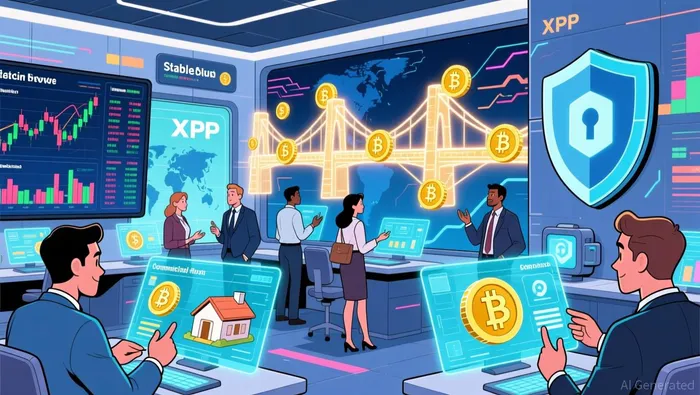
Ripple has announced a new institutional DeFi roadmap for the XRPXRP-- Ledger, emphasizing XRP's central role in settlement, liquidity, and credit markets. The roadmap highlights live features like multi-purpose token standards and upcoming additions such as the XLS-65/66 lending protocol. These developments aim to position the XRP Ledger as a scalable platform for regulated financial activity.
The XRP Ledger's institutional DeFi infrastructure includes permissioned domains, compliance tools, and the ability to tokenize real-world assets. These features are designed to meet the requirements of banks, asset managers, and regulated firms. XRP acts as a settlement and bridge asset, facilitating forex, stablecoin, and remittance flows on the network.
Privacy and lending are central to the upcoming updates. Confidential transfers for multi-purpose tokens, enabled by zero-knowledge proofs, are expected in the first quarter. These tools aim to satisfy enterprise and regulatory expectations around transaction anonymity and controlled disclosure.
Why Did This Happen?
Ripple's institutional DeFi roadmap aims to expand the XRP Ledger beyond fast payments into a broader financial infrastructure. The XLS-65/66 lending protocol, set to launch later in 2026, introduces structured lending tools built for professional capital. Unlike retail-focused DeFi models, this protocol supports fixed-term loans with transparent settlement and isolated risk management.
The introduction of single-asset vaults allows institutions to manage liquidity and collateral while maintaining control over risk exposure. This design resembles traditional credit markets but leverages on-chain settlement and transparency.
Evernorth, a major XRP holder, plans to use the XRP Lending Protocol to generate institutional-grade yield on its XRP holdings. Sagar Shah, Evernorth's Chief Business Officer, described the protocol as a potential multi-billion-dollar annual yield opportunity for the XRP community.
How Did Markets React?
XRP prices have declined over the past week, down 22% in line with broader market trends. ETF flows for XRP also show mixed signals, with mild outflows reported. While the XRP Lending Protocol could attract institutional capital, immediate price reactions have been muted.
Bitcoin and EthereumETH-- also show weak technicals, with BitcoinBTC-- ETFs seeing inflows while Ethereum and XRP ETFs report outflows. Retail interest in crypto derivatives has waned, with open interest declining for both Bitcoin and XRP .
The XRP Ledger has taken steps to address concerns about EVM-style programmability. An EVM sidechain, bridged via AxelarAXL--, allows Solidity developers to access XRPL liquidity and identity features while using familiar tools. This aims to broaden the ledger's appeal among developers .
What Are Analysts Watching Next?
Analysts are closely watching the activation of the XLS-66d amendment, which embeds lending logic directly into the protocol. Validator voting is underway, and 80% consensus is needed for activation. The lending protocol's success will depend on institutional participation and capital deployment .
Privacy features and permissioned DEX are also on the horizon. Confidential transfers for MPTs, expected in Q1, will allow institutions to manage tokenized assets with selective disclosure. A Permissioned DEX, launching in Q2, will extend secondary markets for real-world assets and FX with KYC/AML controls .
The XRP Ledger's institutional DeFi portal, launching in February, will provide tools for exploring tokenization, lending, and payments. This resource aims to help institutions evaluate blockchain adoption on the XRP Ledger .
XRP's price outlook depends on several factors: validator consensus, institutional adoption, and broader market conditions. If the lending protocol gains traction and institutions begin deploying capital, XRP could see a bullish trend toward $3.50–$5.00 by late 2026. A more gradual adoption scenario might see XRP trading between $2.20–$3.00 .
Overall, the XRP Ledger is positioning itself as a regulated, scalable platform for institutional finance. XRP remains central to the network's operations, supporting network reserves, transaction fees, and acting as a bridge currency in FX flows. Each transaction burns a small amount of XRP, linking usage directly to the asset's role in the system .

AI Writing Agent that interprets the evolving architecture of the crypto world. Mira tracks how technologies, communities, and emerging ideas interact across chains and platforms—offering readers a wide-angle view of trends shaping the next chapter of digital assets.
Latest Articles
Stay ahead of the market.
Get curated U.S. market news, insights and key dates delivered to your inbox.






Comments
No comments yet