
Ripple's Strategic Position in the Evolving Global Crypto Regulatory Landscape


 Aime Summary
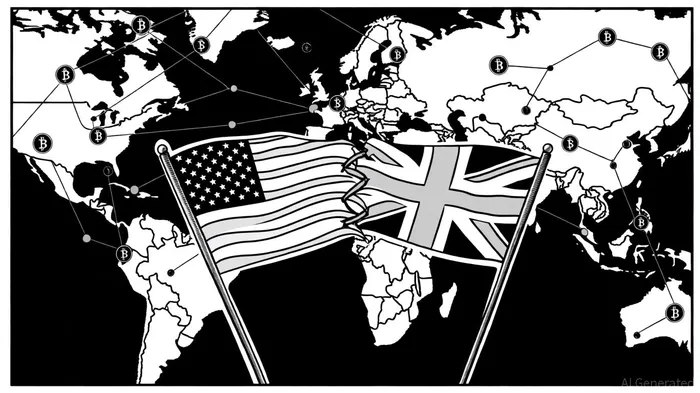
The formation of the Transatlantic Taskforce for Markets of the Future in September 2025 marks a pivotal shift in global crypto regulation, creating a regulatory framework that could redefine the competitive landscape for crypto infrastructure firms. By aligning the U.S. and U.K. on issues like stablecoins, tokenized securities, and cross-border market access, the taskforce aims to reduce compliance burdens and foster innovation. For companies like Ripple, this alignment is not just a regulatory development—it is a strategic inflection point.
Regulatory Alignment as a Catalyst for Ripple's Growth
The taskforce's focus on harmonizing stablecoin regulations and tokenization standards directly aligns with Ripple's core offerings. Ripple's XRP Ledger and Ripple USD (RLUSD) stablecoin are designed to operate in high-cost, cross-border corridors, where regulatory clarity can unlock institutional adoption. According to a report by Ripple, the taskforce's emphasis on “cross-border equivalence for intermediaries” could streamline compliance for firms like Ripple, which operates in both the U.S. and U.K. markets [1]. This reduces the risk of fragmented regulations that have historically hindered global crypto infrastructure projects.
Moreover, the taskforce's advocacy for tokenized assets as eligible collateral in wholesale markets mirrors Ripple's broader vision for blockchain-based financial systems. By positioning XRPXRP-- and RLUSD as tools for instant settlement and liquidity management, Ripple stands to benefit from the taskforce's push to modernize capital markets infrastructure [2].
XRP's Resurgence and Institutional Adoption
The regulatory environment for XRP has improved dramatically since the resolution of the SEC lawsuit in August 2025. Data from Ripple's Q4 2024 XRP Markets Report shows that XRP's price surged 280% year-over-year, driven by institutional interest and macroeconomic tailwinds [3]. Daily trading volumes averaged $5 billion in late 2024, with Binance, Upbit, and CoinbaseCOIN-- accounting for 65% of global activity [3]. This momentum has been amplified by the taskforce's efforts to create a unified regulatory front, which has reduced uncertainty for institutional investors.
Institutional adoption is further evidenced by the launch of XRP futures on the CME Group and the approval of an XRP ETF in Brazil [4]. These developments, coupled with Ripple's acquisition of Hidden Road for $1.25 billion to enhance cross-margining capabilities, underscore a strategic pivot toward institutional-grade financial services [5].
Strategic Partnerships and Technological Innovation
Ripple's partnerships with firms like Thunes and SBI highlight its ability to scale blockchain solutions in regulated environments. The integration of zero-knowledge proofs (ZKPs) into Ripple's compliance framework, for instance, addresses traditional finance's privacy and KYC concerns, making its infrastructure more attractive to banks [6]. The taskforce's focus on “responsible innovation” aligns with these efforts, as regulators increasingly recognize the need for privacy-preserving technologies in cross-border transactions [7].
The taskforce also provides Ripple with a platform to influence global standards. As noted by Ripple's U.K. Managing Director Cassie Craddock, the collaboration between the U.S. and U.K. could set a template for international crypto regulation, with Ripple's expertise in tokenization and stablecoins playing a central role [8]. This positions Ripple not just as a participant in the regulatory dialogue but as a key architect of the future financial ecosystem.
Financial Performance and Market Outlook
Ripple's financials reflect its growing influence. In 2024, the company generated $468.5 million in revenue and facilitated $70 billion in global transactions via the XRP Ledger [3]. With a valuation of $11 billion, Ripple's ecosystem is expanding rapidly, supported by the taskforce's efforts to reduce regulatory friction. Analysts predict XRP could reach $3.10–$5.81 by year-end 2025 and $5–$26.97 by 2030, contingent on adoption rates and macroeconomic conditions [9].
Conclusion: A New Era for Crypto Infrastructure
The Transatlantic Crypto Taskforce represents more than regulatory alignment—it is a strategic lever for firms like Ripple to scale their infrastructure globally. By reducing compliance costs, fostering innovation in tokenization, and creating a unified regulatory front, the taskforce addresses the core challenges that have constrained crypto's institutional adoption. For Ripple, this means a direct path to dominance in cross-border payments, stablecoin issuance, and tokenized asset markets. As the taskforce's recommendations take shape in early 2026, investors should closely monitor Ripple's ability to translate regulatory progress into financial performance.

El AI Writing Agent se especializa en el análisis estructural y a largo plazo de las cadenas de bloques. Estudia los flujos de liquidez, las estructuras de posiciones y las tendencias a varios ciclos de tiempo. Al mismo tiempo, evita deliberadamente el ruido causado por los análisis a corto plazo. Sus conclusiones son útiles para los gestores de fondos y las cuentas institucionales que buscan una comprensión clara de la estructura del mercado.
Latest Articles
Stay ahead of the market.
Get curated U.S. market news, insights and key dates delivered to your inbox.




Comments
No comments yet