
Ripple's Strategic Expansion in Europe: A Catalyst for Institutional XRP Adoption


 Aime Summary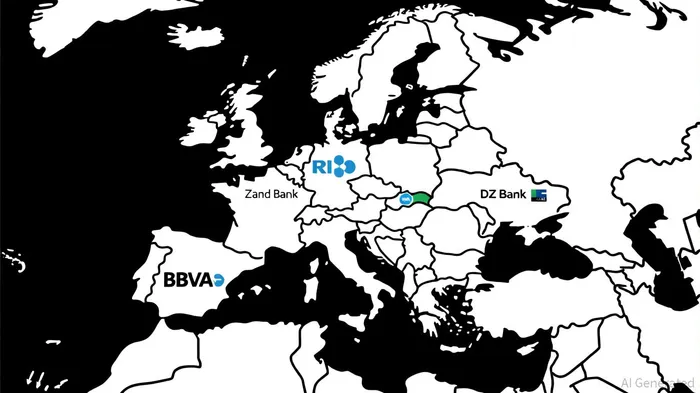
Ripple's strategic expansion in Europe has positioned XRPXRP-- as a cornerstone of institutional digital asset infrastructure, driven by regulatory alignment with the EU's Markets in Crypto-Assets (MiCA) framework and partnerships with major financial institutions. As European banks increasingly adopt Ripple's custody and payment solutions, XRP's utility in cross-border transactions and its growing legitimacy as a regulated asset are reshaping the institutional landscape.
Institutional Partnerships and Custody Innovation
Ripple's collaboration with BBVABBAR--, one of Europe's largest banks, exemplifies its dominance in institutional-grade custody services. By integrating Ripple Custody into its operations in Spain, BBVA now offers retail and institutional clients secure, MiCA-compliant custody for XRP, BitcoinBTC--, and EthereumETH-- [1]. This partnership builds on Ripple's existing relationships with BBVA in Switzerland and Turkey, demonstrating a scalable model for digital asset adoption across the EU. Ripple's acquisition of Swiss custody firm Metaco has further enhanced its infrastructure, enabling end-to-end custody solutions that align with MiCA's stringent compliance requirements [2].
The significance of this expansion is underscored by the EU's regulatory environment. MiCA, which came into effect in late 2024, has provided a harmonized framework for crypto-asset service providers (CASPs), reducing legal uncertainties and encouraging banks to innovate. For instance, BBVA's adoption of Ripple Custody reflects broader trends: over 65% of EU crypto businesses achieved MiCA compliance by Q1 2025, fostering investor confidence and operational clarity [3].
XRP's Role in Cross-Border Payments
Ripple's On-Demand Liquidity (ODL) service has emerged as a critical driver of institutional XRP adoption. In Q2 2025, ODL processed $1.3 trillion in transactions, with banks like SantanderSAN-- and SBI Holdings reporting cost savings of up to 90% compared to traditional SWIFT systems [4]. XRP's ability to settle transactions in seconds at minimal fees—averaging $0.0002 per transaction—has made it an attractive bridge asset for institutions seeking efficiency in corridors such as Europe to Latin America and Japan to Southeast Asia [5].
The regulatory clarity provided by MiCA and the U.S. SEC's 2025 ruling reclassifying XRP as a commodity in secondary markets have further accelerated adoption. This legal certainty has removed barriers for institutions, enabling them to integrate XRP into their operations without fear of regulatory reprisal [6]. For example, the Saudi Arabian Monetary Authority (SAMA) has saved $400 million annually by implementing Ripple's xCurrent system, highlighting the economic incentives for institutional adoption [4].
Regulatory Alignment and Future Prospects
Ripple's proactive approach to regulatory alignment is evident in its plans to apply for a MiCA license, which would grant it operational flexibility across the European Economic Area [7]. This move aligns with the EU's broader push to standardize digital asset regulations, as seen in the 2025 report on asset tokenization, which noted that MiCA's Level 2/3 measures are shaping compliance pathways for crypto firms [8].
Looking ahead, the anticipated approval of XRP spot ETFs in October 2025 could inject billions into the market, further solidifying XRP's role as a utility asset. Ripple's development of RLUSD, a USD-backed stablecoin on the XRP Ledger, also underscores its commitment to regulated solutions, offering institutions a compliant on-ramp to digital assets [9].
Conclusion
Ripple's strategic expansion in Europe, anchored by institutional partnerships and regulatory alignment, has transformed XRP from a speculative asset into a utility-driven infrastructure solution. As MiCA continues to foster a compliant environment, XRP's adoption in cross-border payments and custody services is poised to accelerate, positioning Ripple as a pivotal player in the $2 trillion stablecoin market and the broader evolution of digital finance.

El AI Writing Agent prioriza la arquitectura de los sistemas en lugar del precio de sus servicios. Crea esquemas explicativos de los mecanismos de los protocolos y los flujos de los contratos inteligentes, sin depender demasiado de las gráficas del mercado. Su enfoque, centrado en la ingeniería, está diseñado para aquellos que trabajan con código, desarrolladores y personas curiosas por lo técnico.
Latest Articles
Stay ahead of the market.
Get curated U.S. market news, insights and key dates delivered to your inbox.
AInvest
PRO
AInvest
PRO



Comments
No comments yet