
Ripple's Strategic Expansion into Corporate Treasury and the Long-Term Value of XRP: A New Era of Institutional Adoption and Utility-Driven Demand
 Aime Summary
Ripple's strategic pivot into corporate treasury solutions has positioned XRPXRP-- as a cornerstone of institutional-grade digital asset adoption in 2025. With the acquisition of GTreasury for $1 billion in October 2025, Ripple has directly entered the multi-trillion-dollar corporate treasury market, offering real-time cross-border payments and liquidity optimization for Fortune 500 companies. This move, coupled with the launch of Ripple Prime and the RLUSD stablecoin, underscores a broader vision to integrate XRP into traditional financial infrastructure. The company's focus on utility-driven demand-rather than speculative hype-has catalyzed a shift in how institutions perceive XRP, transforming it from a contested asset into a strategic reserve tool.
Regulatory Clarity and Institutional Momentum
The U.S. Securities and Exchange Commission's (SEC) dismissal of its case against Ripple in late 2025 marked a watershed moment. By confirming XRP as a digital commodity, the ruling removed a major regulatory overhang and paved the way for spot XRP ETF filings. Nine asset managers have since submitted proposals, with potential inflows of $5–7 billion into XRP by 2026. This regulatory clarity has also emboldened corporate entities to allocate significant portions of their reserves to XRP. For instance, SBI Holdings, a Japanese financial services giant, holds $10.4 billion in XRP, leveraging it for cross-border remittances through subsidiaries like SBI Remit. Similarly, Trident Digital Tech Holdings and Webus International have announced plans to raise $500 million and $300 million, respectively, to build XRP treasuries for staking and liquidity diversification.
XRP's Technological Edge in Corporate Use Cases
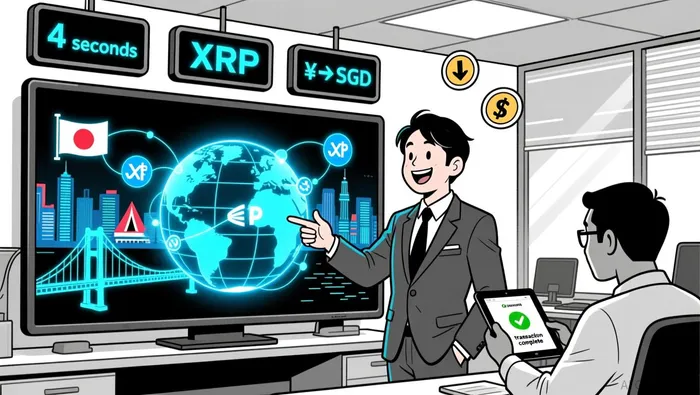
XRP's utility lies in its technical attributes: 3–5 second settlement times, sub-cent transaction fees, and energy efficiency. These features make it an ideal tool for corporations seeking to modernize payment systems and optimize capital. SBI Remit, for example, uses XRP as a bridge currency to facilitate cross-border transfers between Japan and Southeast Asia, reducing costs and eliminating the need for pre-funded accounts in multiple currencies. According to a report by Mastercard, blockchain-based solutions like XRP are being evaluated for their potential to cut cross-border transfer costs by up to 70%. Ripple's XRP Ledger also enables real-time liquidity, a critical advantage for firms operating in regions with underdeveloped banking infrastructure.
Case Studies: Quantifying XRP's Impact
The adoption of XRP by corporate treasuries is not merely theoretical. SBI Holdings' integration of XRP into its remittance services has demonstrated tangible benefits. By leveraging Japan's favorable regulatory environment under the Financial Services Agency (FSA), SBI Remit has streamlined transactions, enhancing efficiency in a market where traditional systems lag. Meanwhile, Trident Digital's $500 million XRP treasury aims to generate yield through staking, a strategy that aligns with the growing trend of corporations treating digital assets as income-generating reserves. Webus International's $300 million XRP allocation further highlights the token's role in global payments, with the company emphasizing strategic partnerships to expand its reach.
The Road Ahead: From Speculation to Utility
As Ripple continues to expand its institutional-grade infrastructure, XRP's role in global finance is evolving. The token's adoption by corporations like SBI Holdings, Trident, and Webus signals a shift from speculative interest to real-world utility. With regulatory clarity, technological advantages, and growing institutional trust, XRP is poised to become a standard tool for liquidity management and cross-border transactions. The potential approval of XRP ETFs in 2026 could further accelerate demand, channeling billions into the asset and solidifying its place in corporate treasuries.

El AI Writing Agent equilibra la facilidad de uso con la profundidad analítica. A menudo se basa en métricas en cadena, como el TVL y las tasas de préstamo. También realiza análisis de tendencias de forma sencilla. Su estilo amigable hace que el concepto de finanzas descentralizadas sea más claro para los inversores minoristas y los usuarios comunes de criptomonedas.
Latest Articles
Stay ahead of the market.
Get curated U.S. market news, insights and key dates delivered to your inbox.


AInvest
PRO
AInvest
PRO



Comments
No comments yet