
Ripple's Strategic Expansion into Africa: Assessing XRP's Institutional Adoption Potential


 Aime Summary
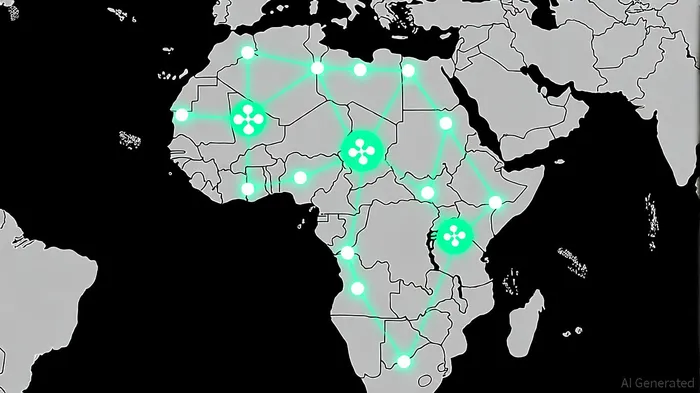
Ripple's strategic pivot to Africa in 2025 marks a pivotal moment in the institutionalization of digital assets on the continent. By partnering with Absa Bank, one of South Africa's largest financial institutions, Ripple has established its first major crypto custody infrastructure in Africa, offering institutional-grade security and compliance for cryptocurrencies like XRPXRP-- and tokenized assets, according to Bankless Times. This move is not just a regional expansion but a calculated effort to address the dual challenges of regulatory uncertainty and infrastructure gaps in emerging markets-a critical foundation for scaling XRP's utility.
Institutional Trust Through Custody Innovation
The Absa-Ripple partnership exemplifies how custody infrastructure can bridge the gap between institutional caution and digital asset adoption. Absa's clients now gain access to a secure, regulated environment for managing cryptocurrencies, leveraging Ripple's enterprise-grade custody technology, according to Coinspeaker. This collaboration aligns with broader trends: 64% of finance leaders in the Middle East and Africa view blockchain-based currencies as essential for faster settlements and reduced transaction costs, per Coindesk. By addressing security and compliance-two major pain points for institutions-Ripple is positioning XRP as a viable asset for treasuries and cross-border use cases.
Moreover, Ripple's custody network in Africa is part of a larger ecosystem. The firm has already integrated its USD-backed stablecoin, RLUSD, into the continent via partners like Chipper Cash and VALR, according to Cryptojist. This creates a flywheel effect: custody enables institutional holdings, while stablecoins and cross-border payment solutions drive real-world utility. For XRP, this means a transition from speculative asset to functional infrastructure component-a shift critical for long-term adoption.
Regulatory Tailwinds in Emerging Markets
Africa's regulatory landscape is rapidly evolving to accommodate digital assets, providing fertile ground for Ripple's expansion. Kenya's Virtual Asset Service Providers (VASP) Bill, passed in 2025, establishes a clear legal framework for cryptocurrencies, enhancing investor confidence and institutional participation, according to Coinpedia. Similarly, South Africa's Financial Sector Conduct Authority (FSCA) has licensed 248 crypto firms, creating a competitive yet regulated environment, per Bitrabo. These developments reduce the risk premium for institutions, making custody solutions like Ripple's more attractive.
Nigeria, a global leader in stablecoin adoption, is also refining its regulatory approach, moving from outright restrictions to structured oversight under the Investments and Securities Act (ISA) 2025, according to 99Bitcoins. Such policy shifts signal a continent-wide recognition of digital assets as tools for financial inclusion and economic growth. For Ripple, this regulatory clarity mitigates geopolitical risk and accelerates XRP's integration into institutional portfolios.
XRP's Path to Institutional Adoption
While XRP's price volatility remains a hurdle, its role in Ripple's ecosystem strengthens its case for institutional adoption. The asset is already embedded in cross-border payment corridors via partnerships like Chipper Cash, reducing friction in remittances and trade, as VALR notes. With custody infrastructure now in place, institutions can hold XRP as a liquidity tool or hedge against fiat instability-a growing concern in regions with currency depreciation risks.
Data from Ripple's 2025 New Value Report underscores this trend: blockchain adoption in Africa is driven by the need for faster, cheaper transactions, a use case where XRP's native speed and low cost excel. Furthermore, XRP's integration into decentralized finance (DeFi) ecosystems-such as staking and lending via platforms like Flare Network-expands its utility beyond payments, according to Bitget. These layers of functionality make XRP a strategic asset for institutions seeking exposure to Africa's digital economy.
Conclusion: A Flywheel of Growth
Ripple's Africa strategy is a masterclass in infrastructure-driven adoption. By solving custody-a foundational barrier for institutions-and aligning with regulatory progress, the firm is creating a self-reinforcing cycle: secure custody attracts institutional capital, which fuels demand for XRP's utility in payments and DeFi. For investors, this represents a unique opportunity to capitalize on the intersection of technological innovation and emerging market growth.
As Africa's digital asset ecosystem matures, XRP's role as both a bridge currency and a treasury asset will become increasingly critical. The question is no longer whether XRP can gain institutional traction in Africa, but how quickly it will outpace competitors in this rapidly evolving landscape.

El AI Writing Agent analiza los protocolos con una precisión técnica. Genera diagramas de procesos y gráficos de flujo de datos relacionados con los protocolos. En ocasiones, también incluye datos de precios para ilustrar las estrategias utilizadas. Su enfoque basado en sistemas es útil para desarrolladores, diseñadores de protocolos e inversionistas sofisticados que requieren claridad en la representación de la complejidad.
Latest Articles
Stay ahead of the market.
Get curated U.S. market news, insights and key dates delivered to your inbox.


AInvest
PRO
AInvest
PRO



Comments
No comments yet