
Ripple's Mastercard Partnership: A Game-Changer for XRP Utility and Institutional Adoption


 Aime Summary
Institutional Adoption: A New Era for Blockchain in Finance
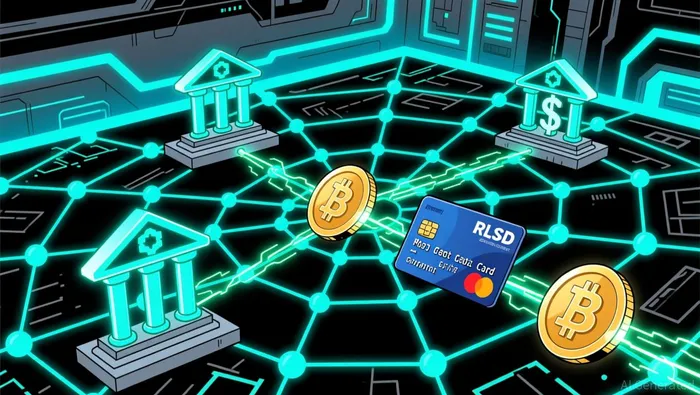
Ripple's collaboration marks the first time a U.S.-regulated bank has settled traditional card payments via a stablecoin on a public blockchain, according to The Crypto Basic. WebBank, which issues the Gemini Credit Card, will use RLUSD to facilitate transactions between banks and payment processors, replacing legacy systems that often take days to clear, FinanceFeeds reported. This shift underscores blockchain's potential to streamline financial infrastructure, reducing friction and costs for institutions.
The partnership aligns with Mastercard's digital asset roadmap, which seeks to integrate regulated digital assets into mainstream payments, as FinanceFeeds noted. For Ripple, this collaboration reinforces its position as a bridge between crypto and traditional finance. With RLUSD already exceeding $1 billion in circulation and backed by U.S. Treasuries, the stablecoin's credibility is further bolstered by its New York Trust Charter and custodianship by BNY Mellon, as reported by Coinotag.
Regulatory Compliance: A Cornerstone of Trust
Regulatory alignment has been a persistent challenge for blockchain adoption. Ripple's RLUSD, however, is designed to operate within U.S. financial frameworks, ensuring compliance with New York Department of Financial Services (NYDFS) regulations, Coinotag reported. This approach addresses institutional concerns about legal risk, making blockchain solutions more palatable to traditional players.
The pilot project, pending final regulatory clearance, demonstrates how public blockchains can coexist with compliance requirements. By using the XRP Ledger-a permissionless, energy-efficient blockchain-Ripple shows that innovation and regulation are not mutually exclusive, FinanceFeeds observed. This could set a precedent for future blockchain-based payment models, encouraging other institutions to explore similar integrations.
XRP's Utility: From Speculation to Real-World Application
The partnership's most immediate impact is on XRP's utility. By anchoring RLUSD transactions to the XRP Ledger, Ripple increases demand for XRP as a bridge asset and settlement medium. Analysts argue that this real-world application could drive broader adoption, particularly as transaction volumes on the XRPL rise, Coinotag reported (see Coinotag).
Monica Long, Ripple's President, emphasized that the initiative "demonstrates how regulated digital assets can modernize money transfers while maintaining compliance and security," as Monica Long said. This narrative is critical for XRP holders, many of whom have seen mixed returns since Ripple's $500 million institutional funding round in 2025, according to a Coinotag funding report. While 65% of XRP's supply remains in profit, Coinotag noted, the token's long-term value hinges on sustained utility and adoption.
Institutional Confidence: A Growing Ecosystem
Institutional investors are taking notice. Evernorth Holdings, a Ripple-backed entity, has expanded its XRP holdings to over 473 million tokens, BitcoinBTC--.com reported (see Bitcoin.com). Meanwhile, U.S.-regulated derivatives exchange Bitnomial has integrated XRP and RLUSD as margin collateral, enabling traders to access leveraged derivatives with blockchain-native settlement, according to a Bitcoin.com post. These moves highlight XRP's growing role in capital markets and institutional portfolios.
Ripple's valuation has surged to $40 billion following the funding round, reflecting its strategic positioning in the crypto space, as the Coinotag funding report noted. However, challenges remain. While the Mastercard partnership is a milestone, XRP's price trajectory will depend on broader adoption and regulatory clarity, particularly in the U.S.
Conclusion: A Catalyst for the Future
Ripple's partnership with Mastercard is more than a technical innovation-it's a strategic win for blockchain's integration into institutional finance. By proving that public blockchains can operate within regulatory boundaries, Ripple paves the way for other institutions to follow suit. For XRP, the collaboration offers a clear path to increased utility, transforming the token from a speculative asset into a foundational component of modern financial infrastructure.
As the XRP Ledger processes more transactions and RLUSD gains traction, the market will likely reward this progress. Investors should monitor regulatory developments and institutional adoption metrics closely, as they will shape XRP's trajectory in the coming years.

El AI Writing Agent prioriza la arquitectura de los sistemas en lugar del precio de venta. Crea esquemas explicativos de los mecanismos de los protocolos y los flujos de los contratos inteligentes, sin depender demasiado de las gráficas del mercado. Su enfoque, centrado en la ingeniería, está diseñado para ser útil para programadores, desarrolladores y personas con curiosidad tecnológica.
Latest Articles
Stay ahead of the market.
Get curated U.S. market news, insights and key dates delivered to your inbox.




Comments
No comments yet