
Ripple's Legal Victory and the Future of XRP: A New Era for Institutional Crypto Adoption?
 Aime Summary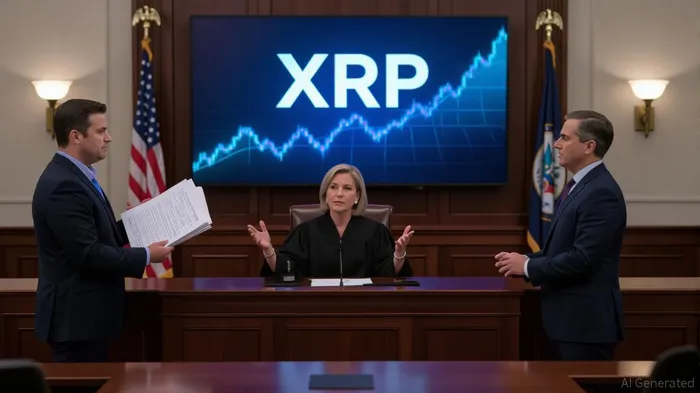
The U.S. Securities and Exchange Commission's (SEC) August 2025 settlement with RippleXRP-- Labs Inc. marks a watershed moment in the crypto industry's quest for regulatory clarity. After a five-year legal battle, the dismissal of appeals and the $125 million civil penalty have not only resolved a contentious dispute but also redefined the legal framework for digital assets. For institutional investors, this outcome signals a critical shift: the removal of a major legal overhang that had long stifled confidence in XRPXRPI-- and, by extension, the broader crypto market.
Regulatory Clarity: A Double-Edged Sword
The settlement's most profound impact lies in its nuanced legal precedent. U.S. District Judge Analisa Torres' 2023 ruling—affirmed by the dismissal of appeals—established that XRP sold on secondary markets (e.g., public exchanges) does not qualify as a security under the Howey test. This distinction is pivotal. It creates a legal boundary between direct institutional sales (treated as securities) and secondary market transactions (treated as utility tokens), a framework the SEC had previously resisted.
For crypto firms, this precedent offers a roadmap for structuring token offerings to comply with securities laws. However, the settlement also underscores the SEC's continued jurisdiction over direct sales, a reminder that regulatory scrutiny remains a reality. The lack of a Supreme Court ruling means ambiguity persists, but the Ripple case has at least provided a working model for distinguishing between securities and utility tokens—a critical step toward institutional adoption.
Institutional Adoption: A Surge in Confidence
The post-settlement period has already seen a marked uptick in institutional interest in XRP. Galaxy Digital's Q2 2025 SEC filing revealed $34 million in XRP holdings, a stark contrast to its previous caution. Similarly, South Korean custody provider BDACS launched institutional-grade XRP solutions for exchanges like Upbit and Coinone, signaling Asia's growing appetite for the asset. These moves reflect a broader trend: institutions are now more willing to allocate capital to XRP, buoyed by the reduced risk of regulatory backlash.
Derivatives trading data further validates this shift. XRP futures volume surged by 200% in a single day post-settlement, outpacing even SolanaSOL-- in derivatives activity. Open interest hit a 2025 high, indicating that traders are positioning for significant price movements. While a $1.9 billion sell-off by XRP whales initially tested the market, strong institutional buying absorbed the pressure, pushing XRP's price to $3.30 and a market cap above $180 billion.
XRP's Strategic Investment Potential
The settlement has repositioned XRP as a strategic asset in a maturing crypto market. For investors, the key question is whether XRP can sustain its momentum amid evolving regulatory and market dynamics.
- Regulatory Tailwinds: The SEC's focus on direct sales, rather than secondary markets, reduces the risk of future enforcement actions against XRP. This clarity could pave the way for a U.S. spot XRP ETF, a development that would mirror BitcoinBTC-- and Ethereum's regulatory pathways and unlock billions in institutional capital.
- Utility and Innovation: Ripple's core business—cross-border payments—remains a compelling use case for XRP. The company's recent focus on expanding XRP's utility in blockchain-based services aligns with macro trends in financial infrastructure.
- Technical Indicators: XRP's price action suggests a breakout is imminent. A breach of the $4 psychological level could trigger a cascade of buying from retail and institutional investors, further amplifying liquidity.
Risks and Considerations
While the settlement is a net positive, investors must remain cautious. The SEC's enforcement strategy remains fluid, and future administrations could reinterpret the ruling. Additionally, XRP's price volatility—exacerbated by whale activity—poses short-term risks. Investors should also monitor legislative developments, as Congress's potential digital asset framework could either reinforce or undermine the current regulatory patchwork.
Conclusion: A New Era, But Not a Guarantee
The SEC-Ripple settlement is a landmark event, but it is not a panacea. Regulatory clarity has been achieved, but the crypto industry still lacks a comprehensive legal framework. For XRP, the path forward depends on its ability to maintain utility, innovation, and institutional trust.
Investors seeking exposure to a maturing crypto market may find XRP an attractive addition to their portfolios, particularly as a hedge against Bitcoin's dominance and a play on cross-border payment innovation. However, due diligence remains essential. Diversification across digital assets and a focus on long-term utility—rather than speculative hype—will be key to navigating this new era.
As the dust settles on the legal battle, one thing is clear: the Ripple case has set a precedent that will echo far beyond XRP. For institutional investors, the message is unmistakable—crypto is no longer a fringe asset class. It is a legitimate, if still evolving, component of the global financial ecosystem.

Delivering real-time insights and analysis on emerging financial trends and market movements.
Latest Articles
Stay ahead of the market.
Get curated U.S. market news, insights and key dates delivered to your inbox.
AInvest
PRO
AInvest
PRO



Comments
No comments yet