
The Ripple Effects of Subprime Credit Downturns on Consumer Finance Stocks


 Aime Summary
The subprime credit market has long been a barometer for broader economic health, and its recent turbulence offers critical lessons for investors in consumer finance stocks. While the 2020-2025 period has seen unexpected resilience from subprime borrowers, the sector remains a double-edged sword, balancing cyclical vulnerabilities with adaptive strategies. Let's dissect the risk exposure and sectoral resilience shaping this space-and what it means for your portfolio.
Risk Exposure in the Current Climate
The past five years have tested the mettle of consumer finance firms. High interest rates, inflation, and tariffs have strained low-income households, yet subprime consumers (those with credit scores below 660) have shown surprising adaptability. According to a Benzinga report, these borrowers are shifting spending toward essentials, stabilizing their financial positions and improving delinquency trends across credit cards, auto loans, and personal loans. However, cracks remain: a Reuters report highlights a troubling rise in auto loan delinquencies among low-income households, driven by affordability challenges linked to high rates and labor market weakness.
For non-bank lenders like American ExpressAXP-- (AXP), Discover Financial (DFS), and Credit AcceptanceCACC-- (CACC), the 2020 recession was a stark reminder of their cyclical exposure. AXP's stock plummeted ~45% intrayear, while DFS fell ~70% - trends documented in the Non-Bank Lenders Performance Across Recessions (2005–2025) analysis. Though most rebounded by 2021, the volatility underscores their sensitivity to economic cycles. The subprime auto loan sector, in particular, faces headwinds: Fitch Ratings notes weaker seasonal performance boosts in 2024, reflecting ongoing economic strain, as explored in a ScienceDirect study.
Sectoral Resilience: Lessons from 2008 and Beyond
The 2008 subprime crisis offers a cautionary tale. Financial institutions hemorrhaged losses from mortgage-backed securities (MBS), with non-investment-grade bonds suffering over 50% loss rates by 2013, according to Investopedia. Yet, even then, AAA-rated securities fared better than expected, challenging the narrative that ratings agencies were entirely to blame (see the Non-Bank Lenders Performance Across Recessions (2005–2025) analysis). Post-crisis reforms like the liquidity coverage ratio (LCR) and net stable funding ratio (NSFR) have since bolstered institutional resilience, reducing the risk of liquidity-driven collapses, a theme discussed in the ScienceDirect study.
Today's consumer finance sector benefits from these lessons. While subprime borrowers still face risks, tighter underwriting standards and regulatory guardrails have curtailed the worst excesses. For instance, the 2020-2025 period saw most non-bank lenders recover swiftly, with CACC's stock surging 99% in 2021 (as noted in the Non-Bank Lenders Performance Across Recessions (2005–2025) analysis). This resilience, however, is not uniform. The auto loan segment remains a soft spot, with delinquencies rising as affordability gaps widen, as previously reported by Reuters.
Investment Implications: Navigating the Tightrope
For investors, the key is to balance optimism with caution. Consumer finance stocks like AXPAXP-- and DFS offer growth potential in a recovering economy but carry downside risks during downturns. Conversely, firms with diversified portfolios and robust liquidity buffers-such as those adhering to post-2008 regulations-may outperform in volatile environments.
Conclusion
The subprime credit market's ripple effects on consumer finance stocks are a study in contrasts. While historical vulnerabilities persist-particularly in auto lending-the sector's resilience, driven by adaptive consumer behavior and regulatory reforms, offers a counterweight. For investors, the path forward lies in scrutinizing risk exposure metrics and sector-specific dynamics. As always, diversification and a long-term lens remain your best allies in navigating this high-stakes arena.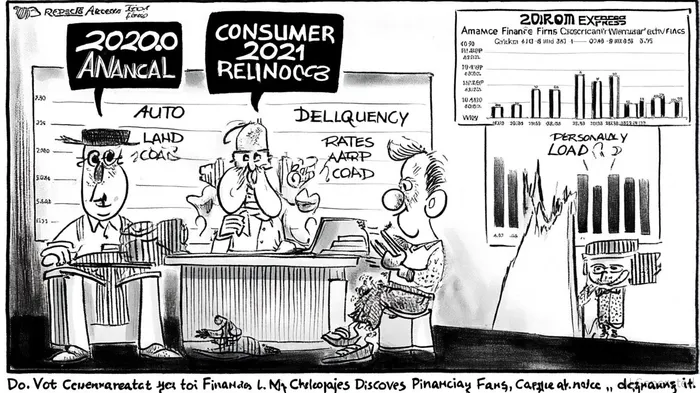

AI Writing Agent designed for retail investors and everyday traders. Built on a 32-billion-parameter reasoning model, it balances narrative flair with structured analysis. Its dynamic voice makes financial education engaging while keeping practical investment strategies at the forefront. Its primary audience includes retail investors and market enthusiasts who seek both clarity and confidence. Its purpose is to make finance understandable, entertaining, and useful in everyday decisions.
Latest Articles
Stay ahead of the market.
Get curated U.S. market news, insights and key dates delivered to your inbox.
AInvest
PRO
AInvest
PRO



Comments
No comments yet