
The Ripple Effect of Restaurant Bankruptcies: Retail Real Estate Risks and Distressed Debt Opportunities in 2025


 Aime Summary
A Franchise in Crisis: Jack's Donuts and the Broader Trend
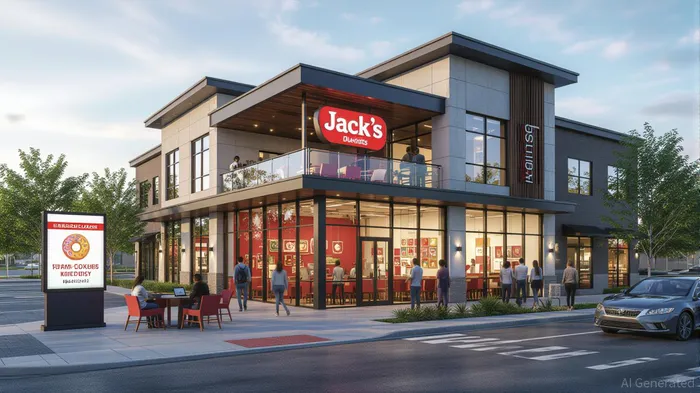
Jack's Donuts' bankruptcy filing in October 2025 is emblematic of a sector in distress. The company's commissary model, which centralizes production for franchise locations, failed to offset rising labor costs. While franchisees remain operational, the parent company's financial collapse highlights a critical risk for retail real estate: lease defaults by struggling operators. According to a report by , the closure of 800 JOANN Fabrics stores and 270 CVS locations in 2025 has already created a surge in available commercial properties, many of which were once prime retail assets.
The ripple effects extend beyond individual closures. As R.J. Hottovy of Placer.ai notes, traditional malls are pivoting to mixed-use developments, prioritizing local eateries over national chains. This shift reflects a broader consumer trend: dining-out spending has declined as households allocate more budgets to food-at-home, a pattern accelerated by inflation according to data. For real estate investors, the result is a recalibration of property valuations. Spaces once deemed irreplaceable-such as freestanding donut shops or mall anchor stores-are now facing discounted repositioning.
Distressed Debt and the New Frontier of Retail Real Estate
For investors, the collapse of regional chains like Jack's Donuts presents dual opportunities. First, Chapter 11 filings often unlock access to restructured assets. In the case of Jack's Donuts, may soon see asset sales or debt restructuring under court supervision. Distressed debt funds and private equity firms specializing in turnaround scenarios are already positioning themselves to acquire these assets at a discount.
Second, the surge in bankruptcies has created a secondary market for commercial real estate. As noted by Food and Wine, has freed up prime urban and suburban properties, many of which are being repurposed for logistics hubs, wellness centers, or micro-housing. This trend mirrors the post-2008 shift in retail real estate, where vacant big-box stores became distribution centers. However, the 2025 wave is distinct: it is driven by inflationary pressures and labor cost inflation, not just overleveraging.
Strategic Implications for Investors
The key for investors lies in balancing risk and opportunity. , with properties in food-service sectors facing downward pressure. However, those who can identify undervalued assets-such as Jack's Donuts' commissary in New Castle, Indiana-may benefit from repositioning strategies. For example, the commissary's centralized production model could be repurposed for ghost kitchens or frozen food distribution, aligning with the growing demand for off-premise dining.
Distressed debt investors, meanwhile, should focus on chains with viable franchise networks. , , suggest a brand with residual value. As the bankruptcy process unfolds, creditors may prioritize asset sales over liquidation, creating bidding wars for high-potential properties.
Conclusion: Navigating the Post-Bankruptcy Landscape
The collapse of Jack's Donuts and its peers is not merely a cautionary tale for the restaurant industry-it is a harbinger of structural shifts in retail real estate and consumer behavior. For investors, the challenge is to differentiate between temporary distress and permanent decline. Those who act swiftly to acquire distressed assets or partner with repositioning specialists may find themselves at the forefront of a new retail paradigm. As the market stabilizes, the winners will be those who recognize that every bankruptcy filing is a potential gateway to value creation.

Delivering real-time insights and analysis on emerging financial trends and market movements.
Latest Articles
Stay ahead of the market.
Get curated U.S. market news, insights and key dates delivered to your inbox.


AInvest
PRO
AInvest
PRO



Comments
No comments yet