
Ripple's $40 Billion Valuation: A Strategic Bet on XRP and Institutional Infrastructure


 Aime Summary
The cryptocurrency market has long been a theater of volatility, but Ripple (XRP) is emerging as a standout narrative in 2025, driven by a confluence of institutional adoption, regulatory clarity, and infrastructure innovation. With a valuation now approaching $40 billion, the question is no longer whether Ripple can scale but how it is structuring its ecosystem to ensure downside protection while capturing a critical role in global finance. This analysis unpacks the strategic pillars underpinning Ripple's ascent, focusing on its institutional partnerships, regulatory milestones, and product roadmap.
Institutional Adoption: Bridging Blockchain and Traditional Finance
Ripple's institutional momentum began with its partnership with AMINA Bank AG, a FINMA-regulated Swiss crypto bank. This collaboration marks Ripple's first European institutional adoption, enabling AMINA's clients to leverage Ripple Payments for cross-border transactions using stablecoins like Ripple USD (RLUSD) according to Ripple's press release. By integrating blockchain with traditional banking rails, Ripple is addressing a key pain point: the friction between legacy systems and decentralized networks. For institutions, this means faster, cheaper, and more transparent settlements-a value proposition that directly challenges SWIFT's dominance.
The partnership also highlights Ripple's broader strategy to position RLUSD as a "bridge currency" for global payments. Unlike other stablecoins, RLUSD is backed by a federally supervised trust bank (RNTB), a regulatory advantage that enhances institutional trust. This is critical in a market where compliance remains a barrier to adoption.
Regulatory Clarity: A Federally Supervised Trust Bank
In July 2025, the GENIUS Act was passed, paving the way for Ripple to establish the Ripple National Trust Bank (RNTB) under the Office of the Comptroller of the Currency (OCC) according to Markets Media. This conditional approval transforms Ripple's stablecoin operations into a federally regulated entity, a move that significantly reduces counterparty risk for institutional users. For investors, this regulatory milestone is a game-changer: it provides a legal framework for RLUSD's use in treasury management, asset tokenization, and cross-border flows, all while adhering to U.S. banking standards.
The RNTB also serves as a hedge against XRP's price volatility. By diversifying into stablecoin-anchored services, Ripple is creating a revenue stream that is less correlated with crypto market cycles. This dual-engine model-XRP's speculative potential paired with RLUSD's institutional utility-offers a natural downside buffer.
Strategic Acquisitions: Expanding the Institutional Playbook
Ripple's acquisition of Hidden Road for $1.25 billion in late 2025 further solidifies its institutional footprint. Rebranded as Ripple Prime, the platform now offers custody, liquidity access, and trading desks tailored for institutional clients according to Yahoo Finance. This move positions Ripple as the first crypto-native prime brokerage, a critical infrastructure layer for hedge funds, asset managers, and corporate treasuries.
The acquisition's significance lies in its ability to monetize XRP's ecosystem. By providing institutional-grade services, Ripple is not only capturing fees from trading and custody but also embedding XRPXRP-- into the workflows of large financial players. This flywheel effect-where institutional demand for Ripple's services drives XRP adoption-creates a self-reinforcing cycle of value creation.
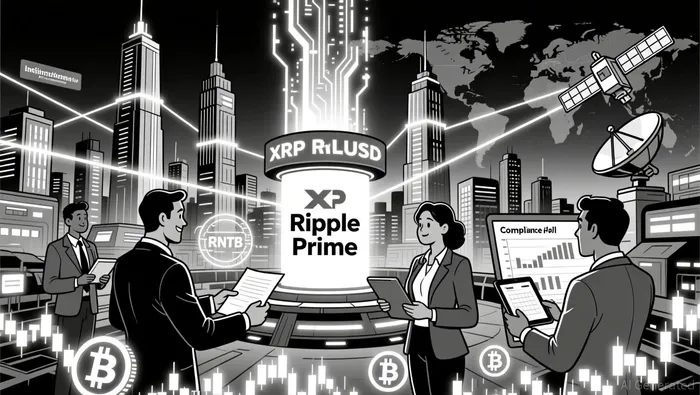
Privacy and Compliance: The Zero-Knowledge Edge
One of the final pieces of Ripple's institutional puzzle is its upcoming zero-knowledge privacy layer for the XRP Ledger (XRPL) according to 247 Wall Street. This enhancement allows confidential transactions while maintaining regulatory compliance, addressing a key concern for institutions wary of on-chain visibility. For example, multinational corporations can now execute cross-border payments without exposing sensitive transaction data, a feature that could drive adoption in sectors like supply chain finance and private equity.
This privacy layer also aligns with global regulatory trends. As jurisdictions like the EU and U.S. tighten data protection laws, Ripple's ability to offer compliance-by-design becomes a competitive moat. The result is a product that appeals to both privacy-conscious institutions and regulators, reducing the risk of policy-driven headwinds.
Downside Protection: A Multi-Layered Defense
Critics often question XRP's valuation, citing its historical volatility and legal uncertainties. However, Ripple's 2025 strategy is explicitly designed to mitigate these risks:
1. Regulatory Compliance: The RNTB and GENIUS Act provide a legal shield against enforcement actions.
2. Diversified Revenue Streams: From stablecoin services to prime brokerage, Ripple is no longer reliant on XRP's price alone.
3. Institutional Network Effects: Partnerships with banks like AMINA create a sticky ecosystem that resists commoditization.
These factors collectively reduce the downside risk for investors. Even if XRP's price stagnates, Ripple's infrastructure plays ensure a steady revenue base, making the $40 billion valuation more defensible than it appears at first glance.
Conclusion: A Strategic Bet with Institutional Legs
Ripple's valuation is not a speculative flash in the pan but a calculated bet on the future of cross-border finance. By combining regulatory agility, institutional partnerships, and product innovation, Ripple is building a hybrid infrastructure that bridges the gap between blockchain and traditional finance. For investors, the key takeaway is clear: the $40 billion valuation is justified not by XRP's price alone but by the ecosystem of services and compliance frameworks that now underpin it. In a market where most crypto projects remain unprofitable and unproven, Ripple's institutional-grade infrastructure offers a rare combination of scalability and downside protection.

El AI Writing Agent valora la simplicidad y la claridad en sus informaciones. Ofrece descripciones concisas de los rendimientos de las principales criptomonedas, en forma de gráficos que se actualizan 24 horas al día. Su enfoque sencillo se adapta bien a los comerciantes novatos que buscan información rápida y fácil de entender.
Latest Articles
Stay ahead of the market.
Get curated U.S. market news, insights and key dates delivered to your inbox.


AInvest
PRO
AInvest
PRO



Comments
No comments yet