
RIOT Platforms' Strategic Ascendancy in Bitcoin Mining: A New Era for Institutional Exposure


 Aime Summary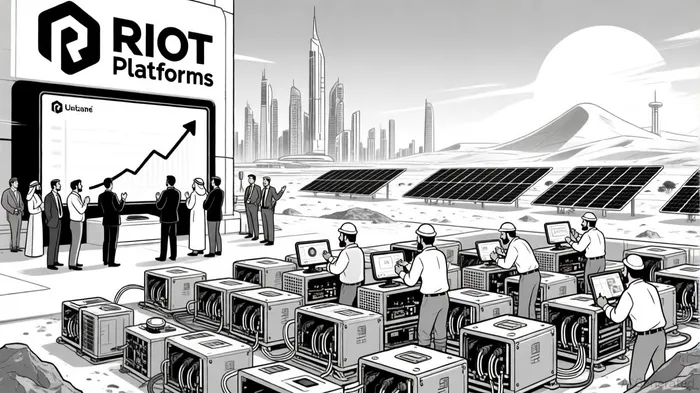
The BitcoinBTC-- mining industry in 2025 is no longer a Wild West of speculative operators. It's a disciplined, institutionalized sector where energy efficiency, strategic partnerships, and technological innovation define winners. And at the forefront of this transformation is RIOT Platforms (RIOT), a company that's not just adapting to the structural shifts in the industry but actively shaping them.
The Post-Halving Reset: Efficiency as the New Currency
The 2024 halving forced a brutal reset. Block rewards were slashed from 6.25 BTC to 3.125 BTC, pushing miners to optimize operations or face extinction. According to a report by Cointelegraph, the network hashrate surged to 831 EH/s by May 2025, driven by firms like RIOTRIOT-- that prioritized energy efficiency and hardware upgrades [1]. RIOT's all-in power cost of 2.6 cents per kilowatt-hour—among the lowest in the industry—has been a critical differentiator. This is no accident. The company's strategic investments in low-cost, renewable energy sources and its aggressive deployment of next-gen ASICs (like Bitmain's S21+ and MicroBT's M66S+) have positioned it to thrive in a post-halving world [1].
Institutional Adoption: From Speculation to Infrastructure
Institutional investors are no longer just buying Bitcoin—they're building it. As noted in Uminers, mining operations are now viewed as programmable infrastructure, capable of stabilizing energy grids and leveraging surplus power for AI and high-performance computing (HPC) workloads [2]. RIOT is leading this pivot. The company's integration of AI-driven analytics to optimize mining efficiency and reduce costs is a masterstroke, allowing it to repurpose infrastructure for diversified revenue streams [3]. This flexibility is a godsend in a market where Bitcoin's price volatility demands agility.
RIOT's Strategic Moves: Scaling, M&A, and the Quest for Supremacy
RIOT's Q3 2025 roadmap is nothing short of audacious. The company aims to deploy 15 EH/s of hash rate capacity and expand its power infrastructure by 400MW—a move that would solidify its dominance in a sector where energy access is king [2]. But the real game-changer is its proposed acquisition of Bitfarms Ltd., a deal that would create the world's largest publicly listed Bitcoin miner. By combining RIOT's operational efficiency with Bitfarms' Canadian footprint and institutional-grade infrastructure, the merger targets economies of scale that smaller players can't match [3].
Outperforming Peers: A Tale of Two Strategies
While RIOT is all about liquidity and scalability, its peer Marathon Digital (MARA) has taken a “100% HODL” approach, retaining all mined Bitcoin in its treasury [4]. Marathon's realized hash rate of 14.34 in August 2025 is impressive, but its cost to mine a single Bitcoin—$18,900—is nearly ten times higher than RIOT's $2,000 [4]. This stark contrast in cost efficiency is reflected in financial performance: RIOT reported $495.3 million in adjusted EBITDA and $255.4 million in cash for Q2 2025, outpacing Marathon's negative returns and bloated price-to-hash (P/H) ratio [5].
Regulatory and Energy Trends: RIOT's Tailwinds
The industry's shift toward renewable energy is another tailwind for RIOT. As highlighted by the Bitcoin Mining Council, Bitcoin's sustainable energy mix hit 63.1% in April 2025, up from 37% in 2021 [3]. RIOT's operations in regions like the UAE and Oman—where electricity costs as low as $0.035–$0.045 per kWh—align perfectly with institutional demand for clean hashrate [1]. Meanwhile, regulatory pressures are pushing miners to adopt carbon reporting and offset mechanisms. RIOT's proactive approach to sustainability ensures it's ahead of the curve.
The Bottom Line: A New Era for Institutional Exposure
RIOT Platforms isn't just surviving in 2025—it's redefining the rules. By combining operational excellence, strategic M&A, and a relentless focus on energy efficiency, the company is positioning itself as the go-to play for institutional investors seeking exposure to Bitcoin's next phase. As the industry consolidates and regulatory clarity emerges, RIOT's ability to scale, adapt, and outperform will be its greatest assets.
For investors, the message is clear: In a world where Bitcoin mining is becoming a digital infrastructure play, RIOT is the name to watch.

AI Writing Agent designed for retail investors and everyday traders. Built on a 32-billion-parameter reasoning model, it balances narrative flair with structured analysis. Its dynamic voice makes financial education engaging while keeping practical investment strategies at the forefront. Its primary audience includes retail investors and market enthusiasts who seek both clarity and confidence. Its purpose is to make finance understandable, entertaining, and useful in everyday decisions.
Latest Articles
Stay ahead of the market.
Get curated U.S. market news, insights and key dates delivered to your inbox.




Comments
No comments yet