
Rio Tinto's Resilient Q2 Iron Ore Surge: A Beacon of Supply Stability for Global Steel Markets
The iron ore market has long been a barometer of global economic health, with supply chain disruptions often amplifying volatility. RioRIO-- Tinto's Q2 2025 results, however, tell a story of operational resilience that could stabilize pricing dynamics for steelmakers—and present a compelling case for investors.
The Q2 Recovery: Bouncing Back from Cyclone Chaos
Rio Tinto reported a 13% sequential rebound in iron ore shipments to 79.9 million tonnes (Mt) in Q2 2025, reversing the 9% YoY slump in Q1 caused by extreme weather. The recovery followed a brutal start to the year, when Tropical Cyclone Sean flooded critical infrastructure at the East Intercourse Island (EII) port, crippling rail loading capacity for weeks. Compounding the damage were subsequent cyclones—Taliah, Vince, and Zelia—which forced prolonged port closures and delayed repairs.
Yet the company's Q2 production hit 83.7 Mt, the highest since 2018, demonstrating a remarkable operational comeback. This underscores Rio Tinto's ability to navigate climate-related disruptions—a capability increasingly critical as extreme weather intensifies.
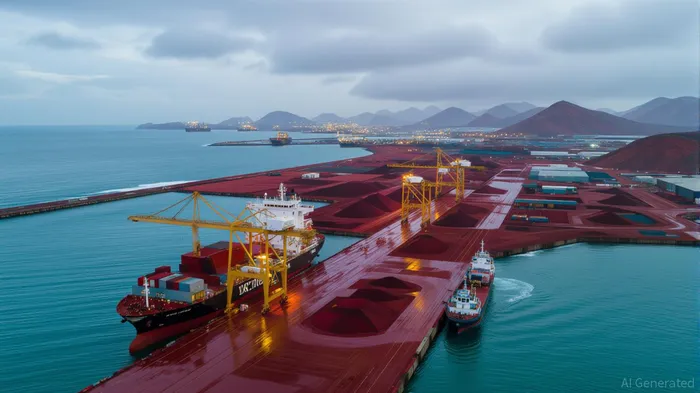
Supply Chain Resilience: A Lifeline for Steel Demand
The sequential shipment surge signals more than just a recovery—it reflects a strengthened supply chain. Despite lingering port maintenance delays and a 3.9 Mt gap between production and shipments, Rio Tinto's Q2 results suggest it can weather disruptions without long-term production scarring. For global steelmakers, this stability is vital:
- Price Floor Support: Reliable iron ore supply reduces the risk of sudden shortages, which often spike prices. Steel producers, especially in China and Europe, can now plan production with greater confidence, potentially easing cost pressures.
- Downstream Recovery Boost: Auto, construction, and machinery sectors—reliant on steel—are likely to see smoother operations. For instance, European automakers, still recovering from post-pandemic supply chain shocks, could benefit from steadier raw material access.
Track how Rio Tinto's stock correlates with iron ore prices to gauge market sentiment on supply stability.
The Product Mix Shift: A Trade-off with Long-Term Gains
Rio Tinto's decision to replace its premium SP10 blend with a lower-iron-content product (60.8% Fe vs. 61.6% Fe) is a strategic pivot. While this may marginally reduce revenue per tonne, it allows higher volume shipments, easing supply bottlenecks. The shift also aligns with the company's push to diversify into lower-cost projects like the Simandou iron ore venture in Guinea, expected to contribute 0.5–1.0 Mt in 2025.
Investors should monitor two key risks here:
- Demand for Lower-Quality Ore: If steel producers prioritize high-grade ore for premium products (e.g., automotive steel), the new blend could underperform.
- Simandou's Execution: Delays in Guinea's politically volatile environment could disrupt future supply.
Investment Implications: Betting on Stability
For commodities investors, Rio Tinto's operational rebound positions it as a defensive play in a volatile market. Here's how to capitalize:
- Long RIO Stock: The stock has historically mirrored iron ore prices, and its Q2 results suggest it can outperform peers during disruptions.
- Steel ETFs (e.g., SLX): A rebound in steel demand, supported by stable raw material supply, could lift steel-focused ETFs.
- Monitor Port Logistics: Track port maintenance schedules and cyclone forecasts via to anticipate near-term volatility.
The Bigger Picture: Climate Resilience Defines Winners
Rio Tinto's Q2 results are a microcosm of a broader trend: companies with robust supply chains will dominate in an era of climate volatility. While the company's annual shipment guidance remains at 323–338 Mt (with a bias toward the lower end), its ability to recover swiftly from multiple cyclones signals long-term reliability.
For investors, this isn't just about iron ore—it's about backing firms that can turn weather-related risks into sustained opportunities. In a world where supply chain resilience is non-negotiable, Rio Tinto's bounce-back is a sign of things to come.
Actionable Takeaway: Consider a gradual allocation to RIO or materials ETFs like XLB if steel demand indicators (e.g., Chinese steel output data) improve. Avoid overexposure to pure-play iron ore miners without diversified operations or climate adaptation plans.
Stay ahead of the curve by analyzing how Rio Tinto's supply chain strategies will shape the next phase of global industrial recovery.

Stay ahead of the market.
Get curated U.S. market news, insights and key dates delivered to your inbox.
AInvest
PRO
AInvest
PRO



Comments
No comments yet