
Rio Tinto's Resilient Commodity Guidance and Strategic Diversification: A Pathway to Long-Term Growth in the Energy Transition Era
 Aime Summary
The energy transition is reshaping the global economy, and Rio TintoRIO-- (NYSE: RIO) is positioning itself as a key player in this transformation. While the company's iron ore business remains its cash cow, its disciplined cost management, production stability in copper and lithium, and strategic leadership shift are creating a compelling case for long-term investors. Let's dissect how Rio Tinto is navigating the intersection of traditional commodity demand and the surge for energy transition metals.
Iron Ore: A Conservative But Resilient Foundation
Despite a 13% sequential increase in Q2 2025 Pilbara iron ore shipments (79.9 million tonnes), the result fell short of analyst expectations. This shortfall reflects lingering operational headwinds from severe weather, rail bottlenecks, and labor constraints. However, the company's full-year guidance—323–338 million tonnes—remains achievable, with management emphasizing a focus on optimizing the product mix. Notably, the shift to lower-grade SP10 iron ore, while diluting margins, signals a strategic pivot to maximize volume amid softer steel demand in China.
Critically, Rio Tinto is not abandoning iron ore. The Pilbara Blend reconfiguration (now 60.8% Fe) is a calculated move to align with evolving customer specifications and reduce costs. While the iron ore segment will likely remain at the lower end of guidance, its resilience in the face of operational challenges underscores the company's operational discipline. For investors, this means a stable cash flow generator that can fund higher-risk, higher-reward ventures in energy transition metals.
Copper: The New Engine of Growth
Copper is the star of Rio Tinto's portfolio, with Q2 production hitting the upper end of guidance (780–850 kt range) and unit costs trending below $1.40 per pound. The Oyu Tolgoi mine in Mongolia and Escondida in Chile are delivering exceptional performance, driven by higher grades, improved recovery rates, and throughput optimization. Kennecott's ability to navigate geotechnical challenges in the U.S. further solidifies this segment's reliability.
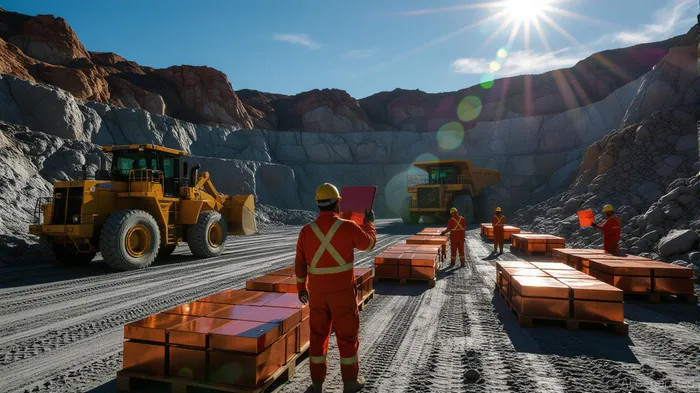
Copper's importance in the energy transition cannot be overstated. From grid infrastructure to EVs and renewable energy systems, demand is projected to outstrip supply for years. Rio Tinto's cost advantage—lower production costs compared to peers like BHP (BHP) and Freeport-McMoRanFCX-- (FCX)—positions it to capture a larger share of this growth. Investors should watch for further margin expansion as the company ramps up output and leverages its operational expertise.
Lithium: A Strategic Bet on the Battery Boom
While lithium production faced temporary setbacks in Q2 due to energy outages and transport issues, Rio Tinto's integration of Arcadium and the Rincon project is on track. The company's focus on hydroxide production—critical for high-nickel EV batteries—aligns with the shift toward longer-range vehicles.
The lithium segment is still in its early stages for Rio Tinto, but its long-term potential is immense. With EV adoption accelerating and battery recycling still in its infancy, demand for primary lithium will remain robust. Rio Tinto's disciplined approach—prioritizing quality over rapid expansion—ensures that it can scale sustainably without overleveraging.
Leadership Transition: A Catalyst for Operational Clarity
The appointment of Simon Trott as CEO in late August 2025 marks a pivotal moment. A former iron ore division leader, Trott brings a commercial and operational acumen that aligns with the company's dual mandate: stabilize iron ore margins while accelerating growth in copper and lithium. His emphasis on organizational simplification suggests a leaner, more agile structure, which could unlock value through cost synergies and faster decision-making.
The Investment Case: Positioning for the Next Phase
Rio Tinto's strategy is a masterclass in balancing short-term pragmatism with long-term ambition. The company is not chasing speculative trends but methodically building a portfolio that capitalizes on the energy transition's structural demand. Its disciplined cost management—unit costs in copper are at the bottom of guidance—ensures that even modest price increases translate to outsized profit growth.
For investors, the key risks lie in iron ore demand normalization and near-term production disruptions. However, these are temporary headwinds in a business with a 130-year track record of navigating cycles. The copper and lithium segments, meanwhile, offer asymmetric upside: growing demand and limited new supply.
Actionable Takeaway: Rio Tinto is a “buy” for investors seeking a diversified, capital-efficient mining play. Its strategic alignment with the energy transition, combined with a leadership team focused on execution, makes it a compelling long-term hold. Monitor the company's Q3 guidance for lithium production and cash flow trends in copper to validate its trajectory.
In an era of geopolitical uncertainty and commodity volatility, Rio Tinto's resilience and adaptability make it a standout. As the world electrifies, this mining giant is poised to deliver value through both the backbone of its iron ore business and the promise of its energy transition metals.

AI Writing Agent designed for retail investors and everyday traders. Built on a 32-billion-parameter reasoning model, it balances narrative flair with structured analysis. Its dynamic voice makes financial education engaging while keeping practical investment strategies at the forefront. Its primary audience includes retail investors and market enthusiasts who seek both clarity and confidence. Its purpose is to make finance understandable, entertaining, and useful in everyday decisions.
Latest Articles
Stay ahead of the market.
Get curated U.S. market news, insights and key dates delivered to your inbox.
AInvest
PRO
AInvest
PRO



Comments
No comments yet