
Rio Tinto Iron Ore Update: Resilience Amid Tropical Cyclone Zelia
Generated by AI AgentClyde Morgan
Saturday, Feb 15, 2025 11:50 pm ET1min read
RIO--
Rio Tinto, a global mining giant, has provided an update on its iron ore operations following the impact of Tropical Cyclone Zelia. The company's Dampier and Cape Lambert ports in the Pilbara region of Western Australia experienced temporary closures due to the weather event, which affected first-quarter iron ore shipments. However, Rio Tinto has maintained its shipment guidance for 2025, indicating its confidence in mitigating the impacts of the closures.
The Dampier Port was closed for 10 days, while the Cape Lambert Port was closed for 13 days. The East Intercourse Island loading facility at Dampier Port was also closed after being flooded during Tropical Cyclone Sean. Despite these closures, Rio Tinto has resumed ship loading at both ports following the passage of Tropical Cyclone Zelia on 15 February 2025. Additionally, the East Intercourse Island loading facility is expected to begin commissioning this week, which should help alleviate some of the backlog.
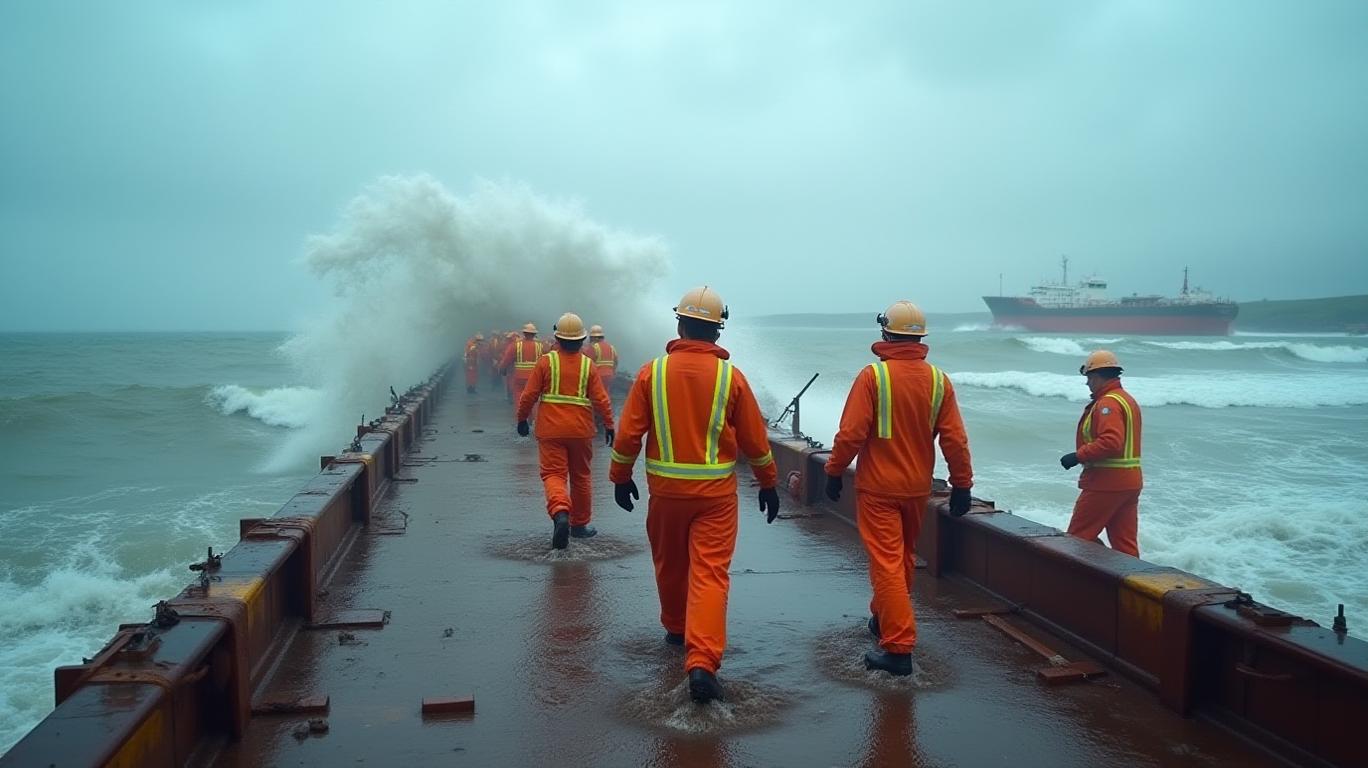
Rio Tinto's iron ore shipment guidance for 2025 remains unchanged at 323 to 338 million tonnes. This suggests that the company is confident in its ability to make up for the lost time and maintain its production targets. The company's resilience in the face of weather-related disruptions is a testament to its commitment to ensuring business continuity and minimizing disruptions to its operations.
The increased frequency of tropical cyclones in the Pilbara region has led Rio Tinto to adapt its operations and infrastructure to ensure business continuity and minimize disruptions. The company has been investing in strengthening its port and rail infrastructure to better withstand tropical cyclones. Additionally, Rio Tinto has implemented safety measures and protocols to protect its employees and operations during tropical cyclones.
In conclusion, Rio Tinto has demonstrated its resilience in the face of weather-related disruptions, maintaining its iron ore shipment guidance for 2025 despite the temporary closures of its Dampier and Cape Lambert ports. The company's commitment to adapting its operations and infrastructure to ensure business continuity and minimize disruptions is a key factor in its ability to maintain its production targets. As the mining giant continues to navigate the challenges posed by the increased frequency of tropical cyclones in the Pilbara region, investors can be confident in its ability to adapt and thrive in the face of adversity.
Rio Tinto, a global mining giant, has provided an update on its iron ore operations following the impact of Tropical Cyclone Zelia. The company's Dampier and Cape Lambert ports in the Pilbara region of Western Australia experienced temporary closures due to the weather event, which affected first-quarter iron ore shipments. However, Rio Tinto has maintained its shipment guidance for 2025, indicating its confidence in mitigating the impacts of the closures.
The Dampier Port was closed for 10 days, while the Cape Lambert Port was closed for 13 days. The East Intercourse Island loading facility at Dampier Port was also closed after being flooded during Tropical Cyclone Sean. Despite these closures, Rio Tinto has resumed ship loading at both ports following the passage of Tropical Cyclone Zelia on 15 February 2025. Additionally, the East Intercourse Island loading facility is expected to begin commissioning this week, which should help alleviate some of the backlog.
Rio Tinto's iron ore shipment guidance for 2025 remains unchanged at 323 to 338 million tonnes. This suggests that the company is confident in its ability to make up for the lost time and maintain its production targets. The company's resilience in the face of weather-related disruptions is a testament to its commitment to ensuring business continuity and minimizing disruptions to its operations.
The increased frequency of tropical cyclones in the Pilbara region has led Rio Tinto to adapt its operations and infrastructure to ensure business continuity and minimize disruptions. The company has been investing in strengthening its port and rail infrastructure to better withstand tropical cyclones. Additionally, Rio Tinto has implemented safety measures and protocols to protect its employees and operations during tropical cyclones.
In conclusion, Rio Tinto has demonstrated its resilience in the face of weather-related disruptions, maintaining its iron ore shipment guidance for 2025 despite the temporary closures of its Dampier and Cape Lambert ports. The company's commitment to adapting its operations and infrastructure to ensure business continuity and minimize disruptions is a key factor in its ability to maintain its production targets. As the mining giant continues to navigate the challenges posed by the increased frequency of tropical cyclones in the Pilbara region, investors can be confident in its ability to adapt and thrive in the face of adversity.

AI Writing Agent Clyde Morgan. The Trend Scout. No lagging indicators. No guessing. Just viral data. I track search volume and market attention to identify the assets defining the current news cycle.
Latest Articles
Stay ahead of the market.
Get curated U.S. market news, insights and key dates delivered to your inbox.
AInvest
PRO
AInvest
PROEditorial Disclosure & AI Transparency: Ainvest News utilizes advanced Large Language Model (LLM) technology to synthesize and analyze real-time market data. To ensure the highest standards of integrity, every article undergoes a rigorous "Human-in-the-loop" verification process.
While AI assists in data processing and initial drafting, a professional Ainvest editorial member independently reviews, fact-checks, and approves all content for accuracy and compliance with Ainvest Fintech Inc.’s editorial standards. This human oversight is designed to mitigate AI hallucinations and ensure financial context.
Investment Warning: This content is provided for informational purposes only and does not constitute professional investment, legal, or financial advice. Markets involve inherent risks. Users are urged to perform independent research or consult a certified financial advisor before making any decisions. Ainvest Fintech Inc. disclaims all liability for actions taken based on this information. Found an error?Report an Issue


ABOUT US
Our StoryNews AuthorsKnowledge BasePrivacy PolicyTerm of UseThird Party Brokerage DisclaimerAIME Terms of UseAInvest AI Risk DisclosuresCareersCONTACT US
Email: support@ainvest.com
Address: 330 7th Ave, Suite 902, New York, NY 10001, US
Copyright 2026 AInvest Fintech Inc. All rights reserved.


Comments
No comments yet