
Rio Tinto's Iron Ore Shipments Plunge 9% Due to Cyclones
Global mining giant Rio TintoRIO-- experienced a significant setback in the first quarter of this year, with its iron ore shipment volume dropping by 9% year-on-year, marking the lowest level in six years. This decline was primarily due to the disruption caused by tropical cyclones in its major export ports in Australia. Despite this, the company's copper business showed robust growth.
In a statement released on Wednesday, Rio Tinto's CEO, Jakob Stausholm, attributed the decline to "extreme weather events" that hindered iron ore operations in the Pilbara region. The company shipped 70.7 million tons of steelmaking raw materials during the first three months of the year, falling short of analysts' expectations of 72.3 million tons. However, Rio Tinto maintained its annual production target.
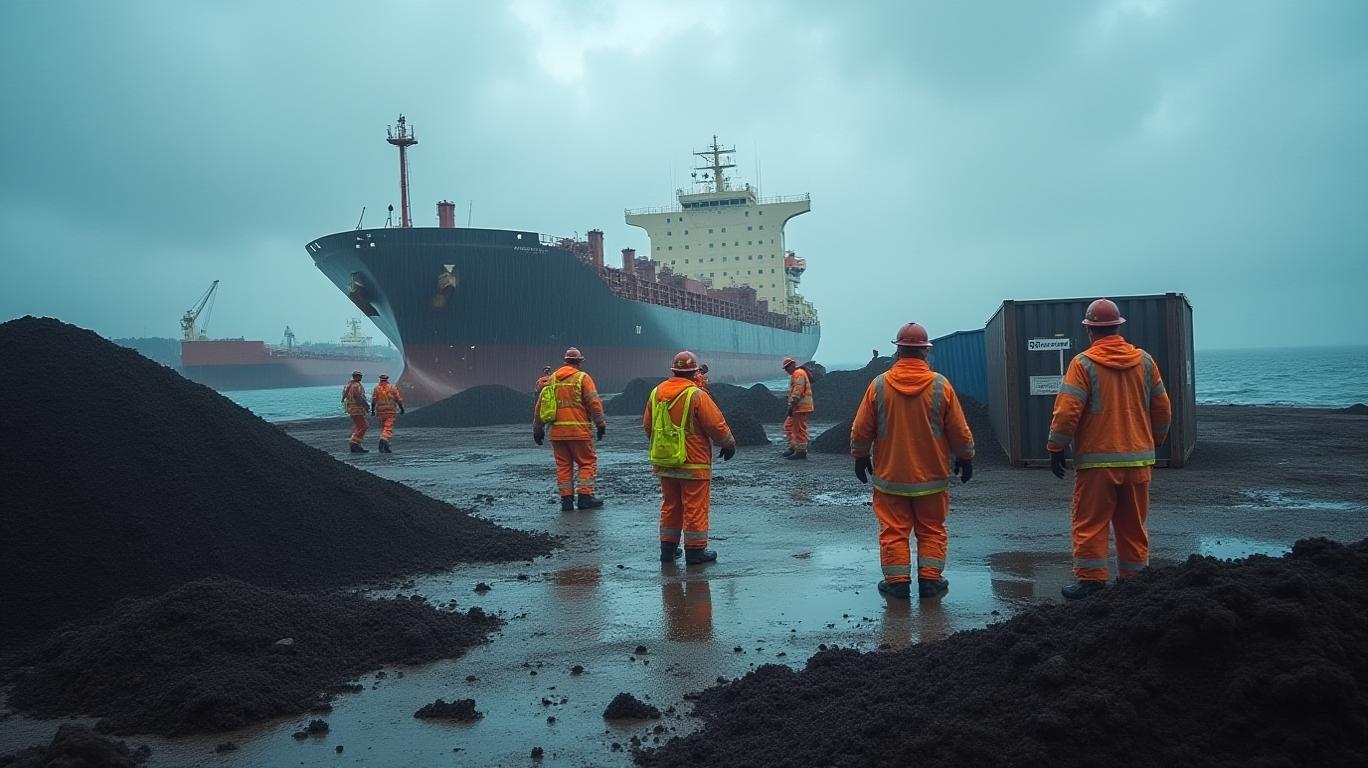
As the world's second-largest mining company, Rio Tinto's iron ore shipments from the Pilbara region in Western Australia were severely impacted by six major tropical cyclones this season. According to data from the Australian Bureau of Meteorology, this was the worst storm season since 1998-99, with the current storm season set to end this month.
Despite concerns over supply glut due to economic slowdown, which caused iron ore prices to briefly fall below $100 per ton in April, prices have since stabilized. The escalating trade tensions between China and the United States have added new challenges for Rio Tinto's board and management.
Rio Tinto is actively expanding into key commodities for the energy transition. Following the acquisition of Arcadium Lithium, the company has strengthened its portfolio of high-quality copper and aluminum projects, enhancing its position in key metals for rechargeable batteries. Rio Tinto is leveraging the substantial earnings from its iron ore business to expand into critical commodities needed for the energy transition.
Data released on Wednesday showed that the Arcadium acquisition increased Rio Tinto's net debt to $7.6 billion. The company maintained its capital expenditure guidance of $11 billion, which would be the largest annual investment since 2013.
Iron ore remains Rio Tinto's core profit driver, contributing about half of its revenue. The company is committed to maintaining production levels at its existing Pilbara mines but will need to develop a new mine each year by the end of this decade to sustain current output levels. As high-grade ore in existing mines depletes, Rio Tinto is accelerating the development of high-quality ore deposits in other regions.
One of the key projects is the Simandou project in Guinea, which is expected to produce 60 million tons annually once fully operational. Although the first batch of ore is expected by the end of this year, it will take 30 months to reach full production. Additionally, Rio Tinto's $2.5 billion expansion of the Rincon lithium project in Argentina has made significant progress, marking the company's first commercial-scale battery-grade lithium extraction project outside of Arcadium assets. The project, which began production in November last year, aims to increase annual output to 60,000 tons.
Meanwhile, Rio Tinto's existing copper assets achieved a 16% year-on-year increase in production to 210,000 tons in the first quarter, setting a new record. This was primarily driven by the Oyu Tolgoi copper mine in Mongolia, which achieved record output as deeper ore bodies were developed.
According to calculations, Rio Tinto's iron ore shipment volume for the quarter was the lowest since the first quarter of 2019 (69.1 million tons). A major storm in February severely disrupted shipments to Asian customers, primarily in China. While maintaining its annual production guidance of 323-338 million tons, the company expects actual exports to be at the lower end of the range.
Market attention is now focused on Rio Tinto's annual general meeting scheduled for May 1 in Perth, Western Australia. The meeting will vote on a proposal to eliminate the dual-listed company structure. Currently listed in both London and Sydney, Rio Tinto faces pressure from some activist investors to merge into a single entity.

Stay ahead of the market.
Get curated U.S. market news, insights and key dates delivered to your inbox.




Comments
No comments yet