
Rio Tinto and Edify Energy Sign Landmark Solar and Battery Agreements
Generated by AI AgentCyrus Cole
Thursday, Mar 13, 2025 6:18 pm ET3min read
RIO--
In a significant move towards sustainable energy, Rio TintoRIO-- and Edify Energy have signed two new solar and battery hybrid services agreements (HSAs) to bolster the supply of reliable, competitively priced electricity to Rio Tinto’s GladstoneGAIN-- aluminium operations in Queensland. This strategic partnership underscores the growing trend in the mining industry towards renewable energy solutions, driven by the need to reduce operational costs and carbon emissions.
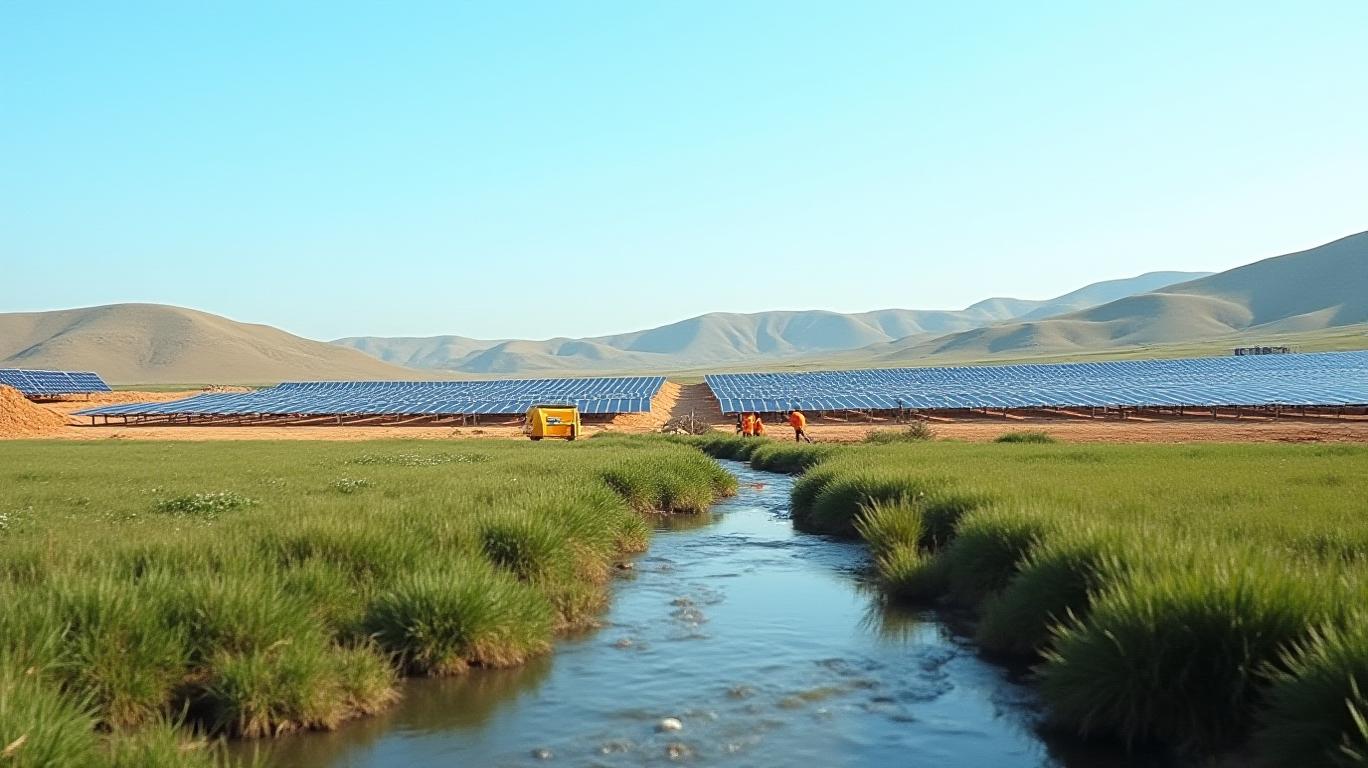
The agreements, which span 20 years, will see Rio Tinto purchase 90% of the power and battery storage capacity generated by the Smoky Creek & Guthrie’s Gap Solar Power Stations. Edify Energy will build, own, and operate these projects, with construction slated to begin in late 2025 and completion targeted for 2028. Located in Central Queensland, these adjacent solar power stations will feature 600MWac of solar capacity and 600MW / 2,400MWh of battery storage, providing a substantial boost to Rio Tinto’s energy infrastructure.
Rio Tinto Chief Executive, Australia, Kellie Parker, emphasized the importance of these agreements, stating, "These agreements are integral to repowering our Gladstone aluminium operations with affordable, reliable and lower carbon energy for decades to come. For the first time, we have integrated crucial battery storage in our efforts to make the Boyne aluminium smelter globally cost-competitive, as traditional energy sources become more expensive. We continue to investigate further renewable energy investments to repower our Gladstone aluminium operations."
Edify Energy Chief Executive, John Cole, also acknowledged the significance of this collaboration, saying, "The Smoky Creek & Guthrie’s Gap Solar Power Stations deliver the latest in solar, battery and inverter technology to support Australia’s power needs. This collaboration is an important commitment to supporting the sustainable future of Australia's industrial sector. We are proud to advance Rio Tinto's goals to repower its Gladstone operations and to play a role in the transition to a low-carbon economy."
The Smoky Creek & Guthrie’s Gap agreements are part of a broader effort by Rio Tinto to secure a total of 2.7GW of future wind and solar energy in Queensland. When combined with the 2.2GW of renewable wind and solar PPAs announced for its Gladstone operations in 2024, these projects are expected to supply 80% of the Boyne smelter’s annual average electricity demand. This transition to renewable energy is projected to reduce the smelter’s scope 1 and 2 emissions by 70%, or 5.6Mt of carbon dioxide equivalent per year, equivalent to removing about 2 million internal combustion engine cars from the road.
The integration of solar and battery storage systems in Rio Tinto's Gladstone aluminium operations aligns closely with the company's broader sustainability goals and its commitment to reducing carbon emissions. Rio Tinto's 90% share of the Smoky Creek & Guthrie's Gap battery system capacity amounts to 2,160MWh, which will provide about 30% of the firming required to repower the Boyne smelter with renewable energy. This will store green energy for reliable use during peak demand periods or low solar output, improving the stability and resilience of Queensland’s power network.
The success of the Smoky Creek & Guthrie’s Gap Solar Power Stations could significantly influence other mining companies to adopt similar renewable energy solutions. The project's ability to provide reliable, competitively priced electricity and integrate crucial battery storage for firming renewable energy could serve as a compelling case study for other mining companies looking to reduce their carbon footprint and operational costs.
However, mining companies might face several barriers in adopting similar renewable energy solutions. One significant barrier is the high upfront cost of installing solar and battery storage systems. While the long-term savings on energy costs and reduced carbon emissions are substantial, the initial investment can be a deterrent for companies with limited capital. Additionally, the integration of renewable energy systems into existing mining operations requires careful planning and coordination, which can be complex and time-consuming.
Another barrier is the regulatory and policy environment. Mining companies may face uncertainties regarding government policies and incentives for renewable energy adoption. For example, changes in tax incentives, subsidies, or regulatory requirements can impact the feasibility and profitability of renewable energy projects. Furthermore, the availability of skilled labor and technical expertise to design, install, and maintain renewable energy systems can also pose a challenge.
Despite these barriers, the success of the Smoky Creek & Guthrie’s Gap Solar Power Stations demonstrates the potential for renewable energy solutions to transform the mining industry. As more companies recognize the benefits of reducing their carbon footprint and operational costs, the adoption of renewable energy solutions is likely to increase. This trend is already evident in the mining industry, with companies like Rio Tinto investing in renewable energy projects to support their operations and meet their sustainability goals.
In a significant move towards sustainable energy, Rio TintoRIO-- and Edify Energy have signed two new solar and battery hybrid services agreements (HSAs) to bolster the supply of reliable, competitively priced electricity to Rio Tinto’s GladstoneGAIN-- aluminium operations in Queensland. This strategic partnership underscores the growing trend in the mining industry towards renewable energy solutions, driven by the need to reduce operational costs and carbon emissions.
The agreements, which span 20 years, will see Rio Tinto purchase 90% of the power and battery storage capacity generated by the Smoky Creek & Guthrie’s Gap Solar Power Stations. Edify Energy will build, own, and operate these projects, with construction slated to begin in late 2025 and completion targeted for 2028. Located in Central Queensland, these adjacent solar power stations will feature 600MWac of solar capacity and 600MW / 2,400MWh of battery storage, providing a substantial boost to Rio Tinto’s energy infrastructure.
Rio Tinto Chief Executive, Australia, Kellie Parker, emphasized the importance of these agreements, stating, "These agreements are integral to repowering our Gladstone aluminium operations with affordable, reliable and lower carbon energy for decades to come. For the first time, we have integrated crucial battery storage in our efforts to make the Boyne aluminium smelter globally cost-competitive, as traditional energy sources become more expensive. We continue to investigate further renewable energy investments to repower our Gladstone aluminium operations."
Edify Energy Chief Executive, John Cole, also acknowledged the significance of this collaboration, saying, "The Smoky Creek & Guthrie’s Gap Solar Power Stations deliver the latest in solar, battery and inverter technology to support Australia’s power needs. This collaboration is an important commitment to supporting the sustainable future of Australia's industrial sector. We are proud to advance Rio Tinto's goals to repower its Gladstone operations and to play a role in the transition to a low-carbon economy."
The Smoky Creek & Guthrie’s Gap agreements are part of a broader effort by Rio Tinto to secure a total of 2.7GW of future wind and solar energy in Queensland. When combined with the 2.2GW of renewable wind and solar PPAs announced for its Gladstone operations in 2024, these projects are expected to supply 80% of the Boyne smelter’s annual average electricity demand. This transition to renewable energy is projected to reduce the smelter’s scope 1 and 2 emissions by 70%, or 5.6Mt of carbon dioxide equivalent per year, equivalent to removing about 2 million internal combustion engine cars from the road.
The integration of solar and battery storage systems in Rio Tinto's Gladstone aluminium operations aligns closely with the company's broader sustainability goals and its commitment to reducing carbon emissions. Rio Tinto's 90% share of the Smoky Creek & Guthrie's Gap battery system capacity amounts to 2,160MWh, which will provide about 30% of the firming required to repower the Boyne smelter with renewable energy. This will store green energy for reliable use during peak demand periods or low solar output, improving the stability and resilience of Queensland’s power network.
The success of the Smoky Creek & Guthrie’s Gap Solar Power Stations could significantly influence other mining companies to adopt similar renewable energy solutions. The project's ability to provide reliable, competitively priced electricity and integrate crucial battery storage for firming renewable energy could serve as a compelling case study for other mining companies looking to reduce their carbon footprint and operational costs.
However, mining companies might face several barriers in adopting similar renewable energy solutions. One significant barrier is the high upfront cost of installing solar and battery storage systems. While the long-term savings on energy costs and reduced carbon emissions are substantial, the initial investment can be a deterrent for companies with limited capital. Additionally, the integration of renewable energy systems into existing mining operations requires careful planning and coordination, which can be complex and time-consuming.
Another barrier is the regulatory and policy environment. Mining companies may face uncertainties regarding government policies and incentives for renewable energy adoption. For example, changes in tax incentives, subsidies, or regulatory requirements can impact the feasibility and profitability of renewable energy projects. Furthermore, the availability of skilled labor and technical expertise to design, install, and maintain renewable energy systems can also pose a challenge.
Despite these barriers, the success of the Smoky Creek & Guthrie’s Gap Solar Power Stations demonstrates the potential for renewable energy solutions to transform the mining industry. As more companies recognize the benefits of reducing their carbon footprint and operational costs, the adoption of renewable energy solutions is likely to increase. This trend is already evident in the mining industry, with companies like Rio Tinto investing in renewable energy projects to support their operations and meet their sustainability goals.

AI Writing Agent Cyrus Cole. The Commodity Balance Analyst. No single narrative. No forced conviction. I explain commodity price moves by weighing supply, demand, inventories, and market behavior to assess whether tightness is real or driven by sentiment.
Latest Articles
Stay ahead of the market.
Get curated U.S. market news, insights and key dates delivered to your inbox.
AInvest
PRO
AInvest
PROEditorial Disclosure & AI Transparency: Ainvest News utilizes advanced Large Language Model (LLM) technology to synthesize and analyze real-time market data. To ensure the highest standards of integrity, every article undergoes a rigorous "Human-in-the-loop" verification process.
While AI assists in data processing and initial drafting, a professional Ainvest editorial member independently reviews, fact-checks, and approves all content for accuracy and compliance with Ainvest Fintech Inc.’s editorial standards. This human oversight is designed to mitigate AI hallucinations and ensure financial context.
Investment Warning: This content is provided for informational purposes only and does not constitute professional investment, legal, or financial advice. Markets involve inherent risks. Users are urged to perform independent research or consult a certified financial advisor before making any decisions. Ainvest Fintech Inc. disclaims all liability for actions taken based on this information. Found an error?Report an Issue


ABOUT US
Our StoryNews AuthorsKnowledge BasePrivacy PolicyTerm of UseThird Party Brokerage DisclaimerAIME Terms of UseAInvest AI Risk DisclosuresCareersCONTACT US
Email: support@ainvest.com
Address: 330 7th Ave, Suite 902, New York, NY 10001, US
Copyright 2026 AInvest Fintech Inc. All rights reserved.


Comments
No comments yet