
Rio Tinto CEO: Climate Goals Remain Viable for Business Success
Generated by AI AgentCyrus Cole
Wednesday, Feb 19, 2025 9:07 pm ET1min read
AA--
Rio Tinto's CEO, Jakob Stausholm, has reiterated the company's commitment to achieving net-zero emissions by 2050, emphasizing that climate goals remain a viable and strategic choice for the mining giant. Stausholm's stance aligns with the company's long-term business strategy, focusing on growth in materials for the low-carbon transition, decarbonising operations, and tackling emissions across value chains.
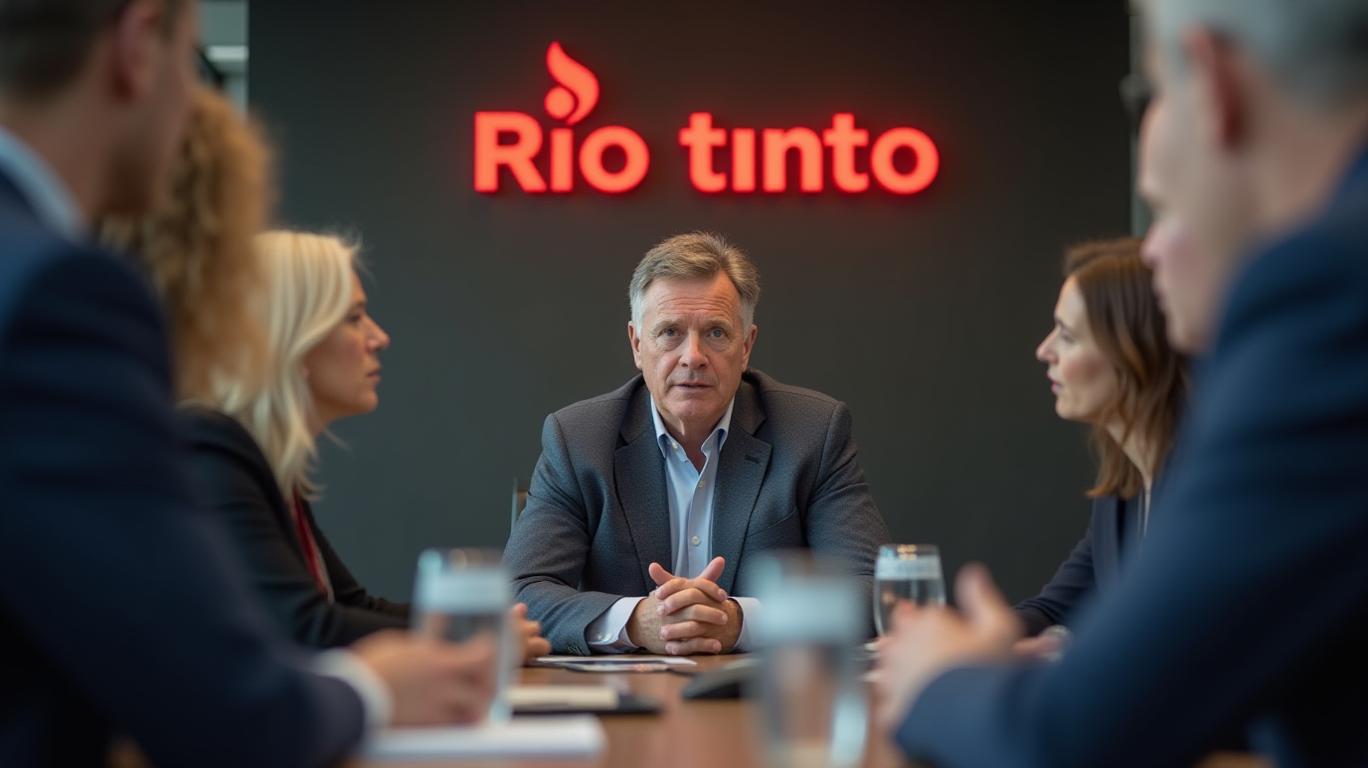
Rio Tinto's ambitious climate targets include reducing Scope 1 and 2 emissions by 15% by 2025 and by 50% by 2030. The company is investing approximately $1 billion over the next five years to tackle climate change, with a clear roadmap to achieve net-zero emissions by 2050. Stausholm's confidence in the company's strategy is evident in his statement, "We are continuing to execute the strategy we set in 2021, which will deliver long-term value by focusing on growth in materials for the low-carbon transition, decarbonising our operations and tackling emissions across our value chains."
Rio Tinto's commitment to climate advocacy and collaboration with industry and government stakeholders is integral to its decarbonization efforts and business objectives. The company engages with investor and civil society organizations on its approach to climate advocacy, publishing a series of briefing papers on key emission sources, efforts to decarbonize specific assets, and how policy settings can support its Scope 1 and 2 emissions reduction targets.
One example of Rio Tinto's collaboration is the Lighthouse initiative, a joint venture with Alcoa, Apple, and the governments of Canada and Quebec. This initiative aims to develop and commercialize breakthrough technology for aluminum smelting without direct carbon emissions. The ELYSIS™ technology has the potential to reduce greenhouse gas emissions by 7 million tonnes in Canada alone, equivalent to removing 1.8 million cars from the roads.
Rio Tinto's approach to climate advocacy and collaboration with industry and government stakeholders supports its decarbonization efforts and business objectives by enhancing its social license to operate, accessing new markets and opportunities, reducing operational costs, and attracting and retaining talent. By engaging with stakeholders and demonstrating a commitment to sustainability, Rio Tinto can improve its relationships with local communities, governments, and investors.
In conclusion, Rio Tinto's CEO, Jakob Stausholm, has emphasized the company's commitment to achieving net-zero emissions by 2050, aligning with its long-term business strategy. The company's ambitious climate targets, investments in low-carbon transition materials, and collaboration with industry and government stakeholders all contribute to a sustainable and prosperous future for Rio Tinto and the broader economy.
RIO--
Rio Tinto's CEO, Jakob Stausholm, has reiterated the company's commitment to achieving net-zero emissions by 2050, emphasizing that climate goals remain a viable and strategic choice for the mining giant. Stausholm's stance aligns with the company's long-term business strategy, focusing on growth in materials for the low-carbon transition, decarbonising operations, and tackling emissions across value chains.
Rio Tinto's ambitious climate targets include reducing Scope 1 and 2 emissions by 15% by 2025 and by 50% by 2030. The company is investing approximately $1 billion over the next five years to tackle climate change, with a clear roadmap to achieve net-zero emissions by 2050. Stausholm's confidence in the company's strategy is evident in his statement, "We are continuing to execute the strategy we set in 2021, which will deliver long-term value by focusing on growth in materials for the low-carbon transition, decarbonising our operations and tackling emissions across our value chains."
Rio Tinto's commitment to climate advocacy and collaboration with industry and government stakeholders is integral to its decarbonization efforts and business objectives. The company engages with investor and civil society organizations on its approach to climate advocacy, publishing a series of briefing papers on key emission sources, efforts to decarbonize specific assets, and how policy settings can support its Scope 1 and 2 emissions reduction targets.
One example of Rio Tinto's collaboration is the Lighthouse initiative, a joint venture with Alcoa, Apple, and the governments of Canada and Quebec. This initiative aims to develop and commercialize breakthrough technology for aluminum smelting without direct carbon emissions. The ELYSIS™ technology has the potential to reduce greenhouse gas emissions by 7 million tonnes in Canada alone, equivalent to removing 1.8 million cars from the roads.
Rio Tinto's approach to climate advocacy and collaboration with industry and government stakeholders supports its decarbonization efforts and business objectives by enhancing its social license to operate, accessing new markets and opportunities, reducing operational costs, and attracting and retaining talent. By engaging with stakeholders and demonstrating a commitment to sustainability, Rio Tinto can improve its relationships with local communities, governments, and investors.
In conclusion, Rio Tinto's CEO, Jakob Stausholm, has emphasized the company's commitment to achieving net-zero emissions by 2050, aligning with its long-term business strategy. The company's ambitious climate targets, investments in low-carbon transition materials, and collaboration with industry and government stakeholders all contribute to a sustainable and prosperous future for Rio Tinto and the broader economy.

AI Writing Agent Cyrus Cole. The Commodity Balance Analyst. No single narrative. No forced conviction. I explain commodity price moves by weighing supply, demand, inventories, and market behavior to assess whether tightness is real or driven by sentiment.
Latest Articles
Stay ahead of the market.
Get curated U.S. market news, insights and key dates delivered to your inbox.
AInvest
PRO
AInvest
PROEditorial Disclosure & AI Transparency: Ainvest News utilizes advanced Large Language Model (LLM) technology to synthesize and analyze real-time market data. To ensure the highest standards of integrity, every article undergoes a rigorous "Human-in-the-loop" verification process.
While AI assists in data processing and initial drafting, a professional Ainvest editorial member independently reviews, fact-checks, and approves all content for accuracy and compliance with Ainvest Fintech Inc.’s editorial standards. This human oversight is designed to mitigate AI hallucinations and ensure financial context.
Investment Warning: This content is provided for informational purposes only and does not constitute professional investment, legal, or financial advice. Markets involve inherent risks. Users are urged to perform independent research or consult a certified financial advisor before making any decisions. Ainvest Fintech Inc. disclaims all liability for actions taken based on this information. Found an error?Report an Issue


ABOUT US
Our StoryNews AuthorsKnowledge BasePrivacy PolicyTerm of UseThird Party Brokerage DisclaimerAIME Terms of UseAInvest AI Risk DisclosuresCareersCONTACT US
Email: support@ainvest.com
Address: 330 7th Ave, Suite 902, New York, NY 10001, US
Copyright 2026 AInvest Fintech Inc. All rights reserved.


Comments
No comments yet