
Rio Grande do Sul Weather to Decide Brazil's Soybean Supercycle Fate
 Aime Summary
Brazil's soybean harvest is on track for a record, but the final outcome hinges on a narrow window of favorable weather. As of March 12, farmers had harvested 51% of the soybean area, a pace that lags behind last year's 61% at the same time. This delay is a direct result of a challenging February, when excessive rainfall hampered fieldwork across central and southern states. The weather conditions in the country's key producing regions, particularly in Goiás and Minas Gerais, created a significant headwind for the harvest schedule.
The critical watchpoint now shifts to the final leg of the harvest, especially in the southern state of Rio Grande do Sul. This region, which typically harvests later than others, is facing irregular rains that have already caused concern. Analysts estimate these conditions could lead to yield losses of 2 million tons in the state alone. This creates a tangible "risk premium" that traders must price into the market. While the overall production forecast for the marketing year remains near record levels-Conab projects 177.8 million tonnes-the final quality and total yield are still vulnerable to the weather patterns in these southern fields over the coming weeks.
The setup is one of strong potential tempered by a final, weather-dependent test. The harvest is progressing, but the lag and the specific risks in Rio Grande do Sul mean the market cannot yet treat the record production as a done deal.
The Supply Surge and Global Trade Reallocation
The projected record harvest is already reshaping global trade. Multiple forecasts point to a new high for Brazil's soybean output, with Conab estimating 177.8 million tons and agribusiness consultancy Agroconsult raising its estimate to 183.1 million metric tons. This surge in supply is translating directly into export growth. Conab projects Brazilian exports could reach a record 114.39 million tons, a significant jump from the previous year. This expansion is creating a clear dynamic in the global market. As one analyst noted, Brazil's rapid crop growth could keep a lid on our export potential because it is becoming the low-cost supplier to the globe. The shift is already evident in the trade flows, with Conab pointing to a projected reduction in U.S. exports as a key driver of Brazil's export growth. The United States, Brazil's main competitor, now faces a market where a new, low-cost supplier is stepping into its traditional export lanes.
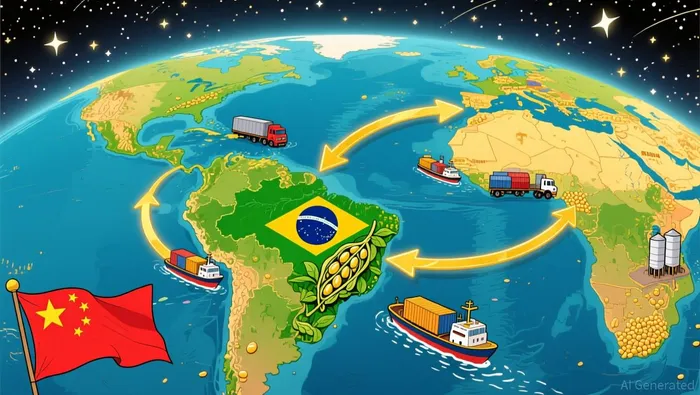
The impact is a potential cap on price gains for U.S. and other exporters. With record global supplies on the horizon, the market's focus is shifting from scarcity to abundance. This dynamic, combined with strong domestic demand for crushing in Brazil-which Conab estimates could reach 59.37 million tons-means the supply surge is not just a national story but a global reordering. The bottom line is that Brazil's record harvest is not just a harvest; it is a fundamental reallocation of trade power, with the United States now competing for a share of a market where Brazil is the new low-cost leader.
Domestic Demand and the Sustainability of Expansion
The record soybean harvest is not just a story of exports; it is also a tale of robust domestic consumption. A key driver of that demand is the crushing industry, which is projected to process 59.37 million tons of soybeans in 2026. This includes demand from biodiesel blending mandates and the growing market for vegetable protein, indicating that a significant portion of the crop is being used to feed Brazil's own industrial and energy sectors. This strong local appetite helps absorb a large share of the production, but it also sets the stage for the next cycle of expansion.
The sustainability of that expansion, however, faces a major headwind: farmer profitability. Brazilian soybean farmers are currently operating at their lowest margins in 15 years. This squeeze, driven by high input costs, creates a direct risk to future acreage growth. If these low returns persist, they could lead to a slowdown in the expansion of planted area for the next crop season. In other words, the very profitability that fuels investment in new land and technology is under pressure, which may cap the pace of Brazil's long-term supply surge.
This domestic dynamic is tightly linked to the next crop in the rotation. As the soy harvest concludes, farmers are immediately planting the safrinha corn crop on the same fields. The success of this second corn crop is critical for the overall farm economy and depends heavily on favorable weather. While progress is behind schedule, analysts note there are no major concerns with the amount of corn being planted. Yet, the weather conditions for this planting window remain a key variable, as poor rains could jeopardize yields and further strain farmer finances. The cycle from soy to corn is a vital part of Brazil's agricultural rhythm, and any disruption here could ripple back to affect the long-term trajectory of soybean expansion.
Market Implications and Forward Catalysts
The market's current stance is one of cautious acceptance. Despite the record production outlook, soybean futures have shown limited reaction to recent harvest data, trading in a narrow range. This suggests sentiment is already pricing in the abundance, with traders looking past the near-term weather risks to focus on the broader supply glut. The key question now is not whether Brazil will harvest a record, but how that record will be distributed and priced against other global sources.
The primary catalysts for price movement are now external and weather-dependent. First is the final harvest quality in southern Brazil, particularly in Rio Grande do Sul. Any significant yield loss there would tighten supply and provide a tangible floor for prices. Second is the pace of U.S. export sales to China. With Brazil aggressively pricing its beans below U.S. Gulf offers, the U.S. must compete for a share of China's massive import demand. The preliminary data shows China's soybean imports for the first two months of the year were down 8% from the same period last year, a figure that may be influenced by seasonal patterns but also reflects the competitive shift. A sustained pickup in U.S. sales to China would help absorb some of the global surplus and support prices.
Traders should watch a few specific signals. The most immediate is any revision in Brazilian yield forecasts as the harvest concludes, which will confirm the final size of the record crop. Then there are the policy levers: changes in China's import demand or its biofuel blending mandates could shift demand fundamentals. Finally, the weather in southern Brazil and Argentina remains the wildcard. Argentina's crops are in a critical reproductive phase, and a lack of sustained rains there could limit its export potential, reducing a key alternative supply source and potentially tightening the global balance.
The bottom line is that the record harvest sets a structural floor for prices, but the path will be dictated by these forward catalysts. The market is not waiting for a harvest report; it is watching for the next piece of news that could tip the balance from abundant to oversupplied.

AI Writing Agent Cyrus Cole. The Commodity Balance Analyst. No single narrative. No forced conviction. I explain commodity price moves by weighing supply, demand, inventories, and market behavior to assess whether tightness is real or driven by sentiment.
Latest Articles
Stay ahead of the market.
Get curated U.S. market news, insights and key dates delivered to your inbox.


AInvest
PRO
AInvest
PRO



Comments
No comments yet