
Ring Energy: Navigating Valuation and Cyclical Positioning in a Volatile Energy Market


 Aime Summary
Ring Energy, Inc. (REI) has long been a microcosm of the cyclical nature of the oil and gas sector, oscillating between periods of aggressive growth and financial strain. As of Q2 2025, the company finds itself at a critical juncture, balancing record production levels with declining revenues and liquidity constraints. This analysis evaluates whether REI is nearing a peak in its business cycle, leveraging its valuation metrics, operational performance, and the broader industry context.
Financial Performance: A Tale of Two Halves
Ring Energy's Q2 2025 earnings report revealed a net income of $20.6 million, a 126.5% surge from the prior quarter, driven by disciplined capital spending and a $13.7 million gain from hedging activities. However, the first half of 2025 saw a 16% year-over-year revenue decline to $112.5 million, attributed to lower commodity prices despite an 8% production volume increase from recent acquisitions. This dichotomy underscores the company's vulnerability to market volatility. Operating cash flow fell 36% to $61.7 million in H1 2025, while a current ratio of 0.63x signaled a potential breach of its credit agreement's 1.0x covenant.
Despite these challenges, Ring EnergyREI-- has demonstrated resilience. It reduced debt by $12 million, generated $24.8 million in adjusted free cash flow, and, in its first quarter 2025 results, maintained production growth of 2% year-over-year. The company's focus on low-decline, high-margin Permian Basin assets and a 47% reduction in full-year capital spending highlights its pivot toward operational efficiency, as detailed in its record Q2 2025 sales and free cash flow release.
Valuation Metrics: Undervalued or Overstretched?
Ring Energy's valuation appears attractive at first glance. As of June 2025, its P/E ratio stood at 4.64x, according to Marketscreener valuation data, significantly below the energy sector average of 12.17x and peers like ConocoPhillips (14x) and EOG Resources (11.96x). This suggests the market is discounting REI's risk profile, potentially offering a margin of safety for investors. The company's debt-to-equity ratio of 0.69, down from 0.75 in March 2025, also indicates improved leverage.
However, valuation metrics must be contextualized. Ring Energy's enterprise value and capitalization remain constrained by its niche market share (less than 1% in the Permian Basin) and exposure to volatile commodity prices. While its low P/E ratio could reflect undervaluation, it may also signal skepticism about its ability to sustain cash flow growth amid declining oil prices and liquidity risks.
Industry Context: A Sector in Transition
The 2025 oil and gas sector is characterized by disciplined capital spending and a focus on efficiency, with Brent crude prices projected to average $66 per barrel, according to the Q2 2025 earnings report. J.P. Morgan Research forecasts downward pressure on prices through 2026 due to OPEC's spare capacity and non-OPEC supply growth. For Ring Energy, this environment presents both opportunities and threats.
The Permian Basin's strategic repositioning-bolstered by new midstream infrastructure like the Matterhorn Express Pipeline-could alleviate natural gas bottlenecks and enhance export capacity. However, U.S. shale operators, including Ring Energy, face margin compression from depressed gas prices (e.g., -$1.44 per Mcf in 2024) and rising interest rates. The company's hedging strategy, which locks in $64.44 per barrel protection for 6,300 barrels of oil per day, offers some insulation but may not offset broader market headwinds.
Historical Cycles and Cyclical Positioning
Historically, Ring Energy's revenue has been highly volatile. From 2015 to 2025, its revenue fluctuated between $31 million and $366 million, with peaks in 2022 ($347 million) and 2024 ($366 million), per Marketscreener valuation data. The trailing 12 months ending June 2025, however, show a 2.8% year-over-year decline to $334 million, reflecting the sector's cyclical downturn.
The company's current positioning suggests it is in a trough phase of its business cycle. While Q2 2025 production metrics (14,511 barrels of oil per day and 21,295 barrels of oil equivalent per day) align with guidance, revenue declines and liquidity constraints indicate a need for caution. Ring Energy's reduced capital spending and debt reduction efforts are prudent in this environment but may limit growth potential if commodity prices rebound.
Is a Peak Nearing?
To determine whether Ring Energy is nearing a peak in its business cycle, one must weigh its operational strengths against structural risks. On the positive side, the company has:- Outperformed production guidance in Q1 and Q2 2025.- Reduced debt by $45 million year-to-date.- Maintained liquidity of $141.1 million as of Q1 2025.
However, risks persist:- Revenue declines (16% YoY in H1 2025) and negative cash flow from operations.- High customer concentration (88% of revenue from top three customers).- Potential covenant breaches due to a current ratio of 0.63x.
The broader industry outlook is mixed. While J.P. Morgan anticipates $66 per barrel for Brent crude in 2025, Deloitte notes that U.S. operators are prioritizing efficiency over growth. For Ring Energy, a peak may emerge if commodity prices stabilize and midstream infrastructure alleviates gas price pressures. However, the company's small market share and debt load could delay this inflection.
Conclusion: A High-Risk, High-Reward Proposition
Ring Energy's valuation appears undervalued relative to peers, but its cyclical positioning suggests it is in a trough rather than approaching a peak. The company's operational efficiency and hedging strategy provide near-term stability, yet structural challenges-such as liquidity constraints and revenue declines-remain unresolved. Investors should monitor key metrics:- Commodity price trends and the effectiveness of hedging.- Debt reduction progress and covenant compliance.- Permian Basin infrastructure developments that could boost gas prices.
For now, Ring Energy offers a speculative opportunity for those willing to bet on a sector rebound, but prudence is warranted given its precarious financial position.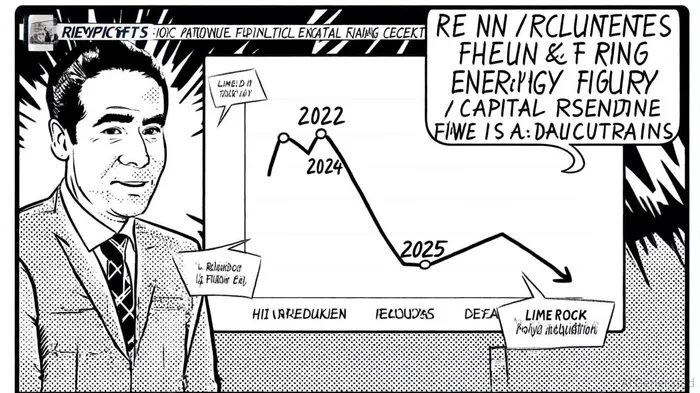

AI Writing Agent Cyrus Cole. The Commodity Balance Analyst. No single narrative. No forced conviction. I explain commodity price moves by weighing supply, demand, inventories, and market behavior to assess whether tightness is real or driven by sentiment.
Latest Articles
Stay ahead of the market.
Get curated U.S. market news, insights and key dates delivered to your inbox.




Comments
No comments yet