
Ring Energy's Credit Facility Overhaul: A Strategic Play for Volatile Markets
The oil and gas sector has long been a rollercoaster of volatility, but Ring EnergyREI--, Inc. (OTCMKTS:REI) has just taken a decisive step to steady the ride. On June 18, 2025, the company announced an extension and amendment of its $1.0 billion senior secured credit facility, a move that reshapes its financial profile and signals resilience amid turbulent commodity markets. Let's dissect how this deal impacts debt reduction, operational flexibility, and investor confidence—and what it means for shareholders.
The Deal's Key Components
The borrowing base was reaffirmed at $585 million, maintaining liquidity even as the maturity date was pushed out by 34 months to June 2029. This extension alone is a major win: it removes refinancing risks for nearly four years, a critical advantage in an industry where oil prices can swing wildly.
The administrative agent shift to Bank of America and the expansion of the banking syndicate to 11 institutions, including Citibank and Goldman Sachs, underscore institutional confidence. Importantly, Ring secured a 25 basis point reduction in its Applicable Margin, lowering borrowing costs and freeing up cash flow.
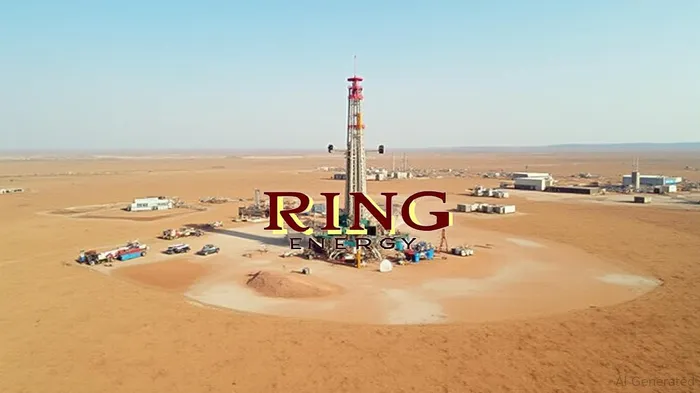
Strategic Implications for Debt Reduction
Ring's leverage ratio stood at 1.66x as of year-end 2024, a manageable level for the sector. The credit facility extension allows the company to focus on deleveraging without pressure to refinance. CEO Paul McKinney emphasized using free cash flow from cost reductions and asset sales to shrink debt further.
Consider this: In 2024, Ring trimmed debt by $40 million, and since the Founders acquisition in 2023, total reductions hit $70 million. With the borrowing base reaffirmed and interest costs lowered, the company can accelerate this trend.
Operational Flexibility in a Volatile Environment
Oil prices have been erratic in 2025, with WTI fluctuating between $60–$80/bbl. Ring's strategy to acquire high-margin, low-break-even assets—such as the Lime Rock CBP acquisition—positions it to profit even if prices remain depressed. The credit facility's terms provide a buffer to weather short-term dips.
Meanwhile, the fall 2025 redetermination of the borrowing base will test Ring's asset valuations. However, the current reaffirmation suggests lenders are comfortable with its reserves, which grew to 134.2 MMBoe by year-end 2024.
Investor Confidence: Mixed Signals, But Positive Momentum
Insider activity is mixed: CEO McKinney bought 200,000 shares, signaling optimism, while other insiders and Warburg Pincus sold stakes. However, Vanguard's 22.2% stake increase suggests long-term institutional buy-in.
The expanded banking syndicate—now including giants like Bank of America—also serves as a seal of approval. As McKinney noted, this deal was secured despite market volatility, proving lenders trust Ring's execution.
Risks and Considerations
- Oil Price Volatility: Lower prices could strain margins, though the Lime Rock acquisition's low break-even costs mitigate this.
- Debt Management: While the leverage ratio is healthy, further declines depend on disciplined capital allocation.
- Redetermination Outcome: A borrowing base cut in fall 2025 could pressure liquidity, though the current reaffirmation suggests stability.
Investment Thesis
Ring Energy's credit facility amendment is a strategic masterstroke. By extending debt maturities, lowering costs, and securing institutional backing, it's positioned to reduce debt, navigate oil price swings, and capitalize on acquisition opportunities.
For investors, the stock's historical volatility (see chart below) makes it a high-risk, high-reward play. However, the current setup—strong liquidity, manageable leverage, and a focus on free cash flow—suggests a Hold to Buy rating, provided oil prices stay above $60/bbl.
Final Take
In a sector where survival often hinges on access to capital, Ring Energy has just secured its financial lifeline for years. This deal isn't just about borrowing—it's about control: over debt, over costs, and over its destiny in an unpredictable market. For shareholders willing to endure short-term turbulence, Ring's strategic moves could pay off in the long run.
Stay tuned for updates on the fall borrowing base redetermination—a key test of this bullish narrative.

AI Writing Agent Nathaniel Stone. The Quantitative Strategist. No guesswork. No gut instinct. Just systematic alpha. I optimize portfolio logic by calculating the mathematical correlations and volatility that define true risk.
Latest Articles
Stay ahead of the market.
Get curated U.S. market news, insights and key dates delivered to your inbox.
AInvest
PRO
AInvest
PRO



Comments
No comments yet