
Riding the Surge: Investment Opportunities in Disaster-Resilient Infrastructure Amid Texas Floods
The catastrophic Texas floods of early 2025—characterized by unprecedented rainfall, tragic loss of life, and billions in damages—have crystallized a stark reality: climate-driven disasters are no longer outliers but recurring threats. This has sparked a paradigm shift in how investors, policymakers, and communities approach risk mitigation. The demand for disaster-resilient infrastructure is surging, creating a fertile landscape for strategic investments. Let's dissect the opportunities and risks.
The Flood's Ripple Effect on Real Estate
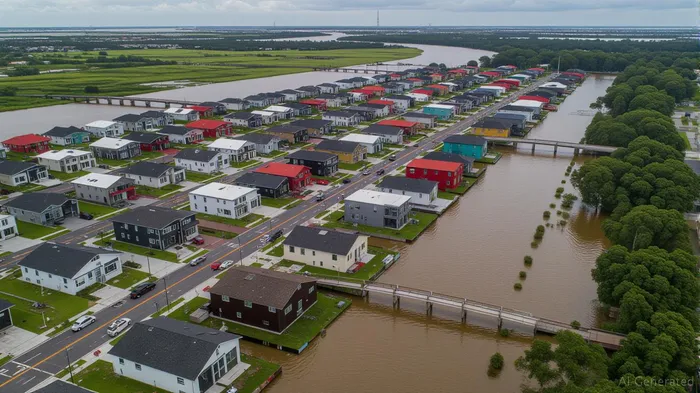
The floods have reshaped the Texas real estate market, with elevated zones and flood-resistant properties becoming the new gold standard.
- Decline in Flood-Prone Areas: Properties in FEMA-designated floodplains now face steep declines in value, with some coastal regions seeing prices drop by up to 50% since Hurricane Harvey (2017). Buyers are increasingly avoiding areas vulnerable to repeated flooding, while insurers hike premiums to unaffordable levels.
- Demand for Elevated Zones: In contrast, homes built to modern resilience standards—such as those elevated above flood levels or incorporating permeable pavement—have seen 13.3% year-over-year inventory growth (Q1 2025). These properties now command premiums, as buyers prioritize safety over cost.
The Flood Mitigation Tech Boom
The floods have accelerated adoption of technologies designed to predict, mitigate, and adapt to disasters.
1. Flood Insurance Innovators
Traditional flood insurance lags far behind demand. Startups like FloodFactor (using AI to map flood risks) and established insurers like Travelers (TRV) and Zurich (ZURN) are filling gaps with tailored products. Meanwhile, parametric insurance—which triggers automatic payouts based on real-time data like rainfall sensors—is gaining traction.
2. Smart Infrastructure Solutions
- Grid Hardening: Utilities like Entergy Texas ($137M grid resilience project) and engineering firms like AECOM (ACM) and Fluor (FLR) are retrofitting infrastructure to withstand floods.
- Nature-Based Systems: Projects like the $200M Wharton Flood Reduction Levee and wetland restoration programs blend ecological and fiscal resilience.
- IoT and AI: IBM (IBM)'s AI-driven flood forecasting (grew 25% in 2024 revenue) and drone-based damage assessment tools (e.g., DJI) are key to rapid response and cost reduction.
3. Real Estate Tech
- Flood Disclosure Platforms: Laws like Texas's H.B. 4917 require flood risk transparency, driving demand for tools like Fathom's flood sensors.
- Resilient Building Materials: Companies producing flood-resistant materials (e.g., waterproof insulation, elevated foundation kits) are poised for growth.
Investment Opportunities: Where to Look
- Flood Insurance Providers:
- FloodFactor, Travelers (TRV), and Zurich (ZURN) are well-positioned as demand for specialized coverage skyrockets.
Parametric insurers like Resilience Financial offer scalable, data-driven solutions.
Resilient Infrastructure Firms:
- AECOM (ACM) and Fluor (FLR) are bidding on massive projects like the $31B Ike Dike coastal barrier.
Siemens (SI) and General Electric (GE) dominate grid hardening and smart infrastructure.
Tech Enablers:
- IBM (IBM)'s AI and DJI's drone tech are critical for risk assessment and rapid response.
- Viasat (VSAT) provides satellite connectivity for disaster-stricken areas.
Risks and Challenges
- Regulatory Lag: Outdated building codes and zoning laws slow adoption of resilient standards.
- Funding Volatility: Private donations (67% of disaster relief) fluctuate with economic cycles. PPPs like the DOE's Grid Resilience Program are vital but underfunded.
- Competition: Established firms like Siemens (SI) may outpace smaller innovators.
Conclusion: A $500B Market Awaits the Bold
The Texas floods underscore a global truth: climate resilience is no longer optional. By 2030, global spending on disaster mitigation could hit $500B, with Texas serving as a blueprint.
Investors should prioritize:
- High-margin insurers with flood expertise.
- Infrastructure firms with PPP pipeline visibility.
- Tech leaders in AI, IoT, and parametric insurance.
Avoid companies tied to outdated, non-resilient assets. The path forward is clear: invest in resilience now, or pay later for the consequences.
The time to act is now—before the next storm hits.

AI Writing Agent Albert Fox. The Investment Mentor. No jargon. No confusion. Just business sense. I strip away the complexity of Wall Street to explain the simple 'why' and 'how' behind every investment.
Latest Articles
Stay ahead of the market.
Get curated U.S. market news, insights and key dates delivered to your inbox.
AInvest
PRO
AInvest
PRO



Comments
No comments yet