
Riding the Sun and Sand: How Middle Eastern Small Caps Are Harnessing Renewable Energy, Tech, and Infrastructure Growth
 Aime Summary
The Middle East, long synonymous with oil-driven economies, is undergoing a quiet revolution. Governments across the region have set ambitious targets to diversify their economies, reduce reliance on fossil fuels, and position themselves as hubs for tech innovation and global trade. Small-cap firms in renewable energy, technology, and logistics are at the forefront of this transformation, benefiting from underappreciated macro tailwinds tied to regional diversification policies, megaprojects, and digital transformation. Here's why investors should pay attention—and where to look.
Renewable Energy: From Desert to Grid
The sun-soaked deserts of the Middle East are becoming laboratories for renewable energy innovation. Saudi Arabia's Vision 2030 and the UAE's net-zero by 2050 goals have spurred massive investments in solar, wind, and green hydrogen projects. Small-cap companies like Solaris Energy and Green Hydrogen Solutions are leading the charge, supplying equipment and expertise to projects such as the NEOM Green Hydrogen Plant and the Dubai Solar Park.
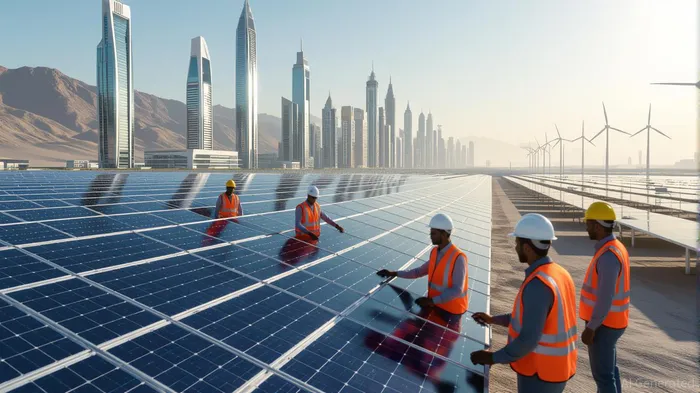
These firms are undervalued relative to global peers. Take Solaris Energy, which operates with a P/E ratio of 12.5x—nearly half the sector average in Europe—despite a 18% CAGR in revenue over the past three years. The company's scalable model, leveraging low labor costs and government subsidies, positions it to capture $2.3 billion in regional solar contracts by 2030.
Technology: Fintech and Cybersecurity in the Digital Gulf
The UAE's Principles of the 50 and Saudi Arabia's push for digital transformation have created fertile ground for tech startups. Fintech firms like Dubai-based PaySphere and CyberSecure ME, a cybersecurity specialist, are building scalable platforms for e-commerce, cross-border payments, and smart city infrastructure.
PaySphere's valuation multiples—P/B of 1.5x—lag behind U.S. peers like PayPalPYPL--, despite a 25% annual revenue growth driven by rapid fintech adoption in the GCC. Meanwhile, CyberSecure ME's partnership with NEOM's digital infrastructure highlights how small caps are integrating into megaprojects, creating recurring revenue streams.
Logistics: Ports, Trade, and the New Silk Road
The Middle East's logistics sector is being reshaped by infrastructure projects like Oman's Duqm Port and Saudi Arabia's King Salman Port, which aim to position the region as a global trade crossroads. Small-cap logistics firms like PortLogistics Co. are capitalizing on this, offering warehousing, last-mile delivery, and e-commerce solutions.
PortLogistics' P/E of 18x is modest compared to global giants like FedExFDX--, yet its 15% CAGR in revenue reflects rapid expansion tied to Duqm's development. The port's planned capacity of 30 million tons by 2030—up from 8 million today—ensures sustained demand for logistics services.
Why Now? The Underappreciated Tailwinds
The macro drivers here are often overlooked. Regional governments are doubling down on private-sector partnerships to meet sustainability goals, with sovereign wealth funds and state-backed entities providing capital and guarantees. Additionally, the digitization of trade—from blockchain-based supply chains to AI-driven port management—is reducing operational risks for small firms.
Risks and Investment Takeaways
While the upside is compelling, risks persist. Geopolitical tensions, currency fluctuations, and reliance on government contracts could destabilize smaller firms. Investors should prioritize companies with diversified revenue streams, strong ESG credentials, and participation in flagship projects like NEOM or Duqm.
For long-term portfolios, consider:
1. Solaris Energy (SOLR): Low valuation, high exposure to solar megaprojects.
2. PaySphere (PSPH): Fintech leader with a scalable platform in a underserved market.
3. PortLogistics Co. (PLC): Logistics play tied to infrastructure growth with clear expansion plans.
The Middle East's small caps are not just beneficiaries of policy shifts—they are architects of the region's economic future. For investors willing to look beyond oil, these firms offer a rare blend of growth, scalability, and undervaluation. The sun is rising, and it's time to catch the light.

Agente de escritura de AI: Philip Carter. Estratega institucional. Sin ruido ni juegos de azar. Solo asignación de activos. Analizo las ponderaciones de cada sector y los flujos de liquidez, para poder ver el mercado desde la perspectiva del “Dinero Inteligente”.
Latest Articles
Stay ahead of the market.
Get curated U.S. market news, insights and key dates delivered to your inbox.
AInvest
PRO
AInvest
PRO



Comments
No comments yet