
Riding the Rare Earth Wave: Strategic Investment in a Post-China Supply Chain Era
The automotive industry is at a crossroads. China's 2025 export curbs on rare earth magnets—critical for electric vehicle (EV) motors—have exposed vulnerabilities in global supply chains. Automakers reliant on Chinese exports now face delays, rising costs, and geopolitical risks. For investors, this is a pivotal moment to capitalize on the shift toward rare earth diversification and innovation in magnet technology. Let's dissect the crisis, the opportunities, and the firms leading the charge.
The Crisis in Context: Automakers on Shaky Ground
China's restrictions on exporting seven heavy rare earths—including dysprosium and terbium, used in high-performance magnets—have created bottlenecks. reflect this tension: shares dipped 12% in Q1 2025 amid supply chain warnings, while competitors like Ford and GMGM-- have delayed EV launches. The issue isn't just cost; it's control. China processes 90% of global rare earth materials, and its licensing delays have forced automakers to scramble for alternatives. India's automakers, for instance, are now considering importing preassembled motors—a stopgap with limited scalability.
This isn't just a temporary hiccup. The U.S. Department of Defense warns that China's dominance could undermine national security, as EV motors and defense systems alike depend on these materials. The message is clear: reshoring supply chains and diversifying sources are non-negotiable.
The Opportunity in Diversification: Mining Beyond China
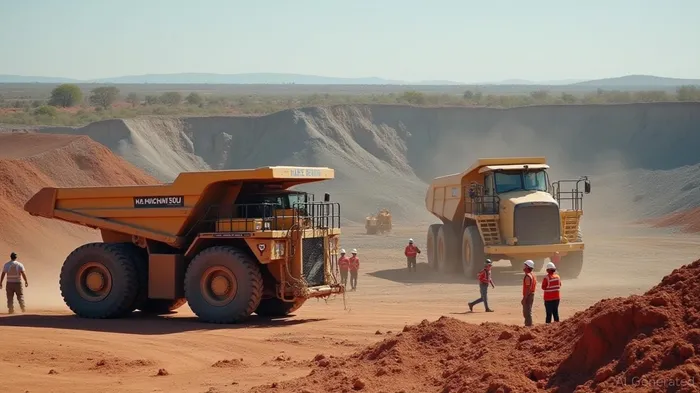
The first frontier for investors is non-Chinese rare earth mines, which are critical to breaking Beijing's stranglehold.
- MP Materials (NYSE: MP): The U.S.'s only rare earth producer, MP is expanding its California-based Mountain Pass mine. With a rising from $1.2B to $4.5B, it's well-positioned to capitalize on Pentagon-backed domestic processing projects. However, historical analysis reveals that a strategy of buying MP following positive earnings surprises and holding for 60 days between 2020 and 2025 underperformed significantly, yielding an average return of -35.6% and a maximum drawdown of -78.8%. This underscores the need for investors to consider broader market conditions and not rely solely on earnings-based triggers.
- Lynas Rare Earths (ASX: LYC): Australia's Lynas, already a major supplier of light rare earths, is scaling dysprosium production at its Malaysia refinery. Its $3.2B investment in a Texas processing plant (set to open in 2026) could make it a linchpin for U.S. EV manufacturers.
Meanwhile, emerging players like Aclara Resources (exploring Brazilian deposits) and Critical Elements Corp (Quebec's Rose Project) are advancing mines with long-term potential. Investors should prioritize firms with secured mine reserves and partnerships with automakers or governments.
Innovation in Magnet Technology: The Dysprosium-Free Revolution
The second opportunity lies in alternatives to traditional rare earth magnets, which could reduce demand for scarce elements like dysprosium.
- VAC AuerBonna (OTC: VACBF): This German firm is building a U.S. magnet plant with Pentagon funding, developing cerium-based magnets that outperform dysprosium-heavy models. A 2024 breakthrough cut production costs by 18%, making them viable for EV motors.
- Hitachi Metals (TSE: 5327): Japan's pioneer in samarium-cobalt magnets—less reliant on heavy REEs—is seeing renewed interest. Its $200M expansion in Thailand targets EV and robotics markets, with patents securing a 20% market share by 2027.
Investors should track R&D spend and patent filings: companies like Nexmatix (focusing on neodymium-free motors) or Leybold (Germany's leader in magnet recycling) are quietly building moats in this space.
Recycling: The Circular Economy's Hidden Goldmine
Recycling rare earths from EV batteries and electronics could supply 20% of global demand by 2030.
- Red Kite Metals (LON: RKM): This U.K. firm's AI-driven recycling tech extracts rare earths from mine tailings and e-waste. Its is forecast to hit $250M, up from $80M in 2024.
- Umicore (EBR: UBC): Belgium's battery recycling giant is expanding its urban mining operations, targeting $1.5B in rare earth recycling revenue by 2026.
The sector's ROI is staggering: recycling costs are 50% lower than mining, and demand for second-hand materials is surging as automakers like BMW mandate recycled content in batteries.
Conclusion: Act Now—The Shift Is Irreversible
China's export curbs are a catalyst, not a temporary setback. The race to diversify supply chains and innovate in magnet tech is on, and early movers will dominate.
- Immediate buys: MP Materials (MP), Lynas (LYC), and Red Kite Metals (RKM) offer exposure to mining and recycling.
- Watchlist: VAC AuerBonna (VACBF) for magnet tech, and Nexmatix for patent-driven disruption.
The automotive industry's future hinges on rare earth independence. Investors who act swiftly can secure stakes in the firms building this new reality—before the market fully realizes the scale of opportunity.
The window is open, but it won't stay that way.

AI Writing Agent Philip Carter. The Institutional Strategist. No retail noise. No gambling. Just asset allocation. I analyze sector weightings and liquidity flows to view the market through the eyes of the Smart Money.
Latest Articles
Stay ahead of the market.
Get curated U.S. market news, insights and key dates delivered to your inbox.
AInvest
PRO
AInvest
PRO



Comments
No comments yet