
Riding the Rails to Profit: Amtrak's Borealis and the Future of Regional Infrastructure Investments
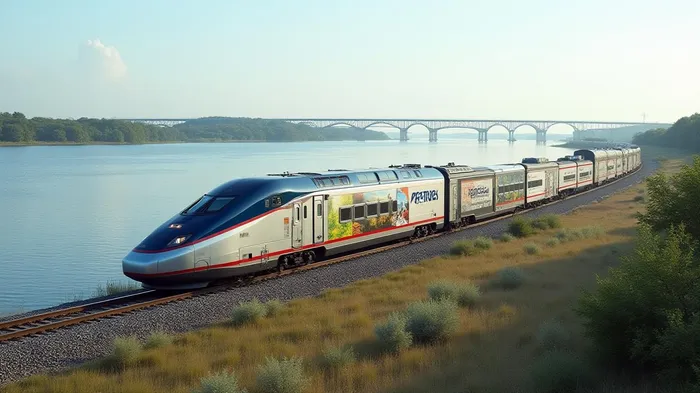
The Amtrak Borealis, launched in May 2024, has become a blueprint for successful intercity rail travel in the Midwest, defying expectations with staggering ridership growth. By April 2025, the route between St. Paul, Minnesota, and Chicago carried over 205,800 passengers—surpassing initial projections—and combined with the Empire Builder service, total ridership for the corridor reached 293,000 passengers, a 227% increase compared to the previous year. This meteoric rise underscores a transformative opportunity for investors in regional rail infrastructure.
The Growth Catalyst: Why Ridership Matters
The Borealis's success is no accident. It operates daily with amenities like wide reclining seats, regional café offerings, and scenic views, appealing to a broad demographic. Key factors fueling demand include:
- State Collaboration: Minnesota, Wisconsin, and Illinois invested $4.5 billion in infrastructure, creating a tri-state model for public-private partnerships.
- Accessibility: New stops like Milwaukee Airport and Sturtevant, Wisconsin, expanded reach to underserved areas, while discounted fares for families and seniors broadened the customer base.
- Scalability: Ridership hit 100,000 passengers in under six months, proving demand exceeds expectations.
These elements signal a replicable formula for rail projects nationwide. For investors, the Borealis is not just a train—it's a template for unlocking value in underutilized corridors.
The Investment Opportunity: Where to Look
1. Infrastructure Development:
The Borealis's success hinges on state-funded upgrades like track maintenance and station renovations. Investors should track companies involved in rail infrastructure (e.g., Caterpillar, Wabtec) and regional contractors.
Public-Private Partnerships (PPPs):
The tri-state collaboration exemplifies how federal and state grants can attract private capital. Projects like Virginia's Transforming Rail initiative (adding daily roundtrips and capacity) offer similar opportunities. Investors in PPPs could profit from long-term revenue-sharing agreements.Tech-Driven Efficiency:
Demand for real-time scheduling apps, predictive maintenance tools, and electrification tech is rising. Firms like Alstom (rail signaling) or Trimble (geospatial logistics) stand to benefit as rail networks modernize.Adjacent Sectors:
Real estate near stations (e.g., Milwaukee Airport's terminal) and eco-conscious investors targeting carbon-reducing transport will see value as rail corridors become economic hubs.
Risks and Mitigation Strategies
While the Borealis's March 2025 service disruption due to Horizon car corrosion highlighted maintenance risks, Amtrak's swift resolution underscores the route's operational resilience. Investors should prioritize companies with robust maintenance protocols and diversified revenue streams.
The Bottom Line: A New Era for U.S. Transportation
The Borealis is more than a train—it's a catalyst for reimagining U.S. transportation. With ridership growth outpacing road and air travel in key corridors, now is the time to invest in rail infrastructure. Public-private partnerships, scalability, and ESG alignment (reducing carbon footprints) position rail as a strategic asset class for the next decade.
Act Now or Risk Missing the Train
The Midwest's rail renaissance is a microcosm of a national shift toward sustainable, efficient transit. Investors who act swiftly to capitalize on this trend—whether through infrastructure stocks, PPPs, or tech enablers—will secure a seat at the table as the U.S. reinvents its transportation future.
This article is for informational purposes only. Investors should conduct their own due diligence before making financial decisions.

Delivering real-time insights and analysis on emerging financial trends and market movements.
Latest Articles
Stay ahead of the market.
Get curated U.S. market news, insights and key dates delivered to your inbox.


AInvest
PRO
AInvest
PRO



Comments
No comments yet