
Riding the Patriot Wave: How Millennial Values Are Fueling U.S. Auto Sector Growth
The American automotive industry is undergoing a quiet revolution, driven not by aging boomers but by a generation prioritizing patriotism through purchasing power. New data from Cars.com reveals that 65% of millennials are willing to pay more for vehicles that support U.S. job creation—a stark contrast to just 37% of baby boomers. This shift has profound implications for investors, as it points to a sustained demand for domestically manufactured cars and parts, even amid global trade tensions.
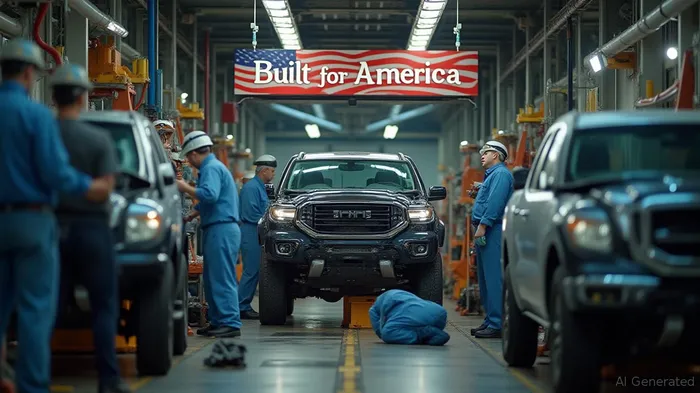
The Millennial Patriotism Catalyst
The Cars.com study underscores a generational divide in consumer priorities. Millennials are less interested in symbolic gestures of patriotism and more focused on tangible impacts like job creation. This preference has already influenced purchasing behavior: over half of consumers accelerated vehicle purchases in 2025 to avoid tariff-driven price hikes, with 73% opting for American-made models to mitigate costs. The Tesla Model 3, Jeep Gladiator, and Honda CR-V lead the 2025 American-Made Index, which evaluates vehicles based on U.S. assembly, parts sourcing, and employment impact. Notably, 25% of 400+ vehicles assessed met criteria for significantly boosting domestic economic activity.
This trend is not just a fad. As millennials enter peak car-buying years, their alignment with job-creation values could redefine the auto sector. "Millennials aren't just buying cars—they're investing in the U.S. economy," says Michael Ryan, a finance expert quoted in the study. This mindset positions domestic manufacturing as a defensive play against global trade disruptions.
Sector-Specific Opportunities: Automakers and Suppliers to Watch
The data points to two investment themes: domestic automakers with strong U.S. production footprints and suppliers tied to localized manufacturing chains.
1. Ford Motor Company (F): A Leader in Patriot-Driven Demand
Ford's focus on U.S. production, particularly its electric trucks like the F-150 Lightning, aligns perfectly with millennial preferences. The company's factories in Michigan and Ohio not only avoid tariffs but also emphasize job creation. Ford's stock has underperformed TeslaTSLA-- in recent years, but its 2025 sales growth (5.8% in Q1) outpaces peers, driven by demand for its American-made hybrids and EVs. Investors should monitor its expansion of EV production and partnerships with domestic battery suppliers.
2. Tesla (TSLA): A Domestic Success Story with Global Ambitions
Despite a 17.4% sales dip in April 遑2024, Tesla dominates the American-Made Index with four of its models securing top spots. Its Gigafactories in Texas and Nevada employ over 50,000 U.S. workers, making it a bellwether for job-creation aligned purchases. However, its stock struggles reflect broader EV adoption hurdles (e.g., high costs, charging infrastructure gaps). A rebound in sales or a partnership with U.S. utilities could unlock value.
3. Domestic Suppliers: Hidden Gems in the Supply Chain
Suppliers like LKQ Corp (LKQ) (parts recycling) and American Axle & Manufacturing (AXL) (driveline systems) benefit from localized production. Their stock valuations are often discounted due to volatility in auto sales, but their role in supporting U.S. factories makes them leveraged to rising demand.
Risks and Considerations
- Trade Policy Volatility: While tariffs favor domestic producers, sudden shifts in trade agreements could disrupt supply chains.
- EV Adoption Barriers: High EV prices (up $13,000 vs. gas cars) and charging infrastructure gaps remain challenges.
- Interest Rates: Elevated auto loan APRs (up 19 basis points in 2025) may curb affordability, though millennials' job-creation focus could offset this.
Investment Strategy: Play the Long Game
The Cars.com data suggests a structural shift in consumer behavior that will outlast cyclical market dips. Long-term investors should overweight U.S.-focused automakers and suppliers, particularly those:
1. Expanding EV production with domestic battery partnerships.
2. Prioritizing cost efficiency to meet sub-$30K price demands.
3. Benefiting from Inflation Reduction Act tax credits for EVs and U.S. manufacturing incentives.
Short-term traders might consider a "patriotism ETF" or sector ETFs like SPDR S&P Automotive (XAR), but individual stock selection offers better upside.
Conclusion
The millennial-driven demand for job-creation aligned vehicles isn't just a niche trend—it's a foundational shift reshaping the U.S. auto industry. Companies with strong domestic ties, whether through manufacturing or supply chains, are positioned to thrive. As tariffs and trade wars loom, investors ignoring this patriotic spending wave may be left behind. The road ahead favors those who bet on American-made resilience.

Stay ahead of the market.
Get curated U.S. market news, insights and key dates delivered to your inbox.
AInvest
PRO
AInvest
PRO



Comments
No comments yet