
The Richest Man on Earth: Elon Musk's Expanding Empire Bolstered by SpaceX's Valuation Boom
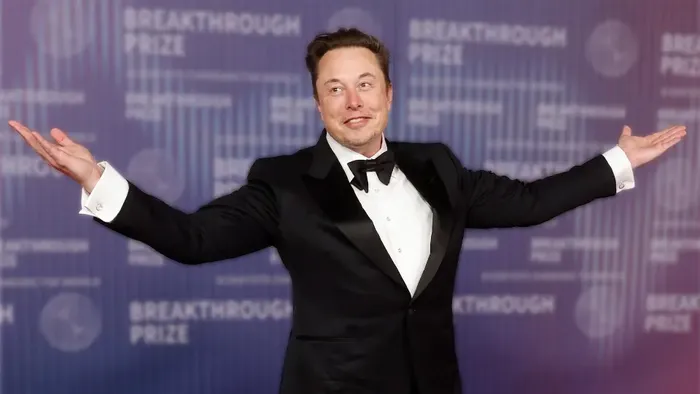
- Elon Musk's net worth has surged to over $600 billion in 2025, largely driven by SpaceX's valuation doubling to $800 billion amid IPO preparations.
- SpaceX is eyeing a potential 2026 IPO that could value the company at $1.5 trillion, making it one of the largest public offerings ever.
- Musk's business portfolio spans aerospace, electric vehicles, AI, neurotechnology, and more, creating diverse investment avenues for growth-oriented portfolios.
- While TeslaTSLA-- remains a publicly traded powerhouse, opportunities in SpaceX and related ventures come with high risks like market volatility and regulatory hurdles.
- Investors should focus on long-term trends in space tech and sustainable energy, but diversify to mitigate exposure to Musk's high-profile ventures.
Elon Musk, the visionary entrepreneur behind some of the world's most innovative companies, continues to reshape industries from space exploration to electric mobility. In 2025, Musk's wealth has skyrocketed to over $600 billion, propelled primarily by the explosive growth of SpaceX, which has seen its valuation double in recent months as it gears up for a potential initial public offering (IPO) in 2026 according to Bloomberg . Here we explores Musk's vast business empire, delves into SpaceX's recent milestones, and highlights potential investment opportunities for those looking to capitalize on his ventures.
Musk's Commercial Empire: A Portfolio of Innovation
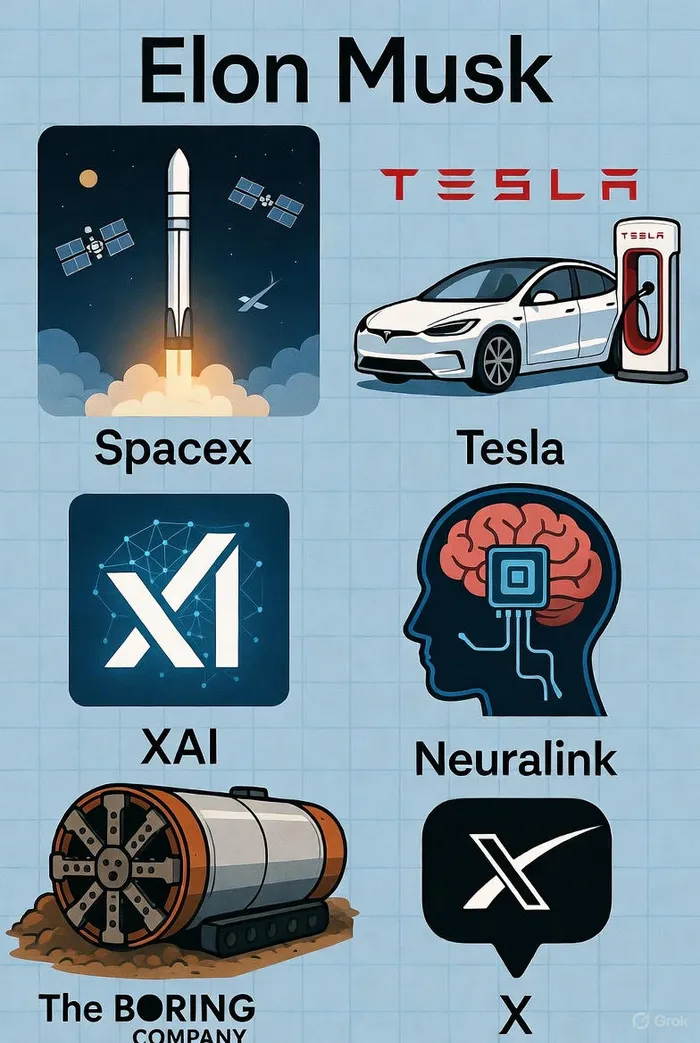
Musk's journey began in the late 1990s with early successes like Zip2 and PayPal, which laid the foundation for his current holdings. Today, his empire includes a mix of publicly traded giants and private disruptors, each targeting ambitious goals in technology and sustainability.
Here's a breakdown of his key companies, according to Wikipedia :
This diverse portfolio not only drives Musk's influence but also positions him at the forefront of emerging technologies. For instance, SpaceX's Starlink has revolutionized global broadband access, while Tesla's push into autonomous vehicles could transform transportation.
SpaceX's Valuation Surge and IPO Buzz
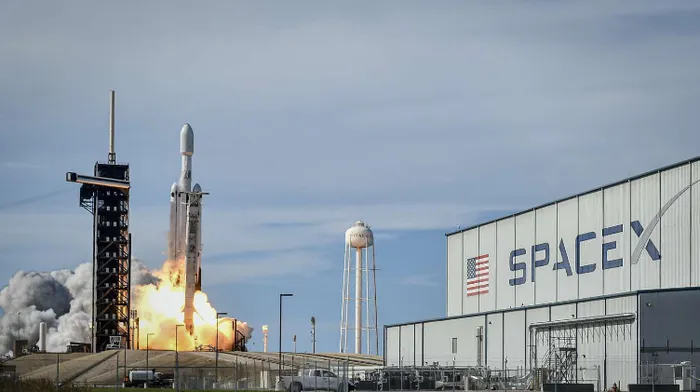
In a landmark development, SpaceX's valuation has doubled from around $400 billion earlier in 2025 to approximately $800 billion through recent insider share sales. This surge is fueled by milestones like expanding Starlink's user base and securing high-value government contracts, with projected revenues climbing to $22-24 billion in 2026. The company is now preparing for a potential IPO in late 2026, aiming to raise over $30 billion at a staggering $1.5 trillion valuation—the largest in history. Reported by Bloomberg, such a move would not only solidify SpaceX's status as the most valuable private U.S. company but also significantly boost Musk's personal fortune, which has already crossed the $600 billion mark due to his substantial ownership stake.
This growth reflects broader trends in the space economy, where private enterprises are increasingly partnering with governments for missions like deorbiting the International Space Station. However, challenges like regulatory scrutiny and competition from players like Blue Origin remain.
Musk's Net Worth Leap: From Billionaire to Trillionaire Trajectory
According to Reuters, Musk's net worth has seen unprecedented gains in 2025, briefly touching $500 billion earlier in the year before surging further with SpaceX's developments. The recent $800 billion SpaceX valuation alone added an estimated $168 billion to his wealth, pushing it to $677 billion by mid-December. Combined with Tesla's strong performance and other ventures, Musk is on track to become the world's first trillionaire, especially if the SpaceX IPO materializes at $1.5 trillion.
Investment Opportunities in Musk's World
For investors, Musk's companies offer exciting prospects in high-growth sectors. Tesla (TSLA) remains the most accessible, with its stock trading publicly and benefiting from EV adoption and AI-driven autonomy. SpaceX, while private, could open doors via its 2026 IPO, potentially allowing retail investors to buy shares post-listing. Indirect exposure comes through funds or partners tied to Starlink or Tesla suppliers.
Other avenues include xAI's AI tools or Neuralink's medtech breakthroughs, though these are early-stage and riskier. Musk has also hinted at AI plays like Alphabet (GOOGL) and Nvidia (NVDA) for broader exposure. Overall, focusing on sustainable energy and space tech ETFs can provide diversified bets on Musk's influence.
FAQs: Strategic Insights for Investing in Musk's Ventures
Q: What are key entry points for Tesla or SpaceX-related investments during market cycles? A: Based on Investopedia analysis, Ideal entry points often occur during post-earnings dips or after regulatory announcements that temporarily suppress valuations, such as Tesla's stock pullbacks following production delays or SpaceX's pre-IPO insider sales. Analyze technical indicators on platforms for support levels around 200-day moving averages, and enter when fundamentals like revenue growth (e.g., Tesla's 20-30% YoY EV sales) remain strong despite short-term noise.
Q: How can investors assess and mitigate potential risks in Musk's high-growth companies? A: Key risks include regulatory hurdles (e.g., SEC investigations into Tesla's autonomy claims or FAA delays for SpaceX launches) and over-reliance on Musk's leadership, which can amplify volatility from his public statements. Mitigate by stress-testing portfolios against 20-30% drawdowns, using options hedges like protective puts, and monitoring sentiment via tools like MarketWatch for shifts in institutional ownership.
Q: What holding time strategies are effective for volatile assets like Tesla stock or a post-IPO SpaceX? A: Adopt a long-term horizon of 3-5 years to capture compounding growth from innovations like Tesla's Robotaxi or SpaceX's Mars missions, avoiding short-term trades that fall prey to 50%+ swings. Use trailing stops (e.g., 15-20% below peaks) for partial exits during rallies, and rebalance annually to lock in gains while maintaining exposure to secular trends in AI and space.
Q: How to identify undervaluation signals in Musk's ecosystem for optimal investment timing? A: Look for discrepancies between market caps and forward metrics, such as Tesla trading below 50x forward earnings during EV adoption booms or SpaceX's private valuation lagging Starlink subscriber growth (targeting 100M users by 2027). Cross-reference with Bloomberg or WSJ analyses for peer comparisons, and enter when P/E ratios compress 20-30% below historical averages amid broader market corrections.
Q: What diversification tactics within Musk's ventures can balance high-reward exposure? A: Spread risk by allocating across correlated but distinct plays: 40% Tesla for EV/AI, 30% space-themed ETFs (e.g., ARKX) for indirect SpaceX access, and 30% in adjacencies like Nvidia for xAI synergies. Avoid over-concentration (no more than 10-15% portfolio in any single Musk entity) to cushion against company-specific events, while using Investopedia resources to model correlations and beta risks.

The AInvest News Editorial Team consists of experienced financial journalists and editors who oversee all published content. While our newsroom leverages advanced AI tools to assist in data gathering and draft generation, every article is reviewed, fact-checked, and approved by human editors to ensure accuracy, clarity, and transparency.
Latest Articles
Stay ahead of the market.
Get curated U.S. market news, insights and key dates delivered to your inbox.
AInvest
PRO
AInvest
PRO



Comments
No comments yet