
Rheinmetall's Surge: What Recent Data Means for Investors


 Aime Summary
Rheinmetall AG has emerged as one of the most dynamic names in the European defense sector in 2025. With a 34% stock rally since March and a staggering €62.6 billion in order backlog, the German arms manufacturer is capturing headlines and investor attention. But what's behind the momentum? A mix of geopolitical demand, strategic restructuring, and significant capital expansion is reshaping the company's trajectory—and offering clues for what's next.
Recent Financial and Strategic Developments
Rheinmetall's Q1 2025 earnings offered a glimpse into its rapid transformation. Revenue hit €2.31 billion, up 46% from the previous year, with operating profit rising 49% to €199 million. The company added €11 billion in new orders, bringing its total order backlog to €62.6 billion—a number that underscores its strong pipeline and market position. Free cash flow also turned positive at €266 million, reversing a negative trend from the previous year.
Meanwhile, the company has been repositioning itself to better serve long-term growth. In July, it announced the sale of its Power Systems division, which had seen a 70.4% drop in operating profit in Q1 2025. The move is part of a broader strategy to focus on high-growth segments like land-based defense and virtual training solutions. 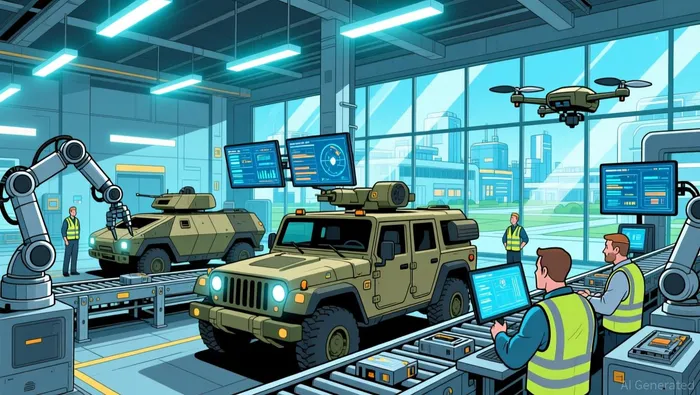 Earlier in 2025, it also inaugurated a HUF 29 billion investment in a vehicle parts plant in Szeged, Hungary, as part of its European expansion.
Drivers of Growth and Market Positioning
The company's growth is being fueled by multiple factors. Geopolitical tensions have boosted demand for military equipment and training systems across Europe. NATO's June 2025 summit, which committed members to raising defense spending to 3.5% of GDP, has only accelerated this trend. As a result, defense contracts are expanding rapidly, and companies like Rheinmetall are benefitting from the increased spending environment.
Beyond traditional arms, Rheinmetall is also positioning itself in the growing military simulation and virtual training market. This sector was valued at $14.5 billion in 2024 and is projected to reach $17.9 billion by 2030, growing at a 3.5% compound annual rate. The company is leveraging advances in virtual reality and artificial intelligence to offer cost-effective training solutions for modern warfare, which is a key differentiator in an industry historically dominated by large players like BAE Systems and Lockheed Martin.
What This Means for Investors
For investors, Rheinmetall presents a compelling case of rapid growth and strategic reinvention. Its share price has surged over 15% since March 2025, driven by bullish analyst forecasts and improved financial metrics. Analysts at CleaRank have been especially optimistic, suggesting a potential 160% upside with a price target over €4,000 by Q4 2025.
However, this growth is not without risk. Selling a key division like Power Systems may raise questions about short-term volatility. The company also faces competition from global peers, and any slowdown in defense spending—especially in key markets like Germany and the U.S.—could impact its trajectory. Still, with a clear focus on high-margin, high-growth areas and a strong order backlog, Rheinmetall is well-positioned to navigate the next phase of its evolution.
Looking Ahead: Opportunities and Challenges
Rheinmetall's CEO, Armin Papperger, has projected a 450% increase in orders by 2030, a bold but not unreasonable target given current market trends. The company is already seeing traction with its new facilities and product offerings. In the near term, investors should watch for key milestones, including the integration of new production lines in Hungary and the execution of major defense contracts. Longer-term, the success of its virtual training and simulation offerings will play a crucial role in sustaining its growth.
The defense sector is inherently cyclical, but with global tensions and the need for modernization, companies like Rheinmetall are likely to remain in focus. For now, the numbers speak for themselves: a surging stock, a growing order backlog, and a company that's clearly positioning itself for the future.

Delivering real-time insights and analysis on emerging financial trends and market movements.
Latest Articles
Stay ahead of the market.
Get curated U.S. market news, insights and key dates delivered to your inbox.


AInvest
PRO
AInvest
PRO



Comments
No comments yet