
Revolutionizing Hospitality: 5 Ways AI is Redefining the Industry
ByAinvest
Friday, Aug 15, 2025 4:31 am ET2min read
MAR--
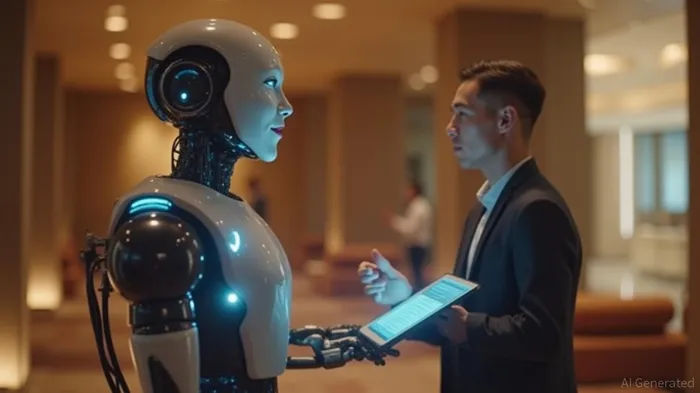
One of the most promising applications of AI in Bellevue is the virtual concierge. AI-powered virtual concierges can automate 24/7 guest support, multilingual replies, and revenue-driving upsells. For instance, Boom's AiPMS can serve as a virtual concierge, automating guest communication and offering targeted upsells [1]. Similarly, Marriott's RENAI pilot demonstrates how a hybrid virtual concierge can provide neighborhood-specific recommendations, reducing information overload for visitors and enhancing their experience [1].
Dynamic pricing and revenue management are also areas where AI can make a substantial impact. AI can optimize pricing strategies based on real-time data, leading to increased revenue and improved guest satisfaction. For example, Atomize's rate optimization platform can help hotels maximize revenue by adjusting prices dynamically [1].
Housekeeping automation is another area where AI can drive efficiency. Systems like Myma.ai can automate task scheduling and housekeeping operations, reducing labor costs and improving service quality [1]. Additionally, AI can optimize energy and sustainability by analyzing data to reduce energy consumption and waste. Platforms like Winnow and LightStay can help hotels track and reduce food waste and energy usage, contributing to sustainability goals [1].
AI also plays a crucial role in enhancing guest experiences. Personalized upsells, such as those offered by Allora.ai, can drive higher spend without annoying guests. By analyzing guest preferences and behaviors, AI can provide tailored offers that increase direct bookings and reduce cancellations [1]. Furthermore, automated review summarization and sentiment analysis, as seen in DigitalGenius, can turn scattered guest comments into actionable insights, helping hotels prioritize improvements based on guest feedback [1].
The economic impact of AI in Bellevue's hospitality industry is substantial. According to local data, Bellevue's hospitality rebound has seen 2.2 million overnight visitors, $1.9 billion in economic impact, and $272 million in citywide hotel revenue [1]. These numbers highlight the potential for AI to drive further growth and operational efficiency.
To capitalize on these opportunities, Bellevue's hospitality operators should consider adopting practical AI workflows. The AI Essentials for Work bootcamp, offered by Nucamp, provides hands-on prompt-writing and business-focused AI applications. Local sources, such as the Visit Bellevue 2025 tourism impact report, can inform pilot scope and KPIs [1].
In conclusion, AI is set to rewrite the hospitality playbook in Bellevue, empowering staff to deliver more personalized and seamless experiences. By optimizing revenue management, personalizing guest interactions, and enhancing sustainability, AI can drive measurable gains and support the city's growth.
References:
[1] https://www.nucamp.co/blog/coding-bootcamp-bellevue-wa-hospitality-top-10-ai-prompts-and-use-cases-and-in-the-hospitality-industry-in-bellevue
AI is set to revolutionize the hospitality industry by amplifying human intuition, cultural fluency, and emotional intelligence. It will analyze guest interactions to better anticipate their needs, transform standardized spaces into dynamic environments, and enable leaps in smart sustainability. AI-powered systems will optimize energy management, personalize guest experiences, and enhance emotional well-being through responsive environments. AI will rewrite the hospitality playbook by empowering staff to deliver a more personalized and seamless experience.
The hospitality industry in Bellevue, Washington, is poised for significant growth and innovation, driven by the integration of artificial intelligence (AI). This technological advancement promises to amplify human intuition, cultural fluency, and emotional intelligence, fundamentally transforming how the industry operates. AI is set to revolutionize various aspects of hospitality, from guest interactions to energy management, personalization, and sustainability.One of the most promising applications of AI in Bellevue is the virtual concierge. AI-powered virtual concierges can automate 24/7 guest support, multilingual replies, and revenue-driving upsells. For instance, Boom's AiPMS can serve as a virtual concierge, automating guest communication and offering targeted upsells [1]. Similarly, Marriott's RENAI pilot demonstrates how a hybrid virtual concierge can provide neighborhood-specific recommendations, reducing information overload for visitors and enhancing their experience [1].
Dynamic pricing and revenue management are also areas where AI can make a substantial impact. AI can optimize pricing strategies based on real-time data, leading to increased revenue and improved guest satisfaction. For example, Atomize's rate optimization platform can help hotels maximize revenue by adjusting prices dynamically [1].
Housekeeping automation is another area where AI can drive efficiency. Systems like Myma.ai can automate task scheduling and housekeeping operations, reducing labor costs and improving service quality [1]. Additionally, AI can optimize energy and sustainability by analyzing data to reduce energy consumption and waste. Platforms like Winnow and LightStay can help hotels track and reduce food waste and energy usage, contributing to sustainability goals [1].
AI also plays a crucial role in enhancing guest experiences. Personalized upsells, such as those offered by Allora.ai, can drive higher spend without annoying guests. By analyzing guest preferences and behaviors, AI can provide tailored offers that increase direct bookings and reduce cancellations [1]. Furthermore, automated review summarization and sentiment analysis, as seen in DigitalGenius, can turn scattered guest comments into actionable insights, helping hotels prioritize improvements based on guest feedback [1].
The economic impact of AI in Bellevue's hospitality industry is substantial. According to local data, Bellevue's hospitality rebound has seen 2.2 million overnight visitors, $1.9 billion in economic impact, and $272 million in citywide hotel revenue [1]. These numbers highlight the potential for AI to drive further growth and operational efficiency.
To capitalize on these opportunities, Bellevue's hospitality operators should consider adopting practical AI workflows. The AI Essentials for Work bootcamp, offered by Nucamp, provides hands-on prompt-writing and business-focused AI applications. Local sources, such as the Visit Bellevue 2025 tourism impact report, can inform pilot scope and KPIs [1].
In conclusion, AI is set to rewrite the hospitality playbook in Bellevue, empowering staff to deliver more personalized and seamless experiences. By optimizing revenue management, personalizing guest interactions, and enhancing sustainability, AI can drive measurable gains and support the city's growth.
References:
[1] https://www.nucamp.co/blog/coding-bootcamp-bellevue-wa-hospitality-top-10-ai-prompts-and-use-cases-and-in-the-hospitality-industry-in-bellevue
Stay ahead of the market.
Get curated U.S. market news, insights and key dates delivered to your inbox.
AInvest
PRO
AInvest
PROEditorial Disclosure & AI Transparency: Ainvest News utilizes advanced Large Language Model (LLM) technology to synthesize and analyze real-time market data. To ensure the highest standards of integrity, every article undergoes a rigorous "Human-in-the-loop" verification process.
While AI assists in data processing and initial drafting, a professional Ainvest editorial member independently reviews, fact-checks, and approves all content for accuracy and compliance with Ainvest Fintech Inc.’s editorial standards. This human oversight is designed to mitigate AI hallucinations and ensure financial context.
Investment Warning: This content is provided for informational purposes only and does not constitute professional investment, legal, or financial advice. Markets involve inherent risks. Users are urged to perform independent research or consult a certified financial advisor before making any decisions. Ainvest Fintech Inc. disclaims all liability for actions taken based on this information. Found an error?Report an Issue




Comments
No comments yet